

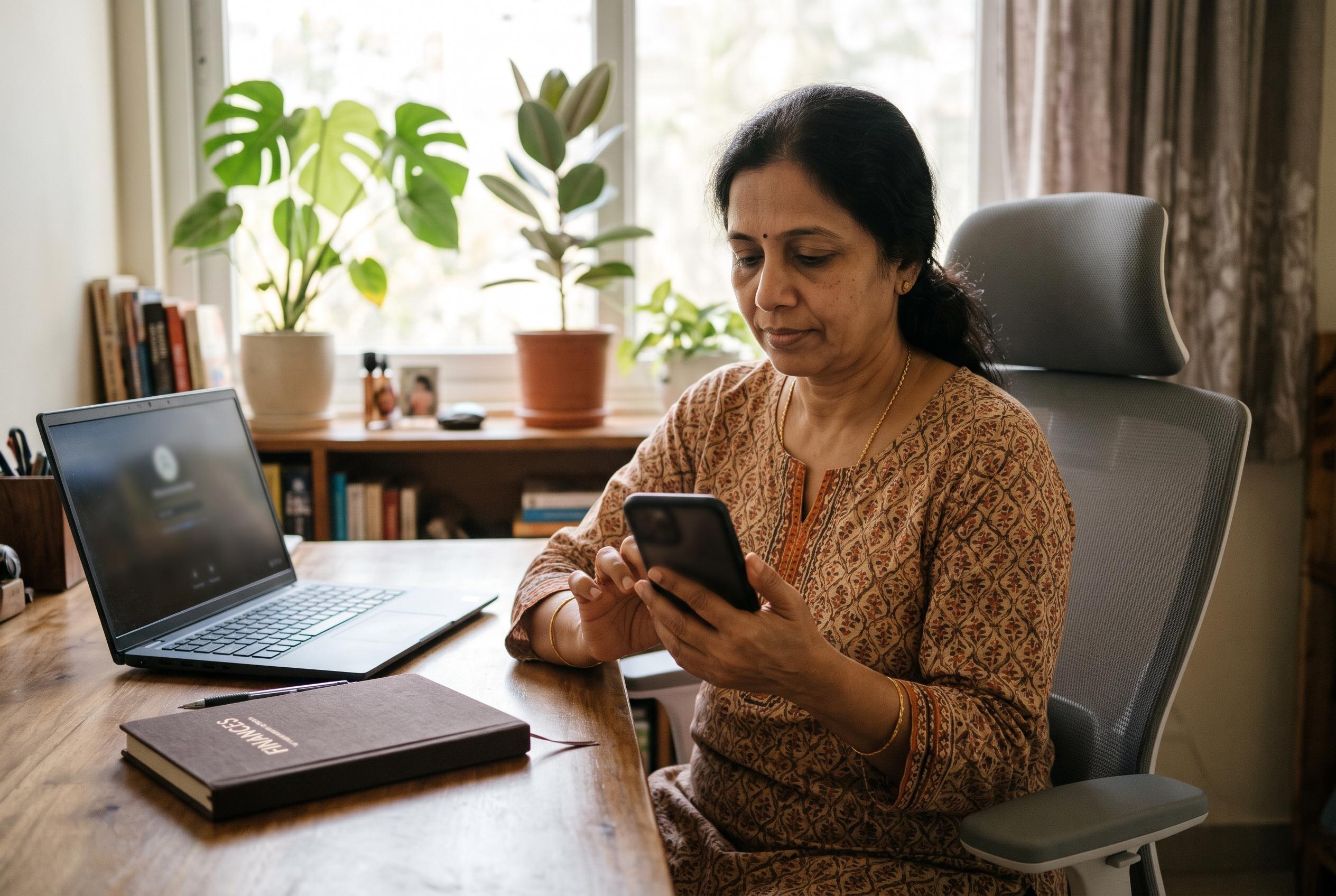

UIDAI says Aadhaar is used to verify identity, not access financial holdings, while users can lock biometrics and use masked Aadhaar details for added protection.
Many Aadhaar holders worry that if their number is shared, their bank balance or investments could also be exposed. But the Unique Identification Authority of India says Aadhaar is used only to confirm identity, not to reveal financial holdings, and that a number alone cannot be used to withdraw money from a bank account.
UIDAI’s public guidance says its database holds only limited enrolment information, such as a person’s name, date of birth, sex, photograph and biometric details including fingerprints and iris scans. Mobile number and email address are optional. According to the authority’s myth-busting material, it does not store bank balances, shares, mutual funds, property details, insurance records or health information.
When a bank or other institution uses Aadhaar for verification, it sends an authentication request to UIDAI. The authority typically responds only on whether the identity check has succeeded. In the case of e-KYC, some basic details such as name, address and photograph may be shared under the rules governing that process, but not financial data. Livemint and Moneycontrol both reported that UIDAI has repeatedly said this system does not give it access to account balances or other sensitive assets.
That distinction matters because Aadhaar is often linked to banking, mobile connections and other services, which can make privacy fears more acute. Security specialists and consumer-finance guides also note that users can add their own safeguards, such as locking biometrics and using a masked Aadhaar when sharing details. Even so, the central point remains the same: UIDAI says Aadhaar is a tool for identity verification, not a window into a person’s finances.
Disclaimer: This article is intended to inform and educate, not to recommend or endorse any financial product, investment or strategy. Please consider your own financial circumstances and seek professional advice where appropriate before making financial decisions.



