

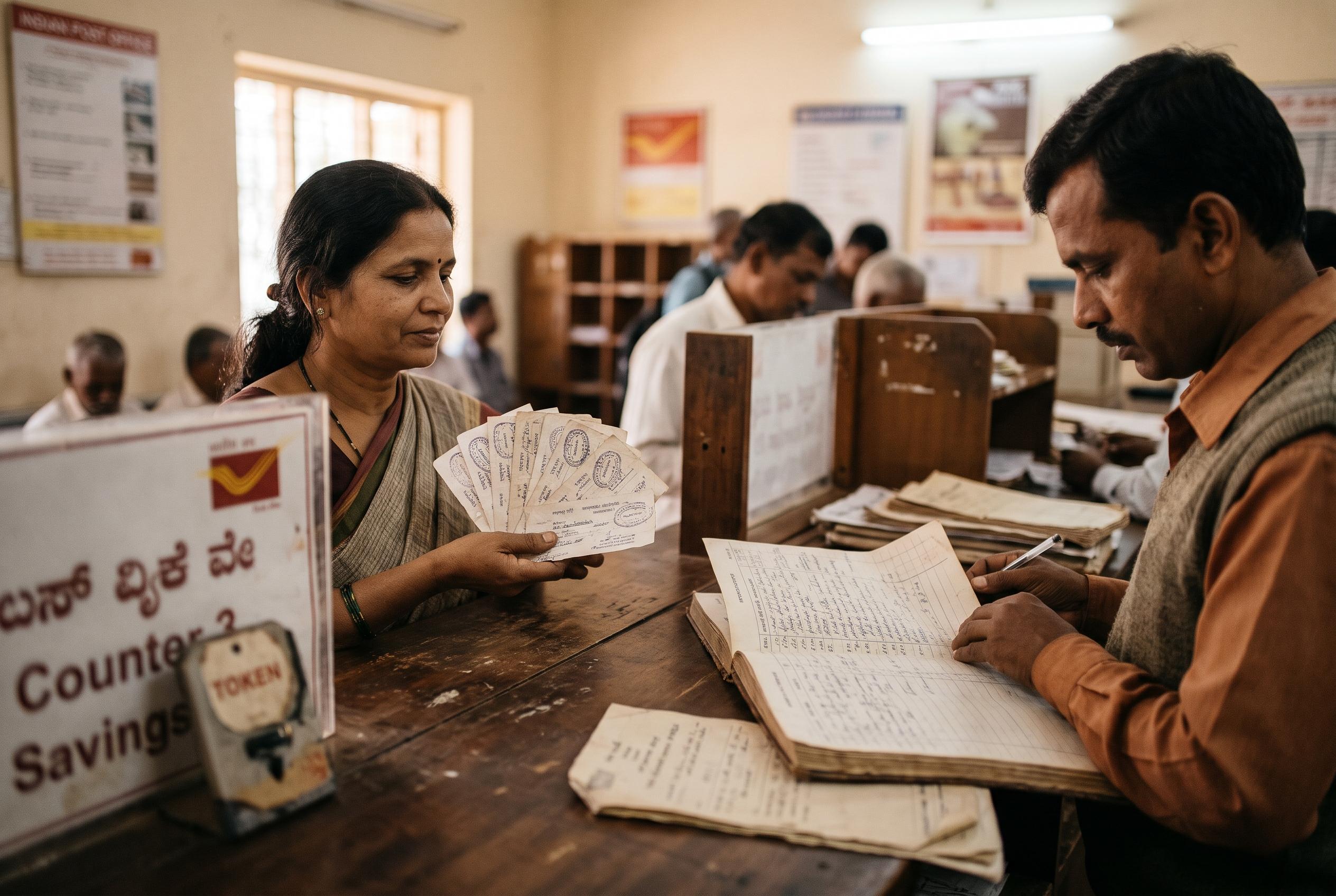

A Gadag consumer commission ordered postal authorities to repay Lalitha Rs 1 lakh with interest, finding that a postmaster’s signed and stamped receipts supported her claim despite missing ledger records.
A consumer commission in Karnataka has ordered postal authorities to pay Lalitha, a 60-year-old woman, after finding that signed and stamped receipts supported her account of handing over money at a post office, despite the department’s lack of matching records.
Lalitha, from Naregal in Gadag district, said she paid Rs 1 lakh on 14 November 2023 for a Senior Citizens’ Savings Scheme account and Rs 500 to open a savings account at Kondikoppa Post Office. She said the branch postmaster gave her two cash receipts but no deposit certificate or passbook followed. The Indian Express reported that she later complained to the postal superintendent, who asked her to provide a prescribed receipt; she then sent a legal notice in March 2026.
The postal department argued that it had no record of the Rs 1 lakh payment and said the forms Lalitha supplied were applications, not the required receipt. The postmaster did not appear in the proceedings. The Gadag District Consumer Disputes Redressal Commission found that the receipts bore the postmaster’s signature and the post office seal, and that the department had not shown them to be false. It concluded that the absence of an official ledger entry alone did not disprove that the money had been received.
The commission said the responsibility to record the payment and issue account documents rested with the official who accepted the money. Its reasoning drew on a Supreme Court decision concerning postal employees’ wrongful conduct: an employer can be held responsible when an employee’s wrongdoing occurs in the course of employment, although merely having provided an opportunity for misconduct is not, by itself, enough to establish liability.
The commission ordered the postal authorities jointly and severally to return Rs 1 lakh, with annual interest of six per cent from 7 November 2024 until payment. It also awarded Rs 10,000 for hardship and mental distress, plus Rs 5,000 towards legal costs, payable within eight weeks.
The Senior Citizens’ Savings Scheme is among the formal savings products offered through India’s post offices. India Post lists both the scheme and Post Office Savings Accounts among its services; the National Savings Institute says people aged 60 and over are eligible to open an SCSS account. Scheme terms and rates may change, so savers should check current official information rather than rely on outdated figures.
For consumers seeking assistance with a grievance, India’s Department of Consumer Affairs says the National Consumer Helpline can be reached on 1915 and also accepts complaints through digital channels. The Indian Express advised depositors to keep signed receipts and account-opening paperwork, and to make written complaints to senior postal officials if promised documents do not arrive.
Disclaimer: This article is intended to inform and educate, not to recommend or endorse any financial product, investment or strategy. Please consider your own financial circumstances and seek professional advice where appropriate before making financial decisions.



