

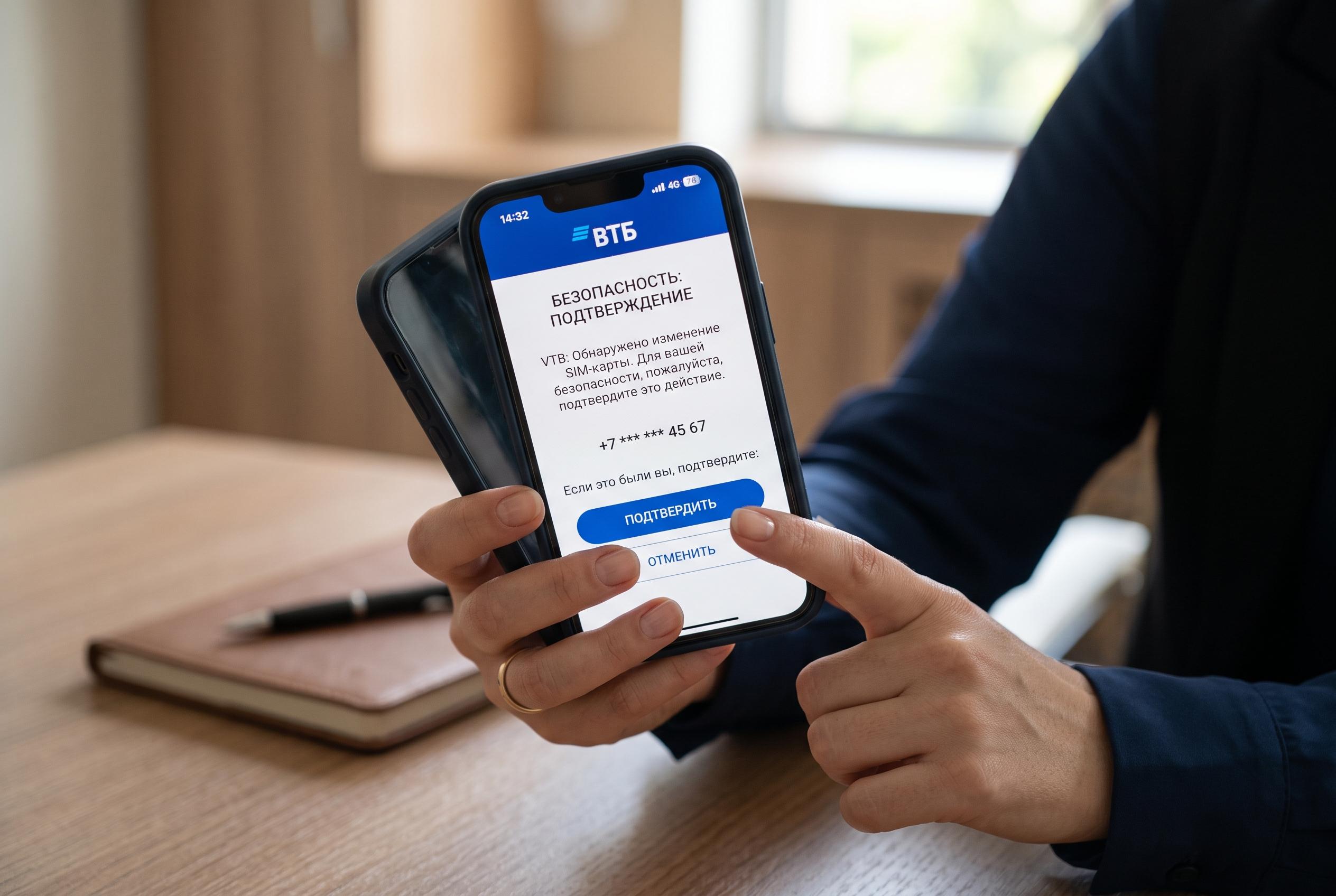

VTB now requires customers to confirm SIM card changes separately to combat rising fraud tactics targeting mobile numbers used for banking and online services.
VTB is now asking customers to separately confirm a change of SIM card or a switch to eSIM, warning that the extra step is meant to protect access to accounts if a phone number has been compromised. The bank’s move reflects a broader fraud problem: criminals increasingly target so-called trusted numbers to intercept messages and impersonate victims, according to VTB’s own consumer-finance guidance.
The concern is straightforward. If a fraudster manages to duplicate a SIM card or take over a mobile number, they can sometimes receive one-time passcodes and reset access to banking, government and messaging services. VTB says those numbers are often tied to the State Services portal, bank accounts, online marketplaces and chat apps, which makes them especially valuable to attackers.
For customers, VTB offers three ways to clear the security check. The quickest is through the bank’s mobile app, where users can open profile settings, find the anti-fraud section and confirm the SIM change there. If the app is unavailable, customers can use a VTB cash machine to reset their online banking password, log in with a temporary one and set a new password, which triggers the verification automatically. Those who prefer an in-person option can visit a branch with a passport, where staff can confirm the new number.
The timing matters because SIM-swap fraud and related phone-number theft have become a persistent tactic for criminals. VTB’s own warning on trusted numbers says fraudsters use stolen mobile access to build trust with victims and then push through financial theft and other scams. In that context, the bank’s message is less about bureaucracy than about forcing a pause at exactly the moment when a stolen number could otherwise unlock a customer’s money.
Disclaimer: This article is intended to inform and educate, not to recommend or endorse any financial product, investment or strategy. Please consider your own financial circumstances and seek professional advice where appropriate before making financial decisions.



