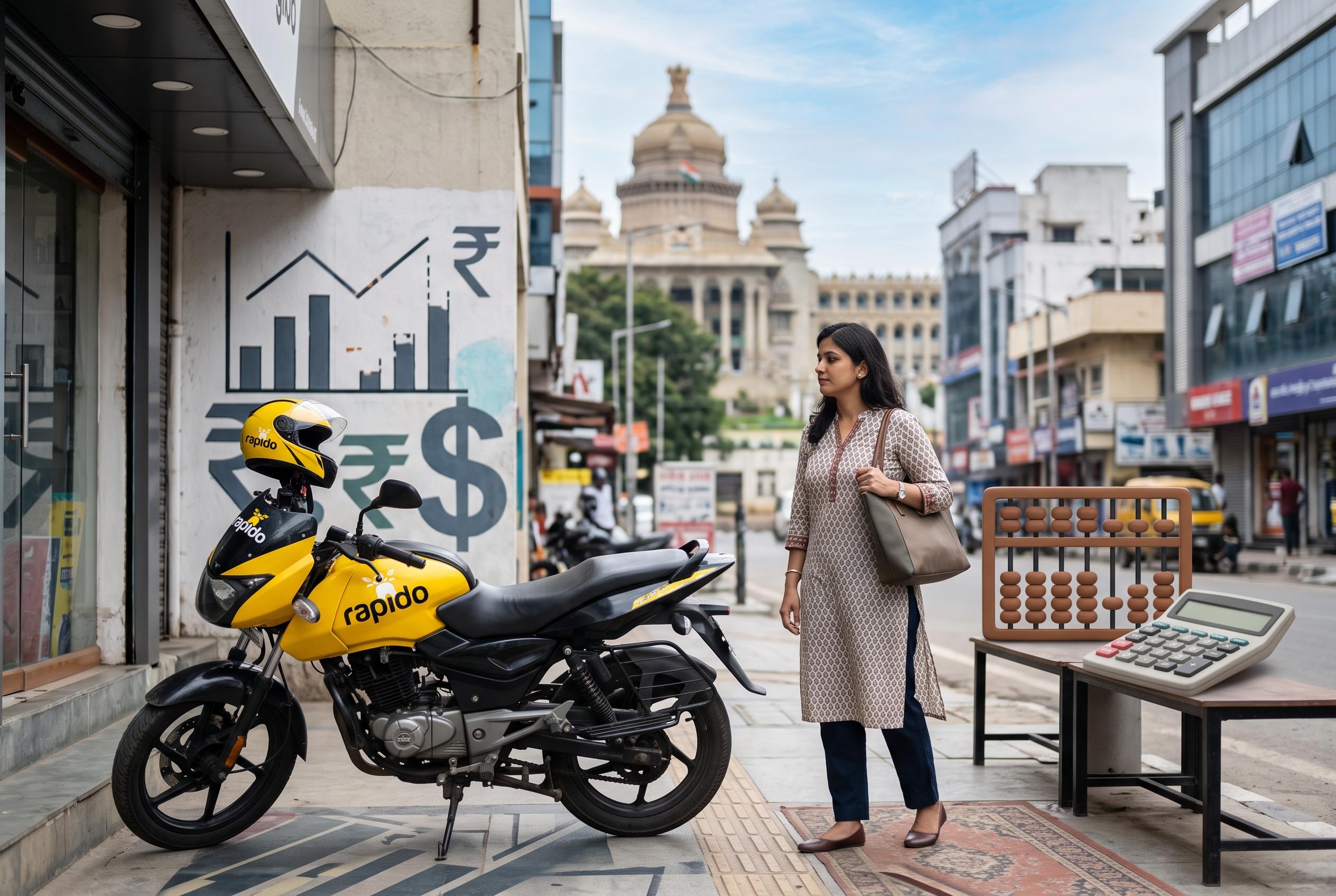

A Bengaluru interior designer’s severe accident after a short Rapido bike ride highlights the limited insurance coverage provided, raising questions about safety and legal compliance in India’s emerging two-wheeler ride-hailing sector.
A Bengaluru interior designer says a short Rapido bike-taxi trip ended in catastrophic injuries, repeated surgery and medical costs that climbed beyond Rs 20 lakh, underscoring the gap between a modest ride-linked insurance benefit and the real expense of treating a serious road accident. Sani Krishna says the crash happened on June 17, when the bike she was riding on tried to overtake a tractor near Bagmane Tech Park, lost balance and left her on the road before the tractor ran over her. She was first taken to a nearby hospital, then transferred to Manipal Hospital and later continued treatment and rehabilitation in Kozhikode. According to her account, Rapido’s response after the accident did not amount to the direct assistance she had expected.
The dispute has brought fresh attention to the small print attached to app-booked bike rides. Rapido’s passenger insurance terms say medical reimbursement is capped at Rs 1 lakh, and only if the hospital stay lasts at least 24 hours. The same policy lists up to Rs 5 lakh for accidental death or permanent disability, while temporary total disability is covered at Rs 16,666.67 a month, subject to a Rs 2 lakh ceiling. Outpatient treatment is limited to Rs 3,000, with a Rs 500 deductible per claim. In practice, that kind of cover can be quickly exhausted by intensive care, multiple procedures and long rehabilitation.
Rapido’s website says passengers can begin a claim through the app or via Acko Insurance, its claims partner. The company also offers an SOS feature and ambulance access during an emergency, but that does not mean it will automatically absorb the full hospital bill. The claims process is separate from the platform’s broader support obligations, which can leave riders dealing with the insurer, the captain, vehicle insurance and, where relevant, police paperwork at the same time. Rapido says cover starts when the passenger boards the bike and ends when the ride closes, subject to a maximum period of 24 hours.
The case also sits against a wider legal and regulatory backdrop. In March, the Competition Commission of India dismissed a complaint alleging that Rapido’s bike taxis were using private motorcycles for commercial passenger transport without proper permits or insurance, saying those issues fall under the Motor Vehicles Act rather than competition law. At the same time, reports on bike-taxi operations in India have noted that legality varies from state to state, with different local authorities taking different views on whether such services may operate. For passengers, the lesson is blunt: low fares can hide a hard limit on protection when something goes badly wrong.
Disclaimer: This article is intended to inform and educate, not to recommend or endorse any financial product, investment or strategy. Please consider your own financial circumstances and seek professional advice where appropriate before making financial decisions.