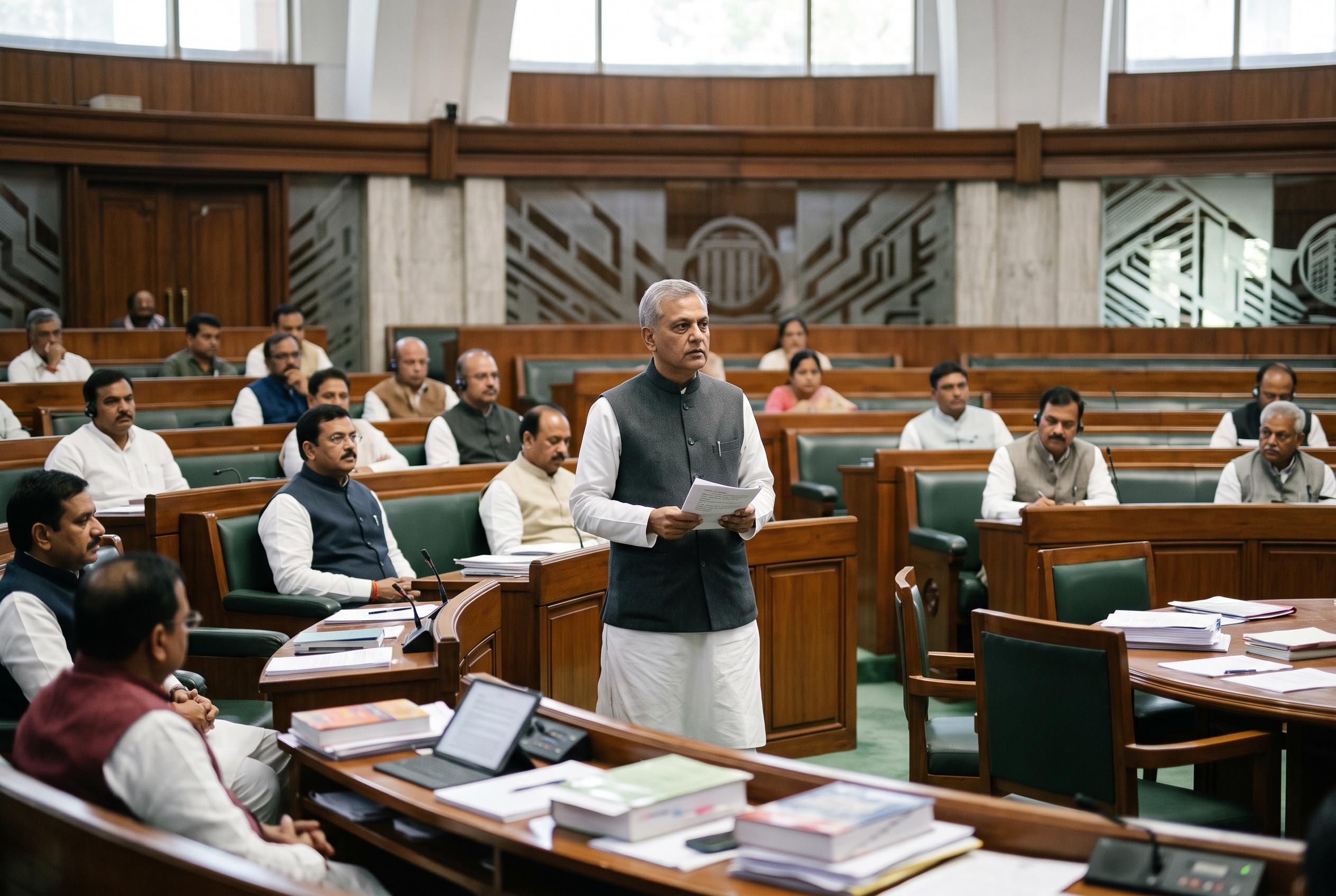

The Rajya Sabha passed legislation updating banking evidence laws and clarifying UPI fee frameworks, sparking controversy and protests during a fractious monsoon session.
Parliament’s monsoon session remained fractious on Monday as the Rajya Sabha passed two bills amid Opposition protests, including legislation that would update banking evidence law for the digital era and another that the government said does not introduce any new charge on UPI payments for consumers. Finance Minister Nirmala Sitharaman told the House that the Taxation and Other Laws (Amendment) Bill, 2026, creates an enabling framework only and does not impose a transaction fee on users of the instant payments system. The House approved the measure by voice vote and sent it back after the Lok Sabha had already passed it last week.
Sitharaman also sought to calm concerns about merchants, saying consumers and small businesses would not be asked to pay Merchant Discount Rate charges on UPI transactions. She said the framework for MDR is still to be finalised and added that the government did not intend to levy such charges on small traders. Her remarks came after CPI(M) MP John Brittas accused the government of moving towards payment fees under pressure from the United States and argued that the step ran counter to Narendra Modi’s claim that India’s digital payments network had been built as a free public good.
The exchange turned heated after Brittas walked out before hearing Sitharaman’s reply, prompting the minister to accuse him of spreading confusion. She criticised communist MPs as unwilling to face facts and said Brittas had shown a lack of courage by leaving the chamber. Earlier, while moving his resolution, Brittas argued that the ordinance and subsequent bill were designed with an eye on foreign capital and said the measure ran against the principle of India.
The Rajya Sabha also passed the Bankers’ Books Evidence Bill, 2026, which will replace the Bankers’ Books Evidence Act of 1891 and align evidence law with modern banking practice. According to the bill, electronic and digital records from banks would be explicitly recognised as admissible and legally enforceable evidence, subject to safeguards. The session was repeatedly disrupted by sloganeering, and the Opposition staged a walkout after raising unrelated issues, including allegations of temple donation theft and the use of pellet guns against protesters during a march to Parliament.
Disclaimer: This article is intended to inform and educate, not to recommend or endorse any financial product, investment or strategy. Please consider your own financial circumstances and seek professional advice where appropriate before making financial decisions.