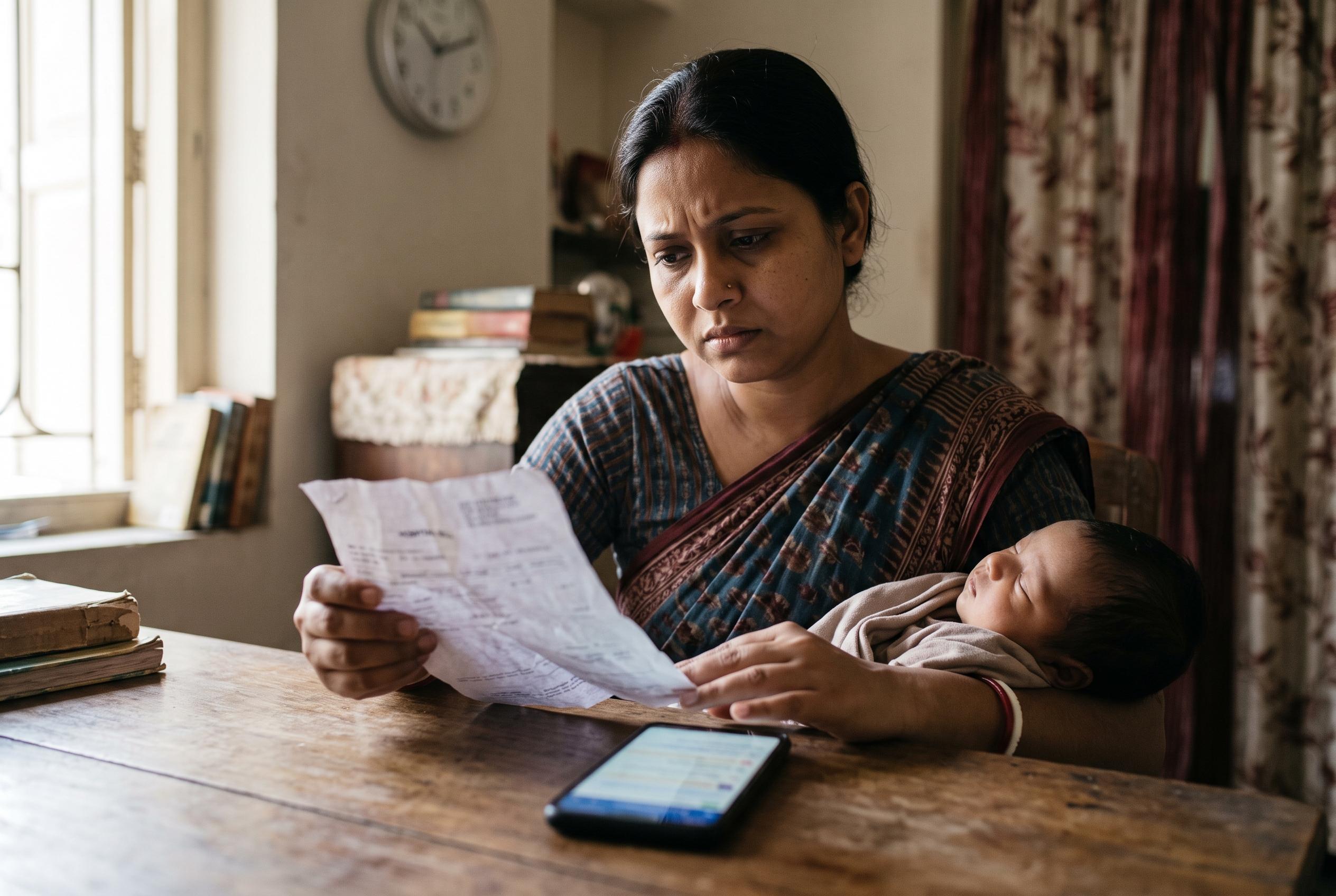

A review of Indian households shows that the final expenses of childbirth often surpass hospital estimates, influenced by insurance coverage, hospital selection, and neonatal care needs, highlighting the complexities faced by parents in managing maternity costs.
For families expecting a baby, the figure on a hospital estimate can be only the start of the bill. Mint Money’s review of several Indian households shows that the final cost of childbirth depends on a mix of insurance cover, hospital choice, room category, medical complications and even how far a family is willing to travel for a doctor they trust. A lower package price does not necessarily mean a lower out-of-pocket expense.
The difference can be stark when insurance is involved. Niranjan Avasthi in Mumbai had half of his ₹1.24 lakh delivery package covered by his employer’s policy, while lawyer S Saddam Singh in Imphal paid his ₹70,000 bill in full because he had no cover. Maheshkrishna AG had insurance support for much of his wife’s delivery in Erode, but Nishant Hospital did not offer cashless treatment, so he paid first and claimed reimbursement later. In his case, the birth of twins by Caesarean section, along with the hospital stay, came to about ₹91,105.
Hospital pricing itself can vary sharply. At Aarogyam Hospital in Mumbai, Sagar Poddar found a general ward package at ₹68,000 and executive accommodation at ₹1.15 lakh. He chose a suite costing ₹1.03 lakh, with an extra bed for a family member, and ended up paying ₹1.39 lakh once medicines, consumables and the child specialist’s fees were added. His baby also spent two days in intensive care, adding ₹16,500 to the total. The experience underlines a point echoed by guides on maternity insurance in India: neonatal intensive care can cost more than the delivery itself, and policyholders need to know whether newborn care is included.
Beyond the package price, the choice of hospital often comes down to medical need and familiarity. Poddar selected a nearby hospital with neonatal intensive care because his wife’s pregnancy suggested the possibility of an early delivery and she had been advised not to travel much. Avasthi and Singh also picked hospitals where their wives’ gynaecologists practised, giving them continuity of care and easier access if complications arose. Across the families, metro hospitals tended to cost more than those in smaller cities, while insurance limits, waiting periods and sub-limits could leave parents with sizeable bills even when they were covered.
Disclaimer: This article is intended to inform and educate, not to recommend or endorse any financial product, investment or strategy. Please consider your own financial circumstances and seek professional advice where appropriate before making financial decisions.