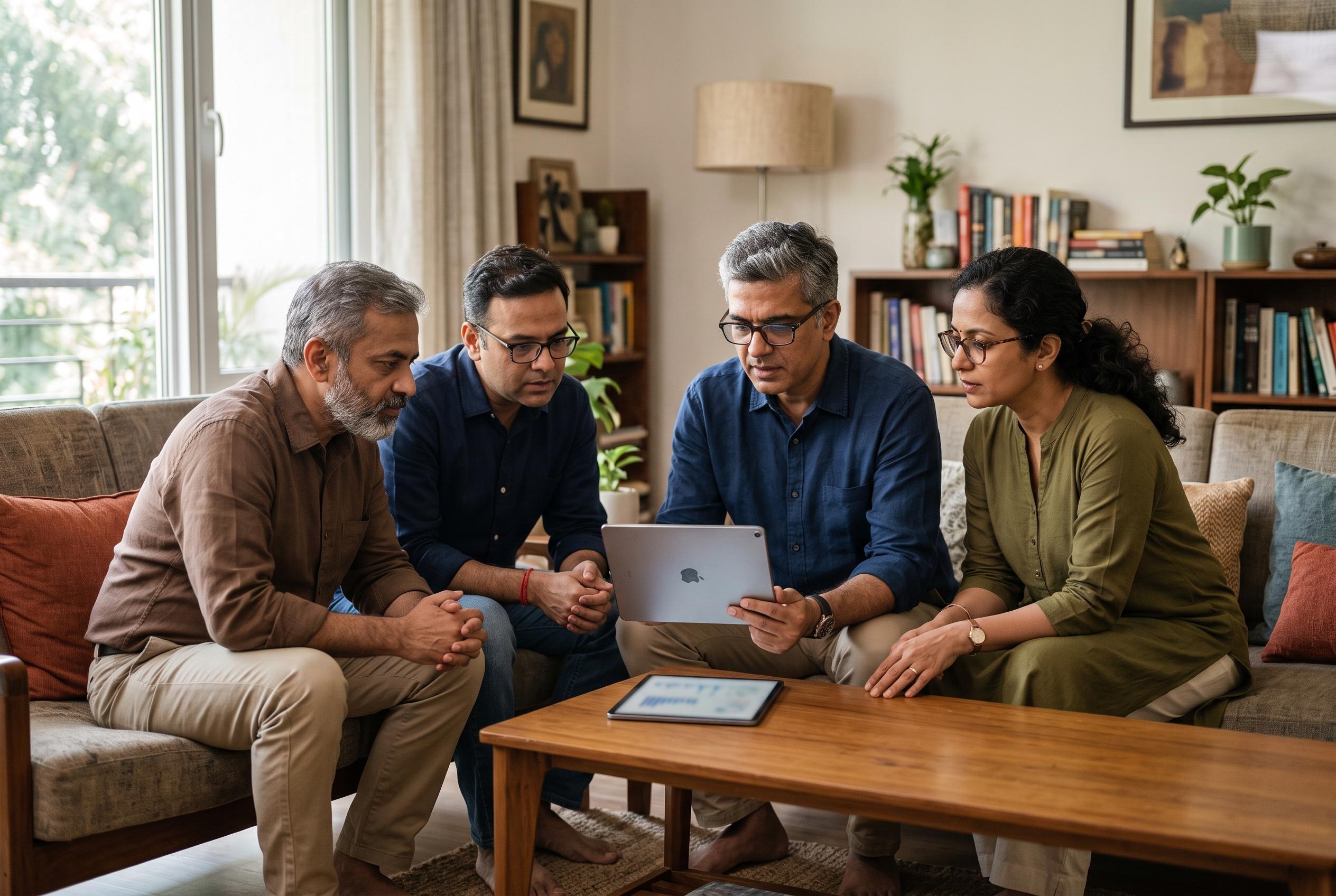

A recent survey indicates a strong desire among India’s urban middle class to retire early, yet many lack confidence in their financial preparedness to do so, highlighting a growing gap between aspiration and reality.
India’s urban middle class is increasingly open to leaving work before the traditional retirement age, but confidence in long-term financial security remains low, according to a new survey from Axis Max Life Insurance.
The company’s India Retirement Index Study, or IRIS 6.0, found that about 70% of urban Indians would prefer to retire before the usual 58-to-60 age range if their finances allow it. Half of those early-retirement aspirants said they would like to reach Financial Independence and Retire Early, or FIRE, before turning 50. The study covered 4,134 households across metro, Tier I and Tier II cities.
The findings point to a clear mismatch between ambition and preparedness. Axis Max Life said 61% of respondents believe they know how much money they would need to preserve their current lifestyle in retirement, but only 11% think their savings would last for life. A further 39% fear their retirement fund would run dry within five years. The company’s earlier IRIS findings also showed that only 29% were confident their corpus would last beyond a decade, underscoring the scale of the gap.
Planning habits were mixed. Half of urban Indians said retirement saving should begin with the first salary, while the average respondent thought planning should start at 31. Among Gen Z, the ideal starting age was even earlier at 29, compared with 31 for millennials and 34 for Gen X and older respondents. Despite that, 62% of Gen Z said they had already begun investing for retirement, below the 70% of millennials and 75% of Gen X and older Indians who said the same.
Sumit Madan, managing director and chief executive of Axis Max Life Insurance, said the survey shows retirement is being redefined as financial freedom rather than simply reaching a particular age. He also pointed to the 82% of Gen X and older respondents who expect to keep working for steady income, suggesting that many Indians still see paid work as part of later life. The study also said health is becoming a more important part of retirement readiness, alongside money and emotional security.
Disclaimer: This article is intended to inform and educate, not to recommend or endorse any financial product, investment or strategy. Please consider your own financial circumstances and seek professional advice where appropriate before making financial decisions.