

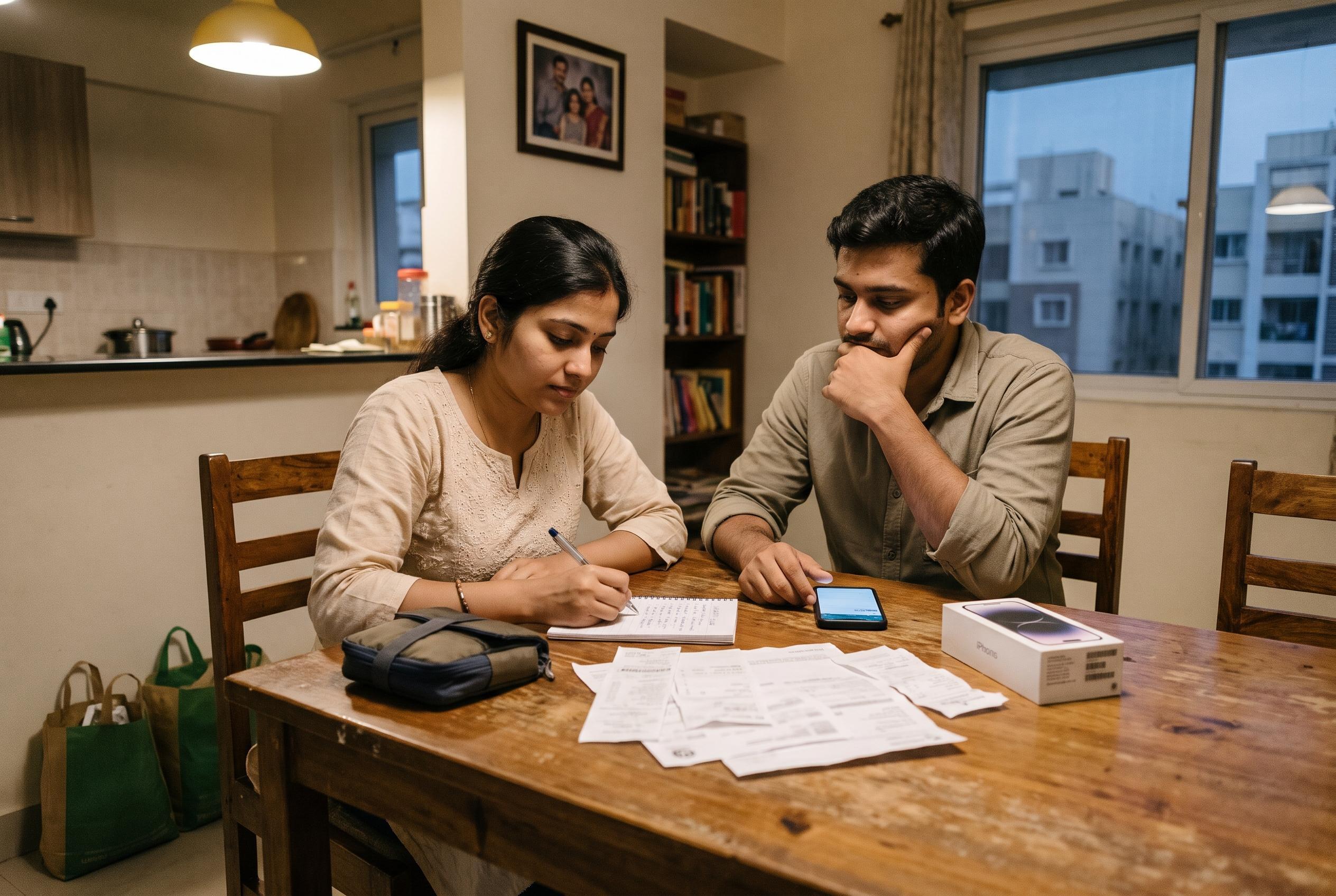

Young and middle-income Indians are borrowing to fund phones, holidays and daily expenses, but debt is growing far faster than incomes and leaving less room for savings and repayments.
Navjot Singh, a 25-year-old restaurant worker in India, thought small loans would make life more comfortable. They helped him buy an iPhone he could not have afforded on a monthly salary of 50,000 rupees, or about $521, and were soon followed by a PlayStation, a television, a training course in wine and spirits, and a trip home. What began as convenient borrowing quickly turned into a burden that consumed almost half his pay packet, forcing him to cut back on meals out, clothes, the gym and even snooker, according to Bloomberg.
His experience captures a wider shift in India’s consumer economy. The Economic Times reported that borrowing has increasingly underpinned spending among younger and middle-income households, even as income growth remains modest in real terms. The result is a growing mismatch between aspirations and earnings: debt is letting people buy now, but it is also leaving them more exposed to repayment pressure, particularly if interest rates rise or wages fail to keep pace.
Research from the Centre for Social and Economic Progress argues that debt is supporting consumption only temporarily, rather than fixing the deeper problem of weak household income growth. It says household borrowing rose 36% in 2025-26, roughly four times faster than disposable income, and that household debt reached 45.8% of GDP in March 2026. Non-housing retail loans made up 58.4% of household borrowing, a sign that more consumers are using credit cards, personal loans and other unsecured products to finance everyday purchases and lifestyle spending.
The Indian Express has separately highlighted growing concern among regulators and analysts about younger borrowers, who are increasingly relying on unsecured credit and buy-now-pay-later products. The paper said delinquencies in small-ticket loans have risen and that regulators are watching whether heavily leveraged consumers can cope if the economy weakens. In a similar vein, CNA reported that some young Indians are turning to digital lending platforms for travel and day-to-day expenses, even as overdue payments and financial anxiety grow. Another Economic Times report said consumers have been using unsecured loans to pay for phones, holidays and household goods, while the Reserve Bank of India has warned about the speed of growth in this part of the market.
Lenders are also seeing demand shift towards assets that can be pledged for quick cash. Fortune India reported that gold-backed borrowing is expanding rapidly as households tap the rising value of jewellery to raise funds, adding another layer to India’s debt story. Together, these trends suggest that credit is helping to fuel consumption, but at a cost: for many households, the ease of borrowing is now beginning to crowd out savings, discretion and financial breathing room.
Disclaimer: This article is intended to inform and educate, not to recommend or endorse any financial product, investment or strategy. Please consider your own financial circumstances and seek professional advice where appropriate before making financial decisions.



