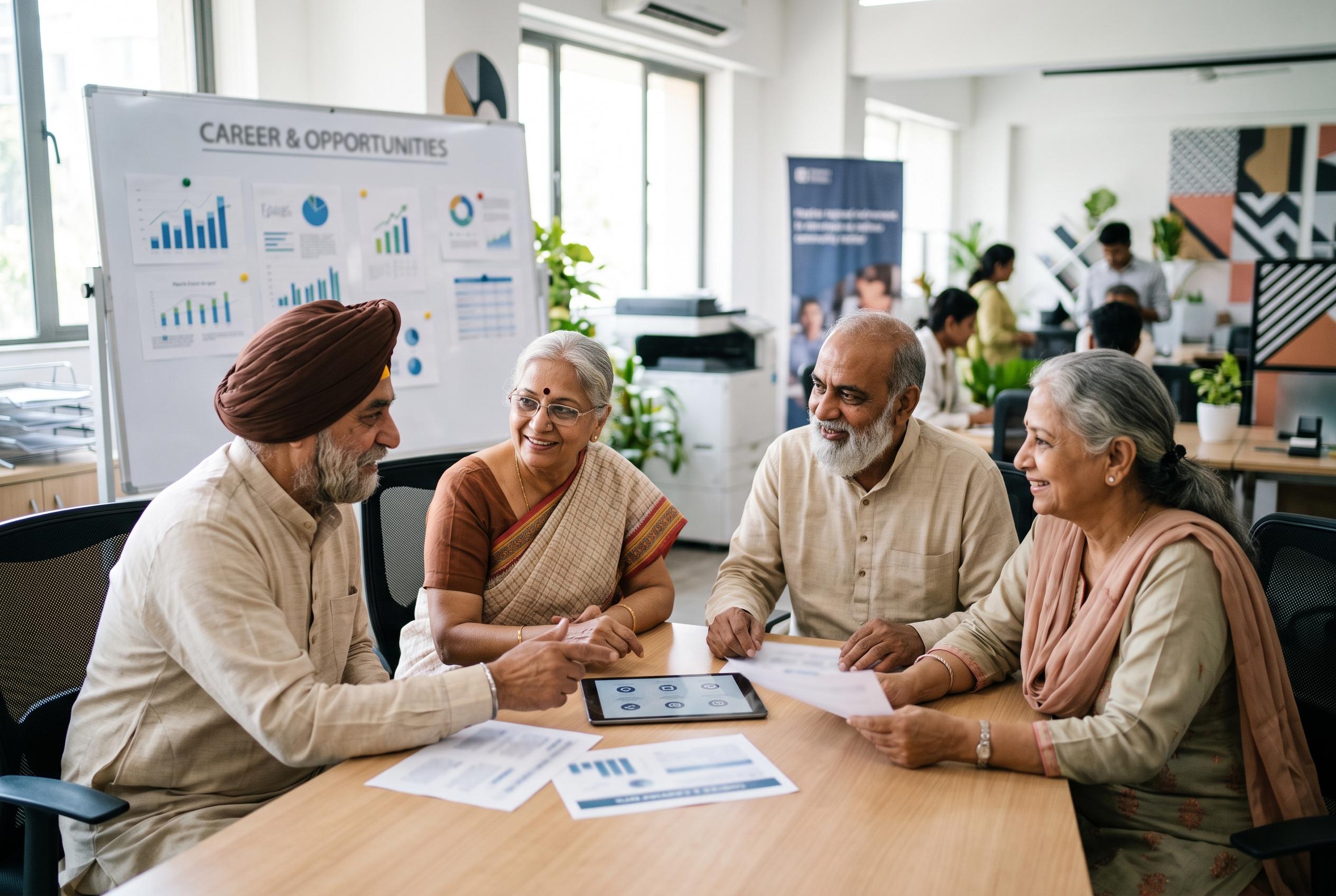

As India’s elderly population surges, more retirees aspire to work for purpose and income, yet obstacles such as tax implications, digital illiteracy, and job availability hinder their efforts, highlighting a evolving landscape in post-retirement employment.
For many Indians, retirement is no longer a clean break from paid work. A growing number of older people are looking for jobs, either to shore up household finances or to stay active and connected, but the choice brings its own complications around tax, health and the reality of the labour market.
The scale of the issue is set to expand sharply. Kuvera said the number of Indians above 60 is expected to rise from 14.9 crore in 2022 to 34.7 crore by 2050. Yet the gap between willingness and opportunity remains wide. An Agewell Foundation survey reported that more than 73% of seniors are open to working after retirement, but only 23.1% are actually in post-retirement work. The same research found that 35.6% of older Indians depend on government pensions and 19% on old-age pensions, underlining the financial pressure many face.
Money is only part of the picture. The survey and related reporting suggest many seniors want work because it offers routine, dignity and a sense of usefulness, not just income. At the same time, barriers are substantial. Agewell cited a lack of opportunities, digital illiteracy and mobility problems as the main obstacles, while the broader labour market still appears thin for older applicants.
Any decision to take up work after retirement also needs a hard look at tax. Kuvera noted that pension income is generally taxable, as are annuity payments, interest and consultancy fees. Gratuity and commuted pension are treated differently depending on employment history and the type of retirement package, and retirees can also choose between the old and new tax regimes. That makes it important to assess whether extra income will simply move a retiree into a higher tax band.
Finding suitable work is another challenge. Kuvera pointed to general job sites such as LinkedIn, Indeed, Naukri and Foundit, alongside niche platforms aimed at older workers and the National Career Service portal. But the employment gap remains obvious: one Agewell finding said there are far more people seeking such roles than formal opportunities available. Even when jobs exist, employers may hesitate over seniority, salary expectations or the need for flexible hours.
For many retirees, then, the question is less whether they can work than whether the work is worth the trade-off. Health, pension rules, tax treatment and the availability of genuinely flexible roles all matter. The most practical answer may be to look for work that preserves energy rather than drains it, and to treat post-retirement employment as a financial and personal choice, not an obligation.
Disclaimer: This article is intended to inform and educate, not to recommend or endorse any financial product, investment or strategy. Please consider your own financial circumstances and seek professional advice where appropriate before making financial decisions.