


The bottler’s profit rose 13.5% and sales volumes jumped 28.7% in the September quarter, but higher packaging costs squeezed margins and weighed on its shares.
Varun Beverages shares slid on Friday even after the PepsiCo bottler reported a sharp rise in profit for the September quarter, as investors focused on margin pressure rather than the headline growth in sales and volumes. The stock fell as much as 5 per cent in intraday trade to ₹393.80 on the National Stock Exchange before recovering some ground, while the broader Nifty 50 was higher. Business Standard reported that the market reaction came despite a strong quarterly update showing faster revenue growth and a surge in case volumes.
According to the company’s results and reports carried by Business Standard and The Economic Times, consolidated net profit for the quarter ended 30 September 2026 rose 13.54 per cent from a year earlier to ₹830.6 crore. Revenue from operations increased 33.3 per cent to ₹6,815.58 crore, while consolidated sales volumes climbed 28.7 per cent to 354.4 million cases. Growth was broad-based, with India volumes up 22.5 per cent and international volumes rising 39.9 per cent. For the first nine months of calendar year 2026, profit rose 15.5 per cent to ₹3,202.3 crore and revenue increased 23.3 per cent to ₹21,814.55 crore.
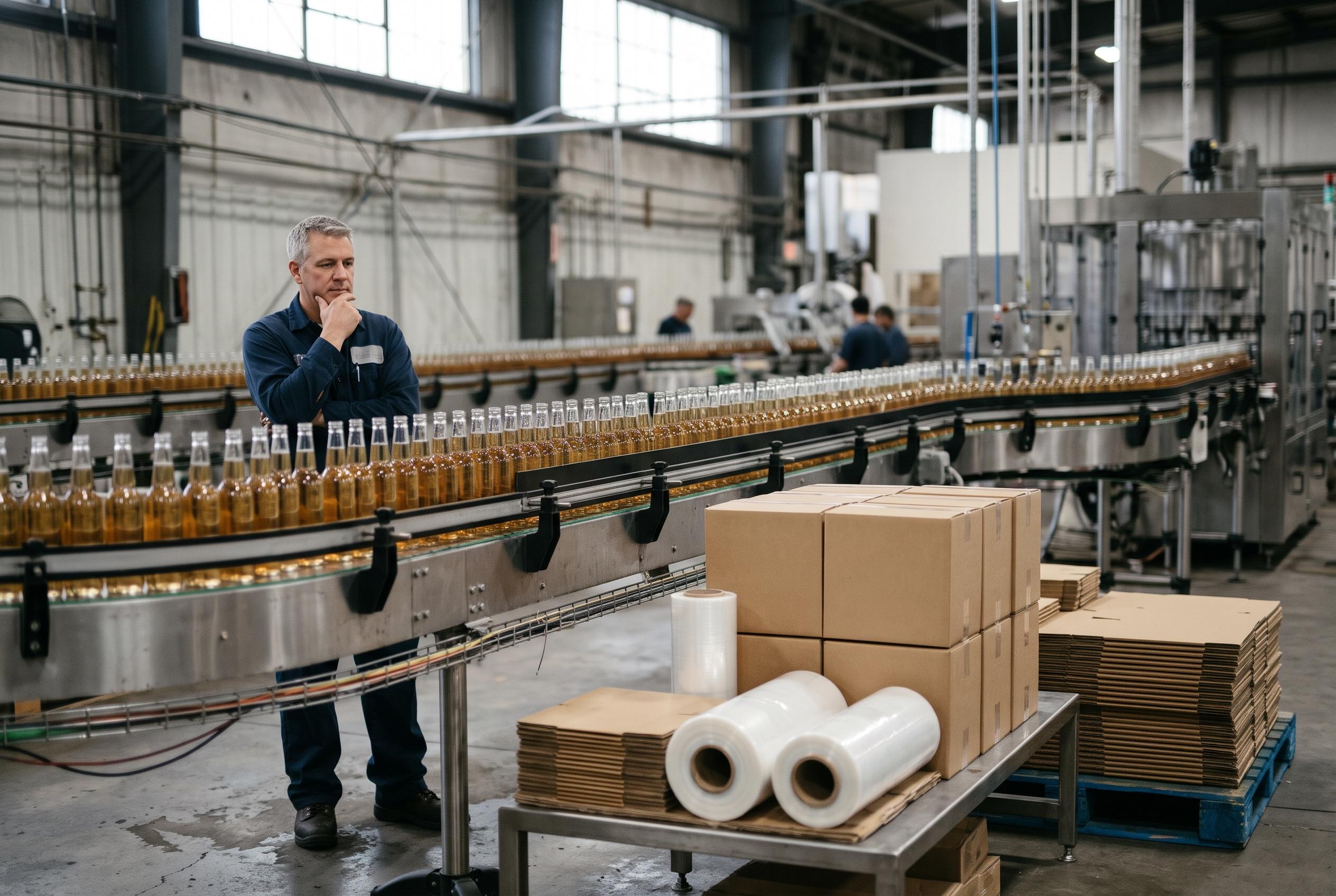
The shares nevertheless came under pressure because profitability did not keep pace with topline growth. Business Standard and The Economic Times said EBITDA margin slipped 140 basis points to 21.6 per cent, while gross margin fell 334 basis points to 53.1 per cent. The company blamed the decline largely on higher packaging costs, including preforms, shrink films, closures and cans, which it said were affected by geopolitical disruption. It also said non-beverage sales such as preforms and caps grew strongly in India, but carried lower margins. Higher sugar costs were mostly offset by a sharp increase in low-sugar and no-sugar products, whose share of Indian volumes rose from 44 per cent to 88 per cent.
Analysts quoted by Business Standard said the stock market appeared to be penalising the softer margin trend, especially after a second straight quarter of compression. The report also said the quarter benefited from the Twizza acquisition, which added to volume growth, and that the board approved a third interim dividend of ₹0.50 per share. That dividend will be paid from 7 November 2026 to shareholders on record as of 5 November 2026. Reuters could not independently verify the market commentary, but the combination of stronger volumes, weaker margins and a premium valuation appears to explain why investors sold the stock despite the earnings beat.
Disclaimer: This article is intended to inform and educate, not to recommend or endorse any financial product, investment or strategy. Please consider your own financial circumstances and seek professional advice where appropriate before making financial decisions.



