

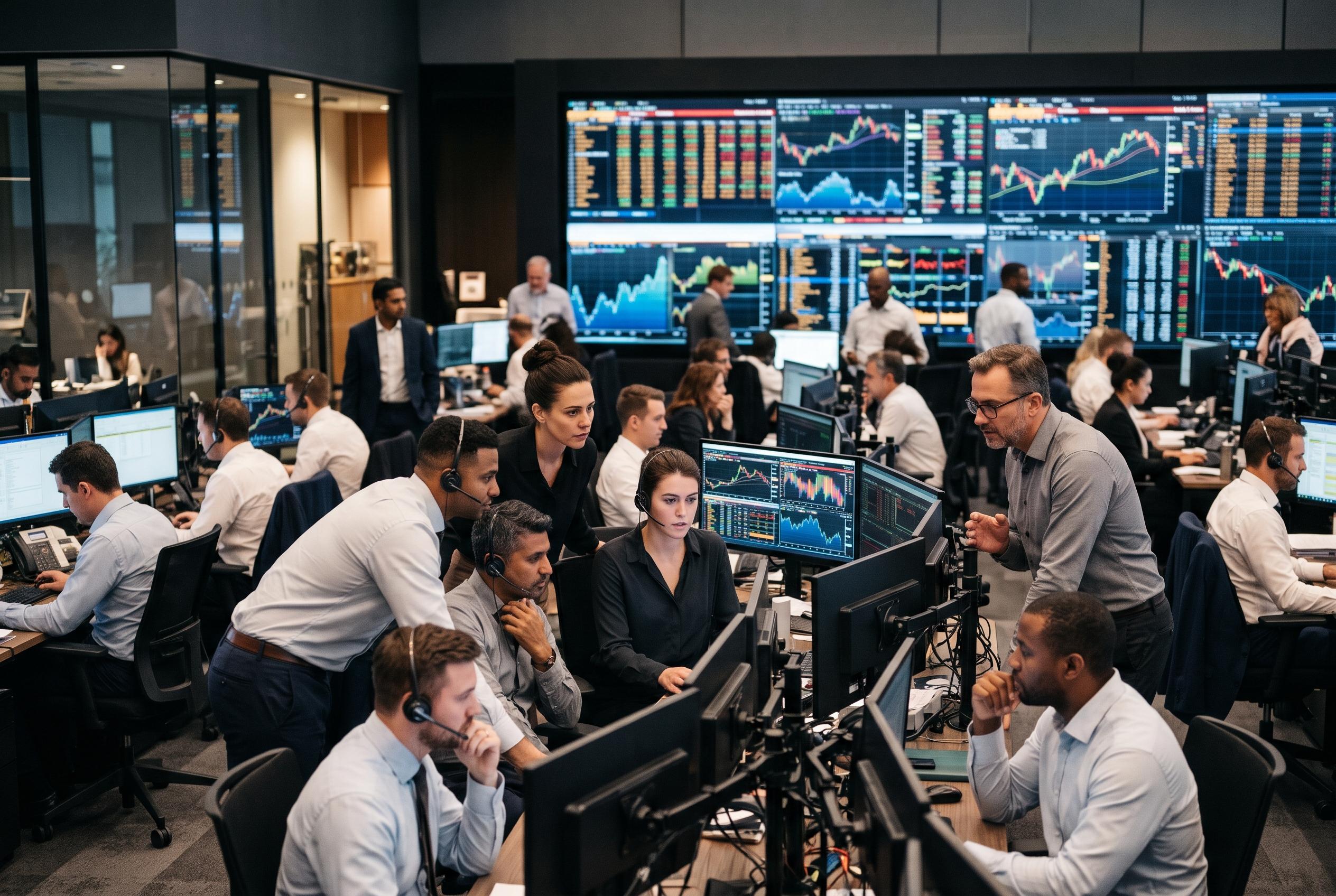

The Nifty is on course for its weakest Samvat year since Narendra Modi became prime minister, with rising volatility, higher crude prices and broader small-cap losses clouding the outlook.
Indian equities are heading into the new Samvat year with investors on edge, as the market’s recent slide has left little confidence that a floor is in place. With fewer than two weeks before Samvat 2083 begins, the mood remains fragile, volatility has risen and traders are still waiting for a clear sign that the sell-off has run its course.
By the Hindu financial calendar used by many Indian investors, Samvat 2082 is now on track to be the weakest year since Narendra Modi became prime minister in 2014. The Nifty has fallen about 13% so far in the current Samvat period, far worse than the previous low point in Samvat 2078, when the benchmark declined 1.4% as global central banks tightened policy aggressively, inflation surged and markets absorbed the shock of Russia’s invasion of Ukraine.
That loss stands in sharp contrast to the gains seen in earlier years of the past decade. Samvat 2080 delivered a return of 24.6%, while Samvat 2077 produced a 40.2% surge as post-pandemic growth, abundant global liquidity and strong risk appetite lifted equities. Over the broader stretch from Samvat 2071 to 2081, the market returned an average of 12%, underscoring how unusual the present downturn has been.
Anand James, chief market strategist at Geojit Financial Services, told the publication that the current phase looks unlike a typical pre-Samvat reset because the market has not shown the usual signs of stabilisation. He said the Nifty has drifted back to levels last seen in May 2026, while the India VIX, a closely watched measure of expected volatility, has climbed above 30, pointing to heightened uncertainty among traders.
James said the weakness runs deeper than the benchmark suggests, because a handful of large stocks, especially in information technology and public sector banks, have helped mask broader damage. Small-cap shares have fallen much more sharply than large-cap names, a sign that weakness has spread across the market and that investors are struggling to find new catalysts.
The cautious tone has been reinforced by higher crude prices, which have moved towards $120 a barrel, alongside inflation worries, geopolitical tensions and signs that liquidity is becoming less supportive. Some market participants expect cash raised in recent initial public offerings eventually to find its way back into listed equities, but that is unlikely to be enough on its own to reverse sentiment.
Dinshaw Irani, managing director and chief executive of Helios Capital Asset Management, said higher borrowing costs are pushing investors to look for growth rather than refuge. He argued that money is unlikely to flow into markets simply because they appear inexpensive; instead, it will favour businesses that can still expand earnings despite the volatility.
Even so, the longer-term story has not broken down, according to Irani. He said India’s structural growth drivers remain intact and that investors should look past short-term turbulence in favour of companies with durable earnings power. For now, though, the market appears to be entering Samvat 2083 with caution rather than conviction, and with little evidence yet that the current correction has fully played out.
Disclaimer: This article is intended to inform and educate, not to recommend or endorse any financial product, investment or strategy. Please consider your own financial circumstances and seek professional advice where appropriate before making financial decisions.



