

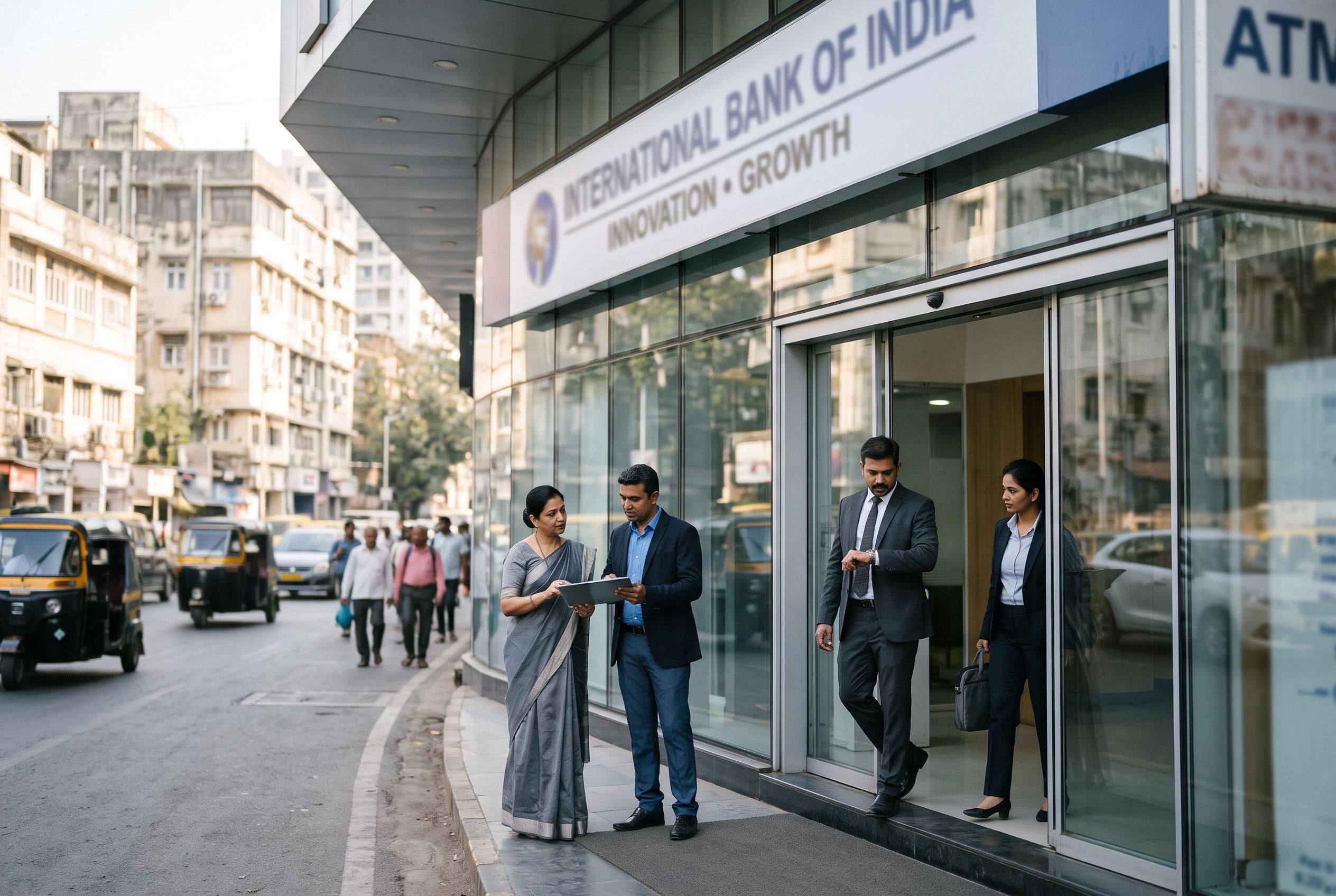

The ₹52,878 crore sale caps IDBI Bank’s recovery from a state-backed lender crippled by bad loans, while testing India’s more relaxed approach to foreign ownership of banks.
IDBI Bank’s long journey from troubled state lender to privatised bank has become a marker of how India’s banking policy has shifted over the past decade, from caution about foreign ownership to a far more flexible stance. According to Business Standard, the government’s approval of Fairfax Financial Holdings as the strategic buyer caps a process that began with the bank’s painful clean-up and ended with one of the largest foreign investments in India’s financial sector.
The sale of a 60.72 per cent stake , 30.48 per cent from the government and 30.24 per cent from Life Insurance Corporation of India , is valued at ₹52,878 crore. Business Standard said the deal is expected to close by March 2027, once the remaining approvals are secured. The newspaper added that the transaction will be the biggest foreign direct investment in India’s financial services sector to date.
Fairfax is not stopping at banking. Livemint reported that the group intends to fold its Indian financial holdings, including Go Digit General Insurance and IIFL Capital Services, into a wider platform built around IDBI Bank. That would create a more diversified financial group spanning lending, insurance, investment banking and wealth management, although the structure still depends on regulatory clearance. The Financial Express likewise described the deal as a major milestone in the government’s divestment programme.
One unresolved issue is Fairfax’s existing 40 per cent stake in CSB Bank. Business Standard reported that the Reserve Bank of India does not permit one entity to own and operate two domestic commercial banks at the same time, leaving Fairfax with a two-year window either to combine CSB with IDBI Bank or to exit one of the holdings. The article said the different technology systems used by the two banks would make any integration complex.
That complication underlines how far the regulatory environment has evolved. Business Standard pointed to earlier episodes in which foreign control of an Indian bank would have been unthinkable. In the early 2000s, HSBC was forced to pare back its holding in UTI Bank, now Axis Bank, under tighter ownership rules. A turning point came in 2016, when the RBI allowed Fairfax to take control of Catholic Syrian Bank, later renamed CSB Bank, marking the first time a foreign investor had been allowed to control an Indian lender.
The IDBI sale also reflects a dramatic turnaround in the bank itself. The RBI placed IDBI under prompt corrective action in May 2017 because of heavy bad loans and weak profitability, restricting lending, expansion and recruitment. Business Standard said gross non-performing assets reached 31.78 per cent in September 2018, while the bank endured 13 straight quarters of losses before returning to profit in the March 2020 quarter.
The rescue came through repeated capital support, including government funds and ₹21,624 crore from LIC, which took a controlling stake in 2019. Since then, the bank has stabilised sharply. Business Standard reported that by the September 2026 quarter, gross bad loans had fallen to 2.12 per cent and net bad loans to 0.17 per cent, while net profit had climbed to ₹2,205 crore for the quarter. Retail lending now accounts for nearly 70 per cent of its ₹2.72 trillion loan book, and its capital adequacy ratio of 27.1 per cent gives it room to grow without fresh equity.
For the government, the sale delivers both cash and symbolism. Business Standard said the Centre will receive about ₹26,543 crore from its own stake sale and will still retain 15 per cent in the bank for the time being. More broadly, the transaction suggests that India is now more willing to use foreign capital, even in core financial institutions, as a tool for recapitalisation, governance improvement and sector consolidation. For IDBI Bank, once burdened by record losses and bad loans, the sale closes a difficult chapter and opens another.
Disclaimer: This article is intended to inform and educate, not to recommend or endorse any financial product, investment or strategy. Please consider your own financial circumstances and seek professional advice where appropriate before making financial decisions.



