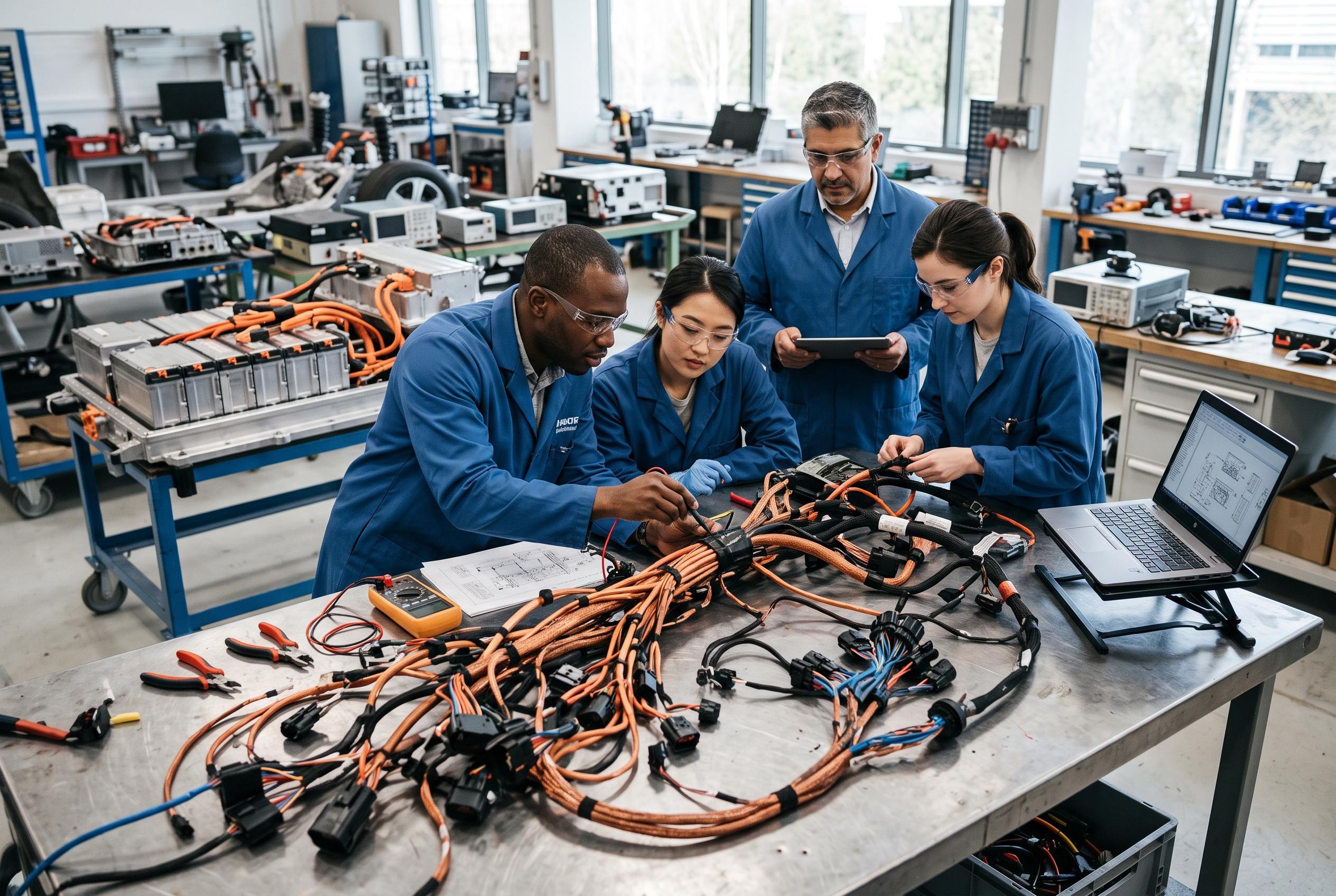

As vehicle electronics and battery systems expand, Dhoot Transmission leads with faster revenue growth and stronger EV focus, reshaping the wiring harness industry landscape.
Wiring harnesses are no longer just bundles of cable hidden inside vehicles. As cars, two-wheelers and three-wheelers add more sensors, electronics and battery systems, the value of wiring content is rising, and that is reshaping the case for Dhoot Transmission and Motherson Sumi Wiring India.
Dhoot appears to have the sharper growth profile for now. Trade Brains’ analysis of the two companies said Dhoot’s revenue rose 49.7% year on year in the latest quarter, while EBITDA climbed 29% and profit after tax increased 37.8%. Independent results analyses from Kotak Neo and Cofacto broadly backed that picture, putting revenue at about ₹1,460 crore and net profit at roughly ₹133 crore.
The company’s momentum is being driven by electrification. StockWatch reported that Dhoot’s EV-related supplies rose about 80% from a year earlier and made up 27% of revenue in the quarter, up from 24% in the prior year. The business is also expanding beyond harnesses into battery packs, sensors, controllers and other electrical products, which gives it more exposure to the content shift inside vehicles.
Motherson Sumi Wiring, by contrast, is winning on scale. According to its quarterly updates, revenue rose about 37% to ₹3,407 crore, helped by new customer programmes and capacity additions. But profitability lagged behind, with Cofacto and other market reports noting that EBITDA margin fell to 7.58% and PAT rose only modestly, as higher copper costs and labour expenses weighed on earnings.
That gap matters because the two companies are being rewarded for different strengths. Dhoot’s reported margin remained far stronger, around 15.1%, and Trade Brains said its FY26 return on equity was 16.3%. Motherson’s business remains deeply embedded with major original equipment manufacturers, giving it scale and integration advantages, but its near-term earnings conversion has been weaker.
The broader industry backdrop still favours both. Trade Brains said Dhoot’s own presentation points to Indian two-wheeler wiring-harness demand growing at 14% to 16% a year through FY31, faster than vehicle output, while three-wheelers are expected to grow 7% to 9%. That outlook reflects a simple reality: safety systems, electrification and connectivity are increasing the amount of wiring in every vehicle.
For investors, the choice is less about whether the market is growing and more about which company can turn that growth into lasting returns. Dhoot looks like the more focused electrification play, with faster revenue growth and richer EV exposure. Motherson offers the larger, more entrenched franchise. The market, unsurprisingly, is pricing them differently: Trade Brains said Dhoot trades at a far higher earnings multiple than Motherson, reflecting stronger growth expectations.
Disclaimer: This article is intended to inform and educate, not to recommend or endorse any financial product, investment or strategy. Please consider your own financial circumstances and seek professional advice where appropriate before making financial decisions.