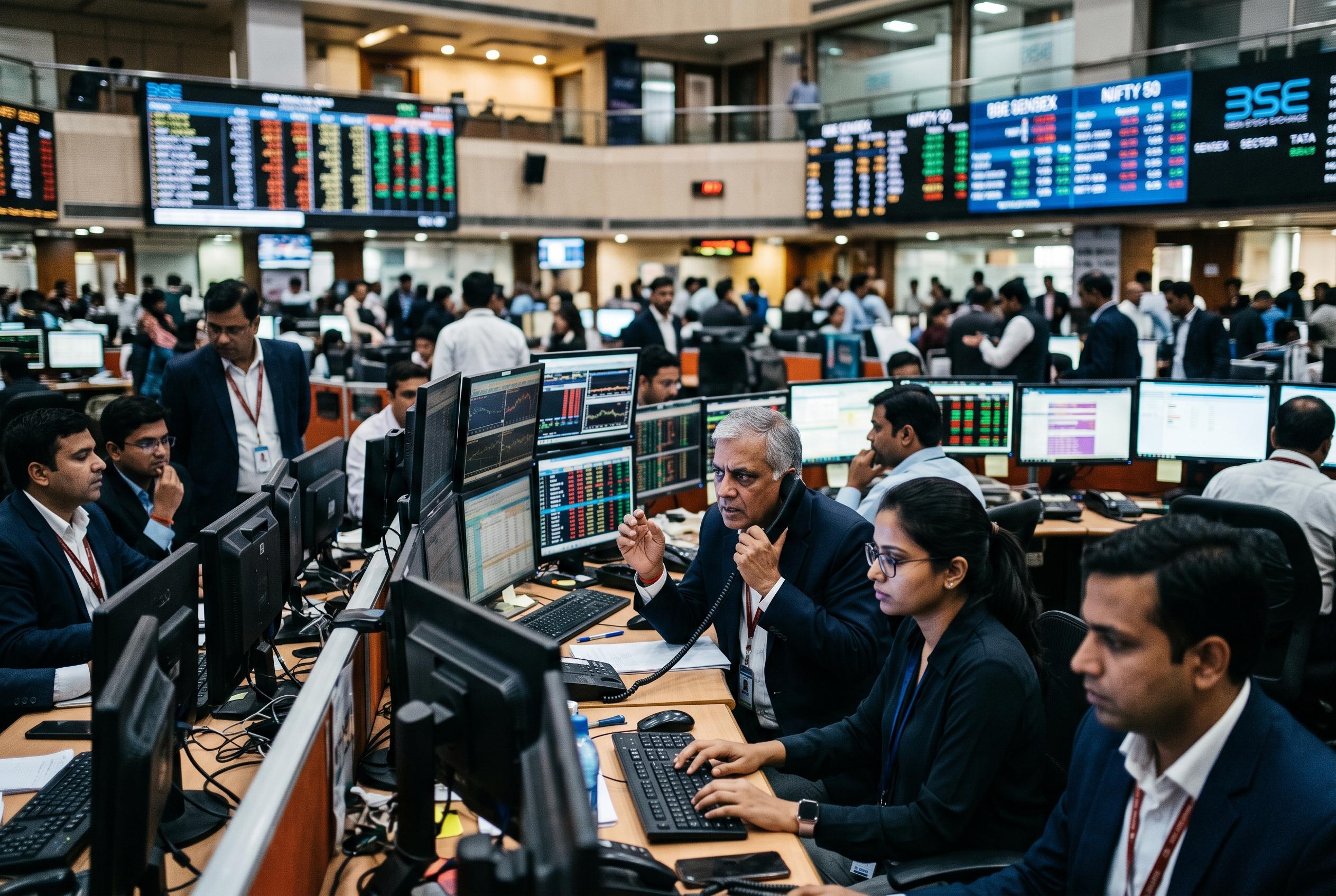

BNP Paribas emerged as the primary conduit for a historic $4.2 billion in MSCI-related trading during India’s first major index rebalancing via the new closing auction mechanism, highlighting both operational success and ongoing market volatility.
BNP Paribas emerged as the main conduit for one of the biggest bursts of end-of-day trading yet seen in India’s equities market, after the National Stock Exchange’s new closing auction absorbed roughly $4.2 billion of MSCI-related orders on 31 August 2026. People familiar with the activity said the French bank handled about Rs180 billion of that flow, largely for overseas institutional clients, including Millennium Management, giving it a larger share of the auction than its Wall Street rivals on a day that became the first real proving ground for the new mechanism.
The surge was set in motion weeks earlier. MSCI said on 5 August that the results of its August 2026 index review would be announced on 12 August and that all changes would take effect at the close of trading on 31 August. That timetable matters because index funds and other passive investors typically leave their buying and selling until the final minutes, so that their portfolios match the benchmark as closely as possible when the new composition takes effect. Monday was also the first index rebalancing day since India introduced its Closing Auction Session at the start of August.
By the exchange’s own figures, the session was extraordinary. NSE said turnover in the closing auction reached Rs39,718 crore, with more than 98,000 unique investors taking part and the platform capturing 99.9% of the market for the session. Reports differed slightly on how far that eclipsed normal activity: Reuters said turnover was nearly 40 times the recent average and equal to 21% of cash-market volume, while Times of India and Moneycontrol put the share at 22%. Business Standard, using the period since the auction’s 3 August debut as its comparison, said the window handled 33 times the daily average, while NDTV Profit compared it with the previous trading session and said it was about 42 times larger.
The exchange has presented that burst of volume as an endorsement of the model. In a statement carried by Business Standard, NSE said: “The CAS turnover recorded on the rebalancing day demonstrates that index funds and passive investors executed their rebalancing trades through the CAS wholeheartedly, reflecting their trust in CAS as the mechanism for fair and transparent closing price discovery.” Sriram Krishnan, the exchange’s chief business development officer, told NDTV Profit that “The successful completion of the first month of the Closing Auction Session marks an important milestone for the Indian capital markets, and the confidence shown by the market on the first index rebalancing day after CAS went live is a strong endorsement of the mechanism.” Over that first month, the exchange said, cumulative turnover in the auction reached about Rs63,000 crore and its share stood at 98.2%.
Yet the record turnover did not eliminate turbulence. Business Standard reported that about 60 stocks came out of the auction at their 3% price limits, underlining how thin liquidity can still distort prices even when turnover is heavy. Eternal, Adani Enterprises and Reliance Industries were among the names cited as showing pronounced moves around the close. Moneycontrol also said stocks that hit their bands in the final minutes showed that the sharp swings still need watching rather than assuming the new system has solved the problem.
That tension – between operational success and unsettled price action – runs through much of the early judgement on the new auction. Kamlesh Shroff of ANMI told Business Standard: “The first MSCI rebalancing through India’s CAS was executed successfully, but the price action was quite frenetic.” Reuters, in its report carried by Business Recorder, cast the day as the first major stress test for a roughly 20-minute closing auction designed to set the official end-of-day price by matching buy and sell orders. It also noted that comparable systems are already used in China, Taiwan, Hong Kong and South Korea, suggesting India is moving towards a structure that is more familiar to large international investors.
For foreign funds, that alignment is important. A deeper closing auction can make it easier to move large baskets of shares at a single reference price, which is especially valuable on MSCI review days when global money managers have to adjust holdings in step with benchmark changes. The auction on 31 August showed that India can now absorb very large benchmark-linked flows in one concentrated window; it also showed that the distribution of those trades can hand a sizeable advantage to banks with strong relationships among hedge funds and long-only institutions.
The larger question is what happens when the calendar is quieter. A rebalance day backed by MSCI’s timetable and heavy passive flows was always likely to produce a headline number. The harder test is whether the exchange can keep drawing liquidity into the closing auction on ordinary sessions and reduce the sudden jumps seen in individual shares. For now, India’s new closing mechanism has passed its first scale test, but not yet the more delicate one of convincing the market that depth and orderly price discovery will arrive together.
Disclaimer: This article is intended to inform and educate, not to recommend or endorse any financial product, investment or strategy. Please consider your own financial circumstances and seek professional advice where appropriate before making financial decisions.