

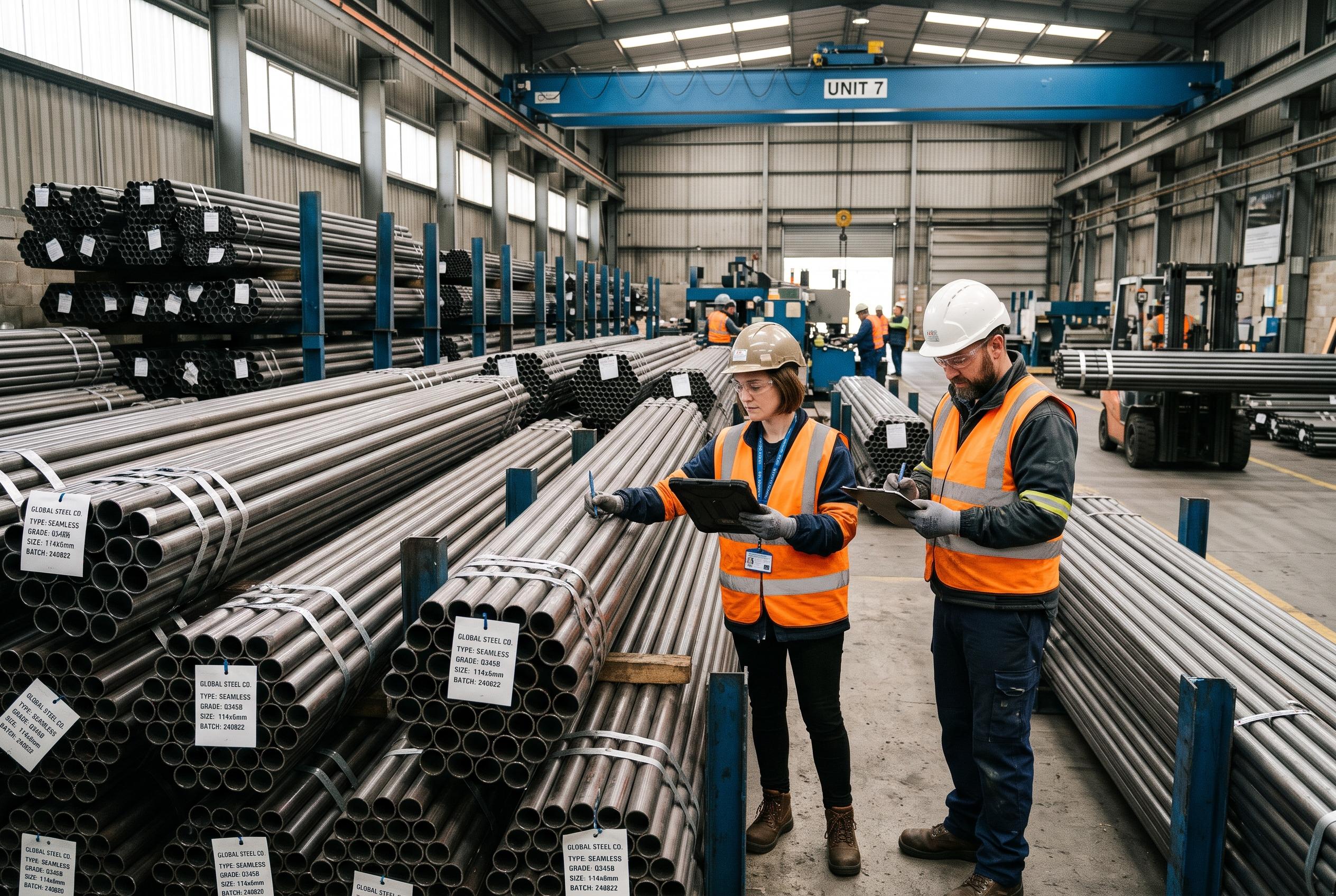

APL Apollo Tubes posted record second-quarter volume, profit and operating earnings as branded and value-added products offset UAE disruption and raw material volatility.
APL Apollo Tubes reported its strongest quarter to date on October 26, with sales volume reaching a record 960,000 tonnes and profit and operating earnings also hitting new highs. The Indian structural steel maker said the result was helped by a richer mix of branded and value-added products, which lifted realisations and pushed EBITDA to about ₹6,000 a tonne. Management described that margin level as sustainable, even as the business faced volatile raw material prices and continuing disruption in the UAE.
The company’s second-quarter performance marked a sharp recovery from the weaker start to the financial year. According to Livemint, APL Apollo’s first-half volume growth was only about 4%, far below the 15% growth target previously signalled for FY27, after a 6% year-on-year decline in volumes in the first quarter. In the latest update, management did not commit to an overall full-year volume target, citing uncertainty in Dubai and tight steel availability, but it said the 15% growth ambition remains intact for the profitable APL Apollo brand and roofing products.
The business has continued to lean on those higher-quality product lines. Management said branded products and roofing sheets now account for roughly 92% to 93% of total volume, with light structures making up a larger share of the mix than before. That shift helped support profitability, although gross profit per tonne fell by around ₹500 sequentially because light structures carry lower realisations. Even so, the company said it remains confident that the current EBITDA-per-tonne run-rate is backed by pricing discipline, operating leverage and a more value-added mix than in earlier cycles.
Balance-sheet strength remains another part of the story. APL Apollo said working capital days stayed at zero and cash on the books rose 15% to ₹16 billion as of September 2026. Management also expects free cash flow for FY27 to exceed the roughly ₹13 billion generated in FY26, helped by lighter capital expenditure in the second half and no further dividend outflows. The company is pressing ahead with an expansion plan that it says will lift capacity to 7 million tonnes through greenfield and brownfield projects, plus another 1 million tonnes from debottlenecking over the next two years, while trying to limit any dilution to fixed costs and margins.
Disclaimer: This article is intended to inform and educate, not to recommend or endorse any financial product, investment or strategy. Please consider your own financial circumstances and seek professional advice where appropriate before making financial decisions.



