

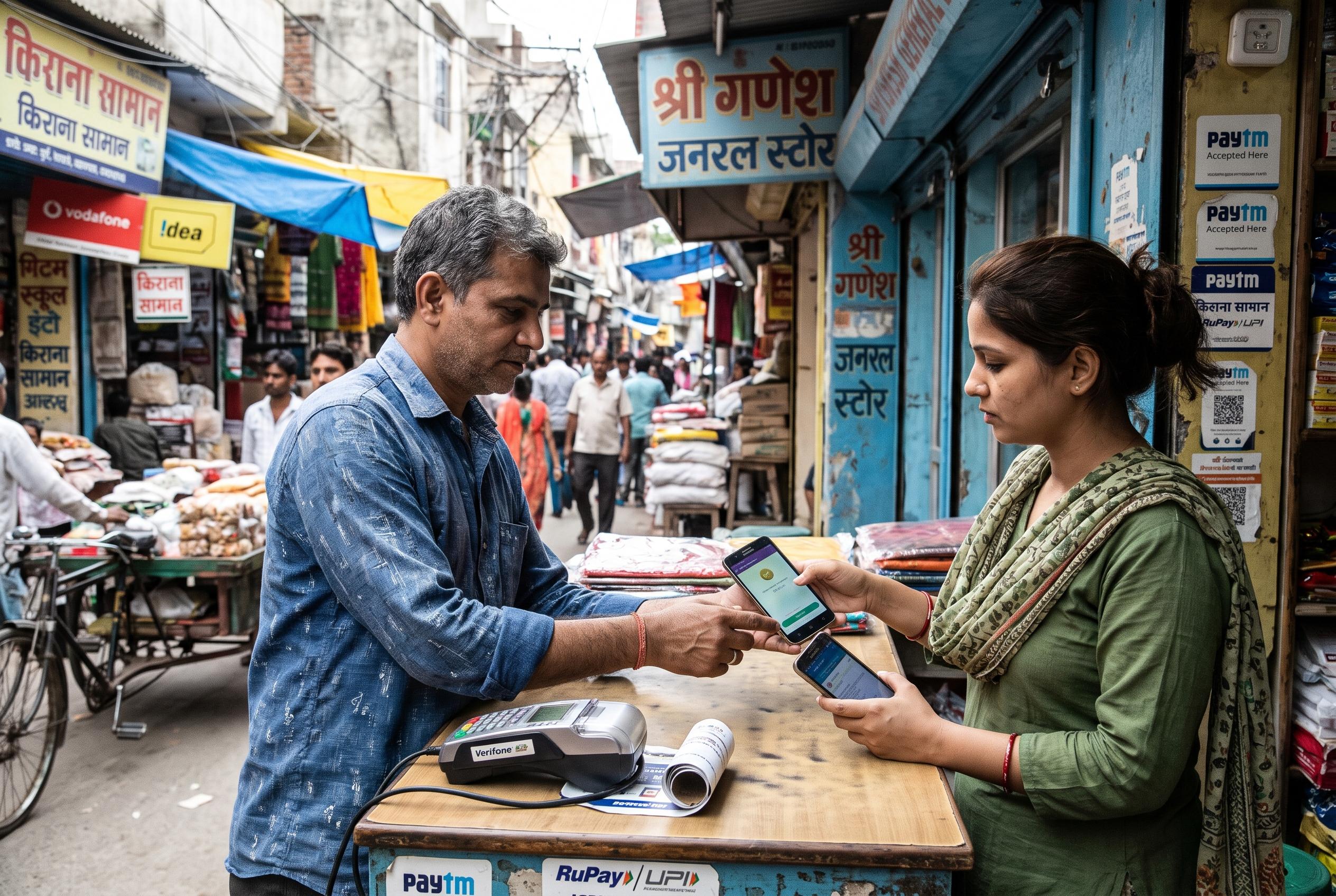

A proposed charge on UPI merchant payments above ₹2,000 would reverse a policy that helped drive mass adoption, raising questions over who will pay and whether the move could weaken India’s digital payments ecosystem.
India’s plan to bring a charge back to certain high-value UPI merchant payments marks a sharp turn in the policy that helped turn the home-grown platform into the country’s dominant digital rail. The Taxation and Other Laws (Amendment) Bill, 2026, introduced in the Lok Sabha, would amend the law governing payments systems so the government can notify charges on specified electronic payment methods. Reporting on the bill, LiveMint said the proposal would restore Merchant Discount Rates on some UPI transactions, with the stated aim of helping fund infrastructure, cyber security, innovation and customer service across the ecosystem.
The move would apply only to a slice of transactions, but an important one. According to reports on the draft changes, the levy would affect UPI merchant payments above ₹2,000, while person-to-person transfers and smaller purchases would remain free. Several outlets have said the charge would be set at about 0.4%, with a cap for larger transactions, although estimates of the proposed rate vary across reports. That matters because, while the government says the threshold would capture only a small share of transaction volume, it would still cover a far larger share of the value moving through the system.
The controversy is less about the size of the fee than the direction of travel. UPI was originally helped by a zero-charge model that encouraged merchants and consumers to shift away from cash. The Hindu argued that the government is now moving against the very payment habit it spent years trying to create. The paper’s commentary also noted that India has a history of taxing electronic payment-related services, including credit card interest and fees through goods and services tax, and warned that the new proposal looks like another example of policy preference being used to steer how people pay.
Economically, the burden may not fall neatly where the law places it. The Hindu said the charge would nominally sit with merchants, but in a two-sided payments market the cost could be absorbed by banks and payment-service providers, passed on to customers, or spread through lower investment in the system. That would be a problem if the aim is to keep UPI reliable, secure and attractive to users. The paper also argued that UPI has helped draw more transactions into the formal economy, creating traceable records that support compliance and, in some cases, credit assessment.
The proposal has already drawn legal scrutiny. The Indian Express reported that the Supreme Court declined to stay the government’s decision on the charge, while seeking responses from the Reserve Bank of India and the National Payments Corporation of India on petitions challenging the notifications. For now, the debate is less about whether the state can charge for UPI than whether it should. Critics say a payment system that was deliberately subsidised to build scale should not now be taxed just as its network effects are maturing. Supporters, by contrast, argue that a more commercial model is needed to sustain the rails behind India’s digital payments boom.
Disclaimer: This article is intended to inform and educate, not to recommend or endorse any financial product, investment or strategy. Please consider your own financial circumstances and seek professional advice where appropriate before making financial decisions.



