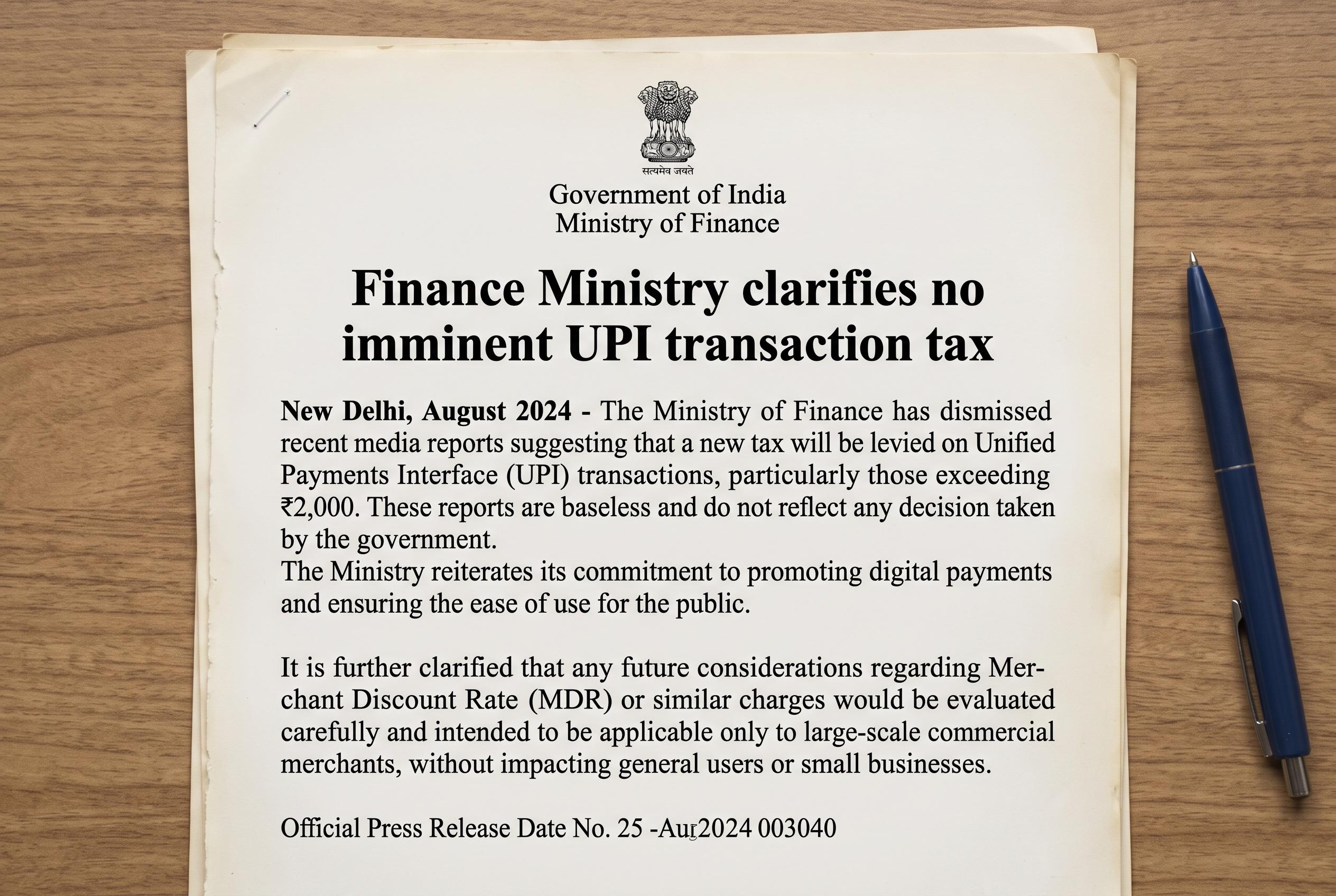

The Indian government dismisses reports of a new tax on transactions above ₹2,000 and outlines plans to apply merchant discount rates only to large merchants, aiming to boost financial infrastructure without burdening consumers.
Finance Minister Nirmala Sitharaman has pushed back against claims that the government is preparing to tax all UPI payments above ₹2,000, saying the discussion has been distorted and that no final decision has been taken. In a post on X on Thursday, she said the merchant discount rate, or MDR, would apply to merchants rather than customers if it is ever brought back. She added that the revenue would help banks and fintech firms invest in infrastructure, innovation and security.
The clarification came after opposition leader Jairam Ramesh accused the government of opening the door to a charge on UPI use. Sitharaman said that was false and warned against spreading misinformation. Her comments were aimed at easing confusion after reports suggested the payment system could soon face a fresh levy on higher-value transactions.
According to the Finance Ministry, there is no proposal to impose goods and services tax on UPI payments above ₹2,000. Officials have said GST would only be relevant if MDR were charged, and as things stand no such fee is being levied on UPI transactions. Business Standard and Outlook India both reported earlier this year that the ministry dismissed similar claims as false and without basis.
Even so, separate reports have suggested the government has been examining whether MDR could return for large merchants. The Financial Express reported that talks have centred on major businesses, including large e-commerce operators, while smaller merchants and person-to-person UPI transfers would remain outside any such framework. The report also said any MDR would be capped at 0.5% and that firms with annual turnover of up to ₹1.5 crore are likely to stay exempt.
Disclaimer: This article is intended to inform and educate, not to recommend or endorse any financial product, investment or strategy. Please consider your own financial circumstances and seek professional advice where appropriate before making financial decisions.