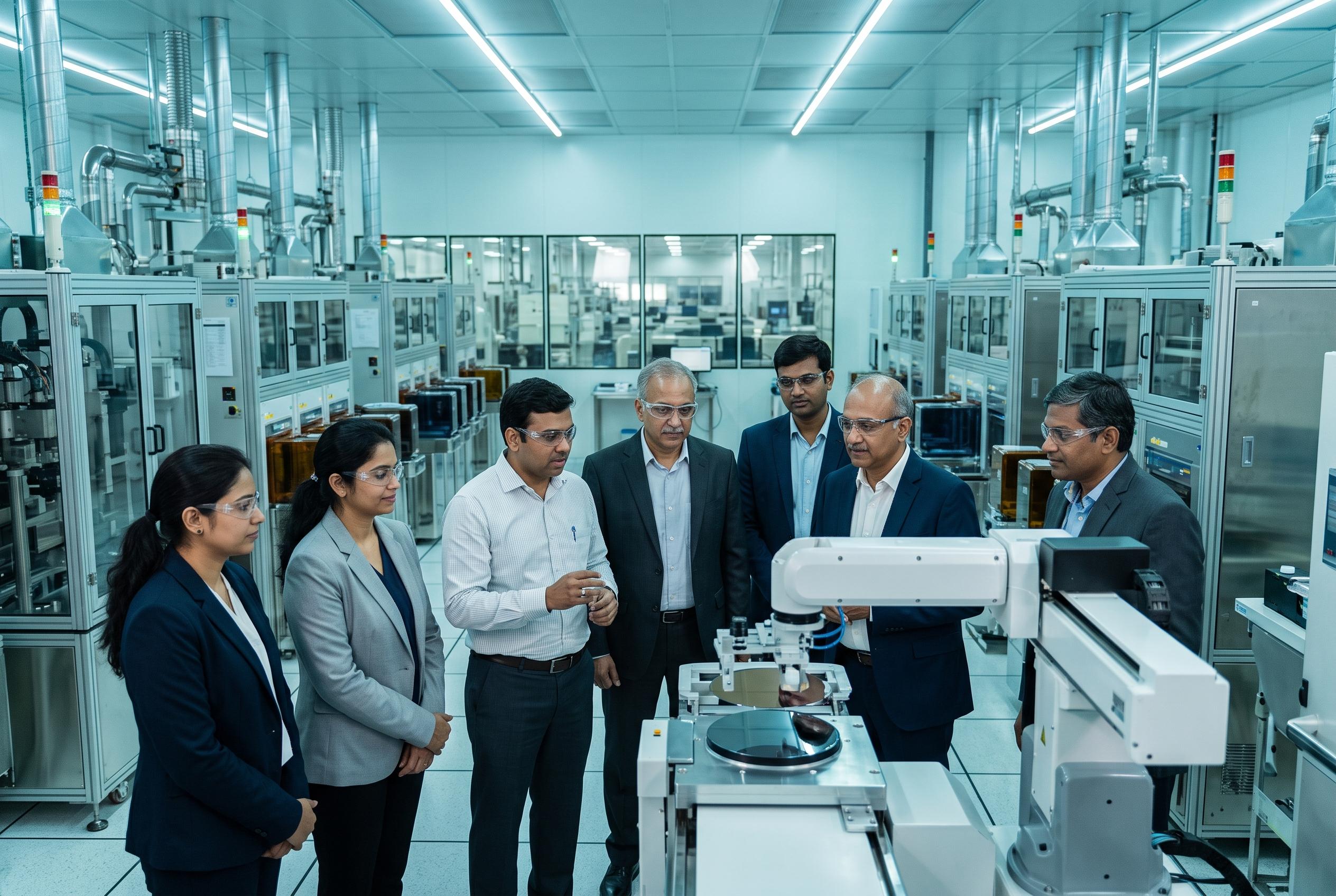

Tata Electronics announces a series of international collaborations and domestic investments at Semicon India 2026, aiming to establish a comprehensive semiconductor ecosystem in India, including new manufacturing plants, material supplies, and workforce development.
Tata Electronics has struck a series of new partnerships with overseas suppliers and Indian institutions as it pushes to build out a domestic semiconductor ecosystem around its planned plants in Gujarat and Assam. Announcing the agreements on the sidelines of Semicon India 2026, the company said the tie-ups span wafer fabrication, packaging, materials, chip design support, supply-chain localisation and training. Nexperia said separately that its deal with Tata Electronics is intended to cover several stages of the semiconductor value chain, including work linked to MOSFET production in Dholera and testing of discrete devices in Jagiroad.
The most commercially significant of the new agreements is with Fujifilm Holdings, which said it plans to invest about ₹800 crore in phases to set up a semiconductor materials plant in the Dholera Special Investment Region. Tata Electronics said the Japanese group will help develop and supply advanced materials for its upcoming 300 mm fab in Dholera, Gujarat, a project that the company says carries a total investment of ₹91,000 crore and is designed to produce chips on process nodes from 28 nm to 110 nm.
Tata Electronics also signed an agreement with BE Semiconductor Industries, better known as Besi, to strengthen advanced packaging capabilities in India. The company is putting $3 billion into its packaging facility in Jagiroad, Assam, and said the Dutch equipment supplier will contribute technology and equipment to support those operations. The two companies will also look at ways to deepen local equipment support, improve technical collaboration and strengthen long-term readiness for packaging production.
Beyond manufacturing, Tata Electronics is seeking to build the wider industrial base needed for a viable chip sector. It has signed a separate memorandum with the Semi-Conductor Laboratory, India’s only integrated device manufacturing facility under the electronics ministry, to explore chip design work for government and start-up projects, technology-node enablement, supply-chain localisation and workforce skilling. It has also partnered with Gati Shakti Vishwavidyalaya on curriculum development, joint certification and industry-focused training, with support from L&T EduTech and Jacobs Solutions, as India tries to narrow the talent gap in a sector that remains heavily dependent on imported technology and equipment.
Disclaimer: This article is intended to inform and educate, not to recommend or endorse any financial product, investment or strategy. Please consider your own financial circumstances and seek professional advice where appropriate before making financial decisions.