

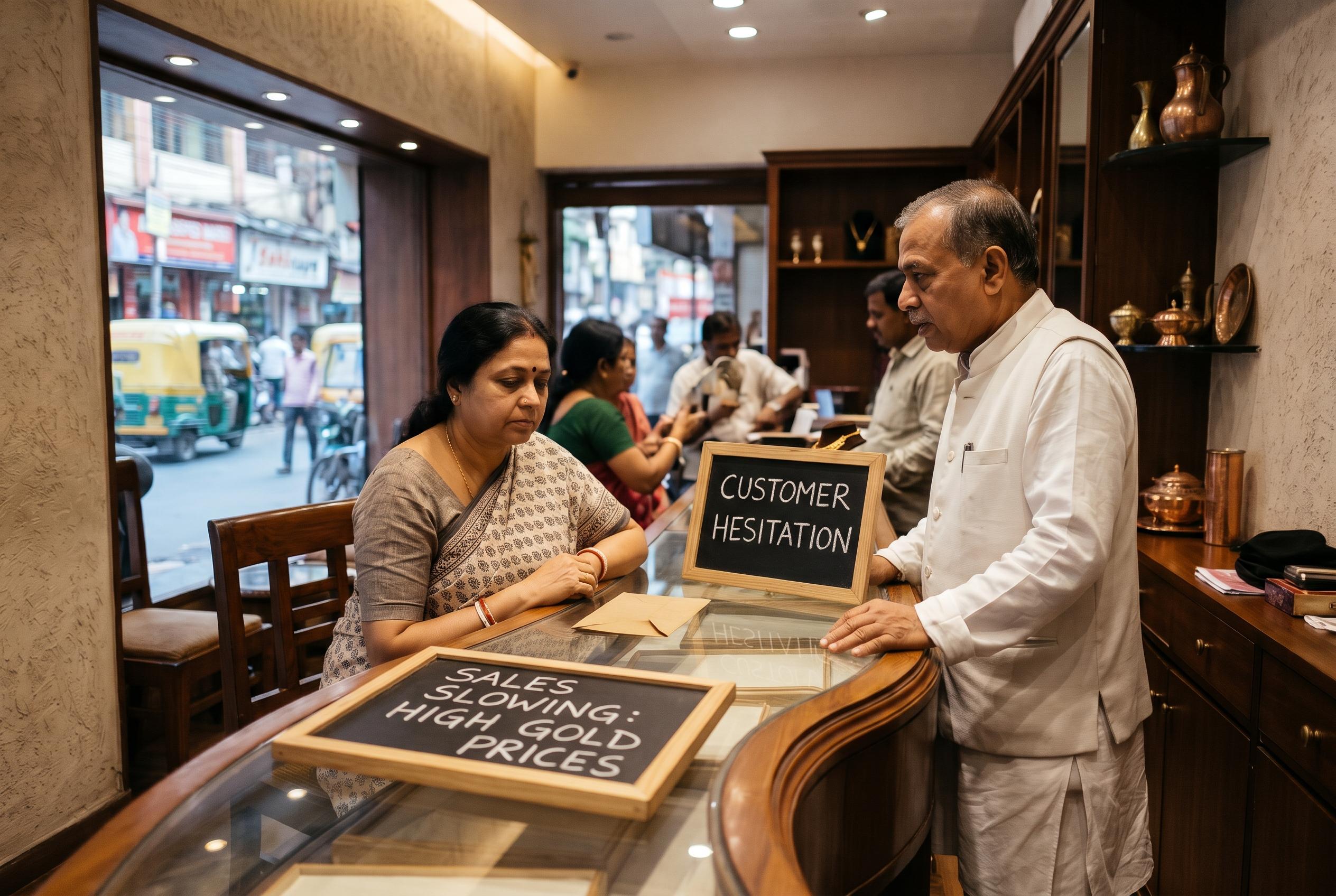

Demand is forecast to fall to about 650 tonnes in 2026 as high prices and rural economic pressures curb jewellery purchases and investment, despite a seasonal lift from festivals and weddings.
India’s gold market is heading towards its weakest year in six years, as record-high prices and a bruising rural economy curb both jewellery buying and investment demand. The World Gold Council said demand in the world’s second-largest consumer of gold is likely to total about 650 metric tonnes in 2026, the lowest level since 2020, when pandemic lockdowns shut shops and disrupted buying patterns. Reuters reported that the council’s Indian chief, Sachin Jain, linked the pullback to softer sales over the first nine months of the year.
The latest quarterly figures underline how sharply affordability is biting. According to the council’s India report, demand reached 162 tonnes in the September quarter, down 29% from a year earlier, even though the value of purchases rose because domestic prices were about 45% higher. Jewellery demand fell 20% and bar-and-coin demand dropped 40%, showing that both adornment buying and investment purchases lost momentum as consumers reacted to the rally in prices.
The pressure is especially acute in rural areas, which account for more than half of India’s gold demand. Reuters reported that households in those regions have been squeezed by higher living costs since the Iran war and by the weakest monsoon in more than a decade, which has cut farm output and incomes. The council’s research also suggested that consumers are spending more overall even as they buy less gold, a sign that high prices are forcing a shift towards lighter pieces and smaller volumes.
There are signs of seasonal support ahead. The World Gold Council said the December quarter should benefit from festivals and wedding-related buying, with Diwali falling in early November and the marriage season usually lifting purchases. However, it also warned that high prices are likely to cap any recovery. Its wider global report showed the same split between strong institutional demand and weaker consumer appetite, with central banks buying heavily while jewellery demand softened.
A separate effect is visible in trade flows. The council said official bullion imports fell sharply in the quarter, but preliminary estimates point to higher unofficial inflows after India raised import duties. That matters for both the current account and the rupee, because lower reported imports can ease pressure on the trade deficit even if some demand is merely moving into informal channels. For the global gold market, the bigger message is that the metal is still attracting official buyers and fund inflows, but price-sensitive consumers in India are increasingly stepping back.
Disclaimer: This article is intended to inform and educate, not to recommend or endorse any financial product, investment or strategy. Please consider your own financial circumstances and seek professional advice where appropriate before making financial decisions.



