

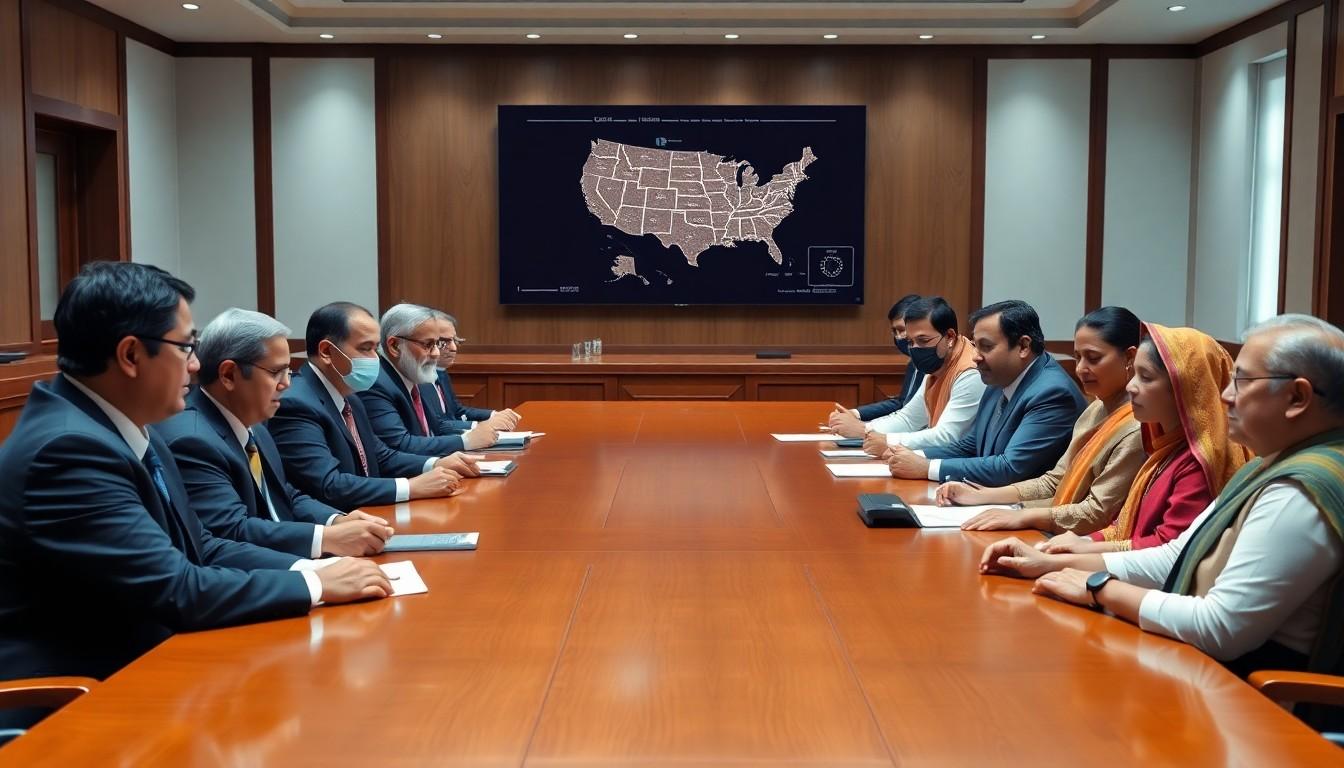

India’s parliamentary committee calls for swift progress on a bilateral trade agreement with the United States, highlighting the need for safeguards against tariff shifts and stronger cooperation in critical sectors to meet economic targets by 2030.
A parliamentary committee has urged India to push ahead with a bilateral trade agreement with the United States as quickly as possible, while building safeguards for exporters facing shifting tariff policy in Washington. The Department-related Parliamentary Standing Committee on Commerce, chaired by Dola Sen, said the deal should be wrapped up early but in a way that protects India’s trade and economic interests.
In its 200th report on India-US trade relations, the panel said the government needs a clearer, time-bound route to reach the Mission 500 goal of $500 billion in bilateral trade by 2030. According to the committee, that effort should be paired with deeper cooperation in critical technologies, investment and supply chain resilience, as well as more predictable trade rules for businesses.
The report also focused on the damage caused by changing US tariff measures, saying Indian exporters remain exposed to abrupt shifts that can hit sectors such as textiles, agriculture, engineering, electronics, pharmaceuticals, chemicals, gems and jewellery, marine products and leather. It said the government should seek exemptions for items such as generic medicines, critical minerals and smartphones from sudden tariff increases and create a dedicated Directorate General of Foreign Trade mechanism to track US customs action and warn exporters.
The committee called for stronger policy backing for micro, small and medium-sized enterprises through export finance, certification support, digital platforms and better links to global supply chains. That builds on earlier parliamentary discussions this year, when officials told lawmakers that the proposed India-US trade deal was the most realistic outcome available in the current global environment and that only a jointly issued statement would be authoritative on the pact’s terms. Separate committee work last year also reflected concern over the US’s tariff stance and its wider implications for India’s trade strategy.
Disclaimer: This article is intended to inform and educate, not to recommend or endorse any financial product, investment or strategy. Please consider your own financial circumstances and seek professional advice where appropriate before making financial decisions.



