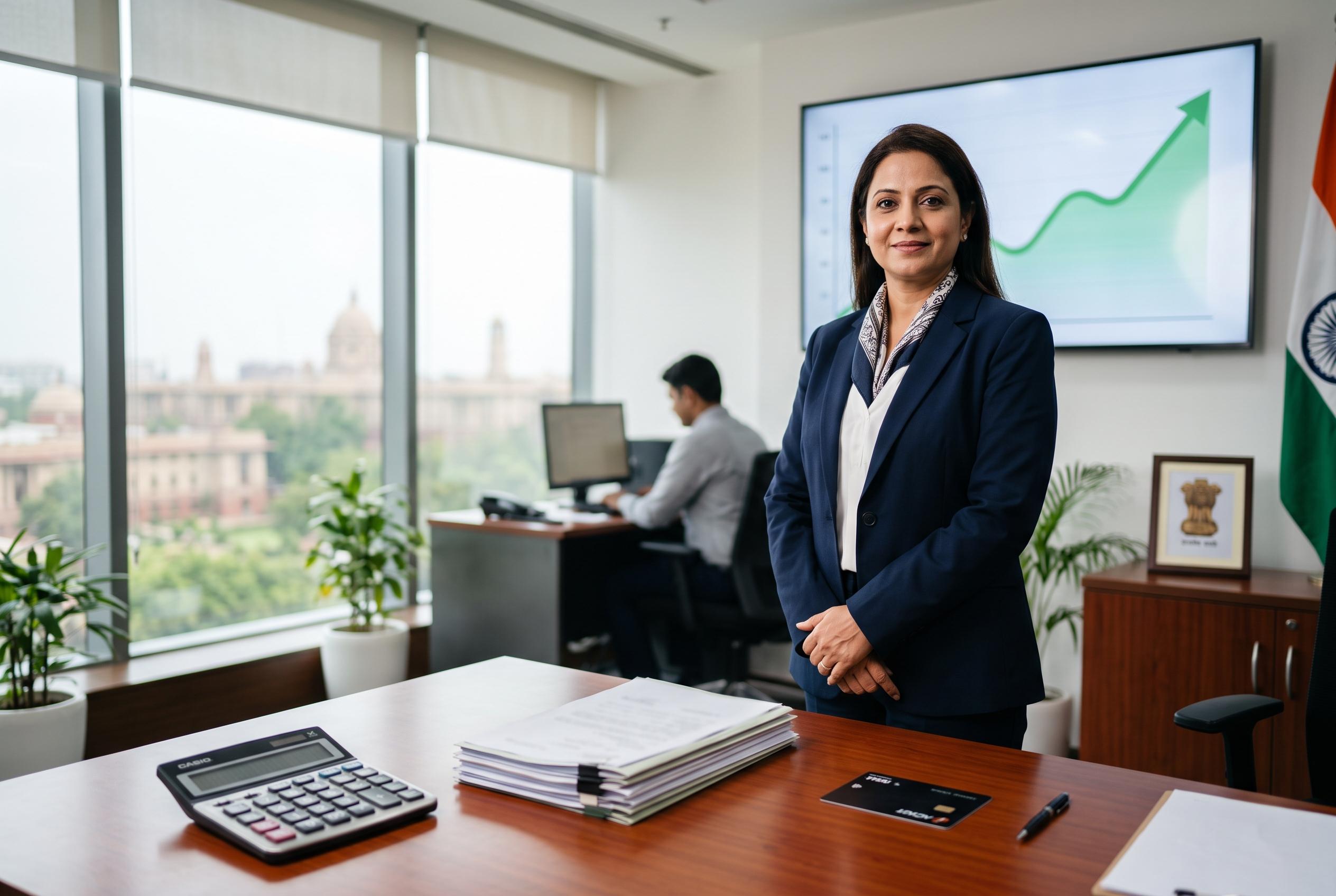

Finance Minister Nirmala Sitharaman frames India’s 1991 liberalisation as a crisis-driven turning point and underscores the country’s long-term pursuit of development goals, linking past shocks to her vision for a developed India by 2047.
Finance Minister Nirmala Sitharaman has cast India’s 1991 economic liberalisation as a crisis response rather than a confident act of policy design, saying the reforms introduced under the P V Narasimha Rao government were “born of compulsion rather than of choice”. Speaking at the CD Deshmukh Memorial Lecture during the 23rd India Policy Forum in New Delhi, she framed the opening-up of the economy as a turning point forced by a severe balance-of-payments emergency rather than by ideological conversion.
Sitharaman used the address to place that moment within a longer arc of Indian economic policy, arguing that the country’s development momentum picked up sharply around the turn of the millennium. She pointed to the Atal Bihari Vajpayee-led National Democratic Alliance government as a period when economic development, physical connectivity and digital infrastructure rose to the top of the policy agenda. In her account, the United Progressive Alliance years from 2004 to 2014 benefited from that earlier push.
The finance minister also linked the current administration’s economic strategy to the shocks of the past dozen years, saying India had built up speed before the global environment became more unstable. She described the recent period as one in which so-called black swan events became frequent, with successive disruptions and heightened uncertainty testing policymaking. Even so, she said, the government did not allow those shocks to derail its broader direction.
That argument fed into her description of Viksit Bharat 2047, the government’s goal of turning India into a developed nation by the centenary of independence. Sitharaman said the ambition should be understood not as something new, but as a restoration of India’s long-term trajectory. She argued that reaching it would require shedding colonial-era habits, rejecting a mindset of victimhood and building a society rooted in civilisational heritage.
Her remarks also reflected a wider emphasis she has made in recent months. According to Hindustan Times, Sitharaman said in April that the path to developed-nation status must rest on inclusive growth, strong institutions and large-scale skilling, with benefits reaching smaller towns, rural areas and first-generation learners. Mint reported in March 2025 that she had tied the Viksit Bharat goal to tax certainty and simpler business rules, while Business Standard said last September she stressed the importance of stronger banks, infrastructure and wider digitisation. Together, those comments suggest the finance minister is presenting Viksit Bharat as both an economic project and a broader social reset.
Disclaimer: This article is intended to inform and educate, not to recommend or endorse any financial product, investment or strategy. Please consider your own financial circumstances and seek professional advice where appropriate before making financial decisions.