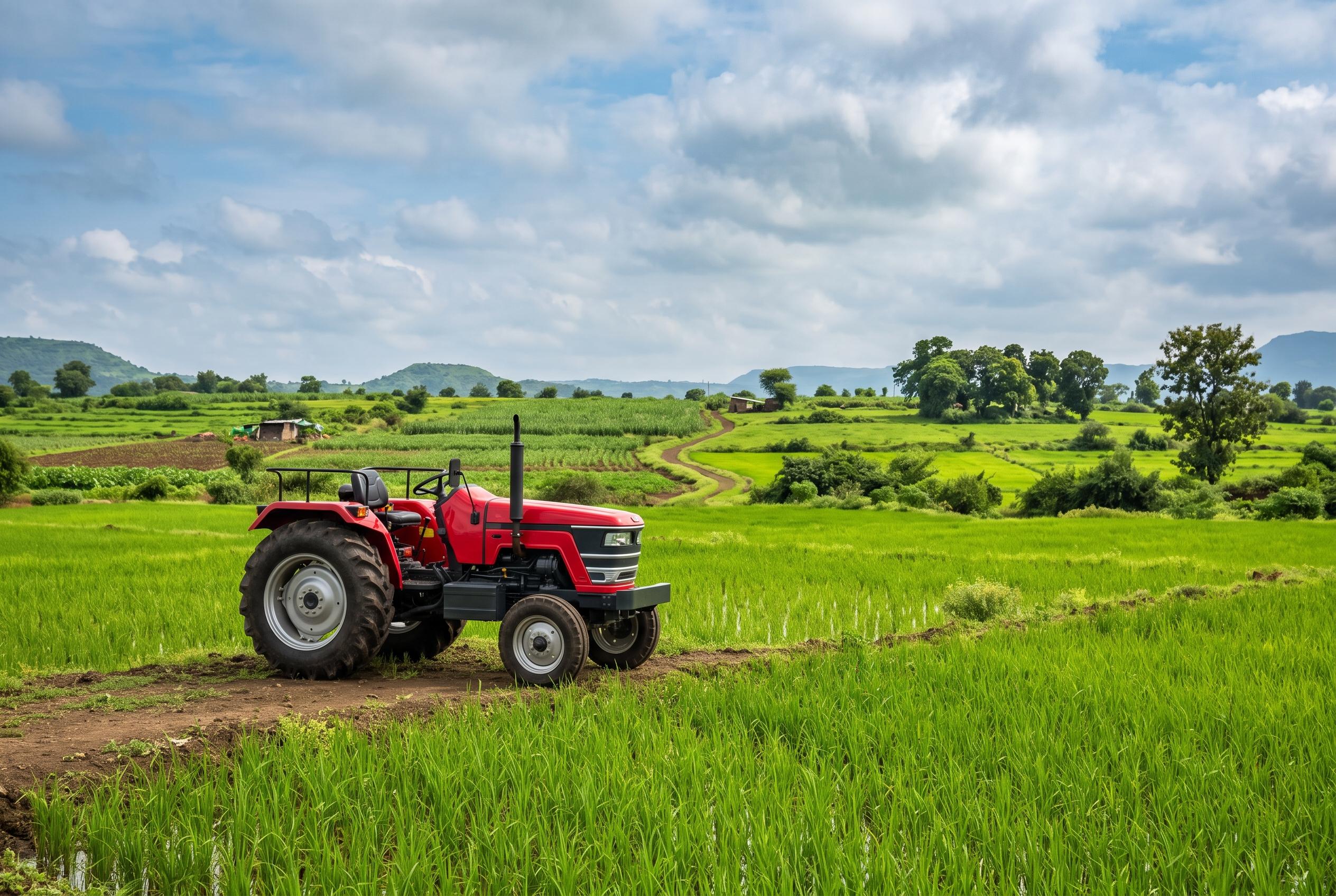

India’s tractor industry experienced its strongest July on record, with sales climbing 28% year-on-year, driven by improved monsoon conditions and rising farm activity, though analysts warn growth may slow later this year amid weather and commodity price concerns.
India’s tractor market posted a sharp recovery in July, with retail sales rising 28% from a year earlier to 117,349 units, the strongest July reading on record, according to data from the Federation of Automobile Dealers Associations. The advance was supported by a better monsoon and quicker kharif sowing, which lifted farm activity and improved rural sentiment.
Mahindra & Mahindra and Escorts Kubota were among the biggest beneficiaries. Mahindra sold 26,863 tractors, up 30.3% year on year, while Escorts Kubota reported sales of 8,731 units, a gain of 22%, according to the figures cited in the report. The broader pickup also followed a strong June, when Escorts Kubota said sales rose 19.1% to 13,695 units, with domestic demand helped by improving agricultural conditions.
The momentum has been even more visible in registrations. Data compiled from the Ministry of Road Transport and Highways showed 100,330 tractor registrations in July, with Mahindra leading the market on 42,350 units and a 42.2% share. Sonalika, TAFE and Escorts were also significant contributors, underscoring the breadth of demand across the industry.
Even so, analysts expect growth to cool through the rest of the fiscal year. They point to a high base after last year’s strong sales and to weather risks if rainfall in August and September disappoints. Commodity prices are another concern, with higher steel and rubber costs likely to squeeze margins if they persist.
Disclaimer: This article is intended to inform and educate, not to recommend or endorse any financial product, investment or strategy. Please consider your own financial circumstances and seek professional advice where appropriate before making financial decisions.