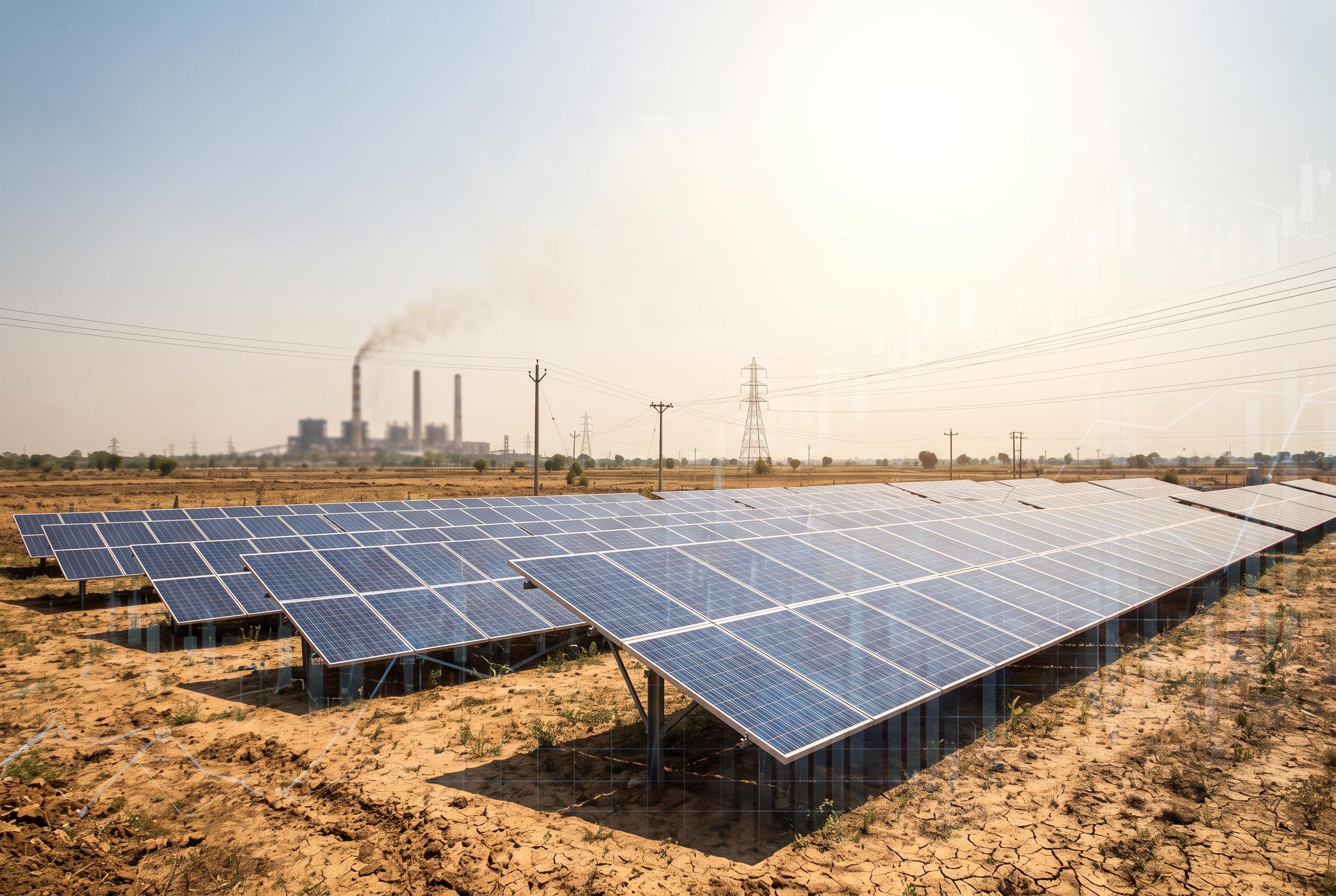

India experiences record-breaking heatwaves and surging electricity consumption as it relies heavily on coal, despite rapid solar expansion hampered by transmission and pollution issues, raising questions about its climate commitments and energy resilience.
India’s summer of 2026 has underlined a stark contradiction at the heart of its energy system: the country is being pushed harder by climate stress even as it leans more heavily on the fuels that worsen it. In April and May, Indian cities dominated global heat rankings, with one report saying all of the 50 hottest cities in the world were in India and others putting the figure at 97 or 98 out of 100 on May 22. That heat has continued to strain households, public services and the power grid.
The result has been a sharp rise in electricity demand. Government data cited in the lead report show July power consumption climbed 10.93% year on year to 170.70 billion units, while peak demand reached 270.20 GW, close to the record 270.82 GW set in May. The pressure is being amplified by soaring use of air conditioners: Voltas, LG Electronics and Panasonic India have all reported strong sales, with Panasonic saying residential AC sales rose 50% in the summer season.
India has managed to meet that demand largely because coal still anchors the system. The lead report says coal accounts for 74% of generation, helping keep wholesale electricity prices lower even as international energy markets have been volatile. At the same time, solar power has grown quickly. Official figures from the Ministry of New and Renewable Energy show solar generation rising from 73.48 billion units in 2021-22 to 174.76 billion units in 2025-26, while installed solar capacity now supplies more than 60 GW, roughly 22% of daytime peak demand.
But the bigger problem is no longer just building solar farms. It is moving that power through the system, storing it and balancing it against coal plants that cannot easily ramp down. The lead report says transmission has lagged behind solar build-out, leaving some capacity underused, while pollution is also reducing output: a recent study found aerosols cut solar generation by 9.6% in 2023, equivalent to about 15 TWh. The same report says India’s average annual losses from pollution between 2017 and 2023 were 74 TWh, a severe drag on a system already short of storage.
That weakness matters more as climate patterns intensify. The International Energy Agency expects India’s electricity demand to grow 7% this year, well above the global average, while a separate analysis cited by PV Magazine India says El Niño could force an additional 17.7 TWh of fossil-fuel generation between July 2026 and June 2027. The lead report says India is planning about $50 billion in investment in multi-hour storage and integrated solar systems, but those fixes will take time. For now, coal remains the default backstop, even as India has committed to cutting emissions intensity 47%, lifting non-fossil power to 60% by 2035 and reaching net zero by 2070.
Disclaimer: This article is intended to inform and educate, not to recommend or endorse any financial product, investment or strategy. Please consider your own financial circumstances and seek professional advice where appropriate before making financial decisions.