

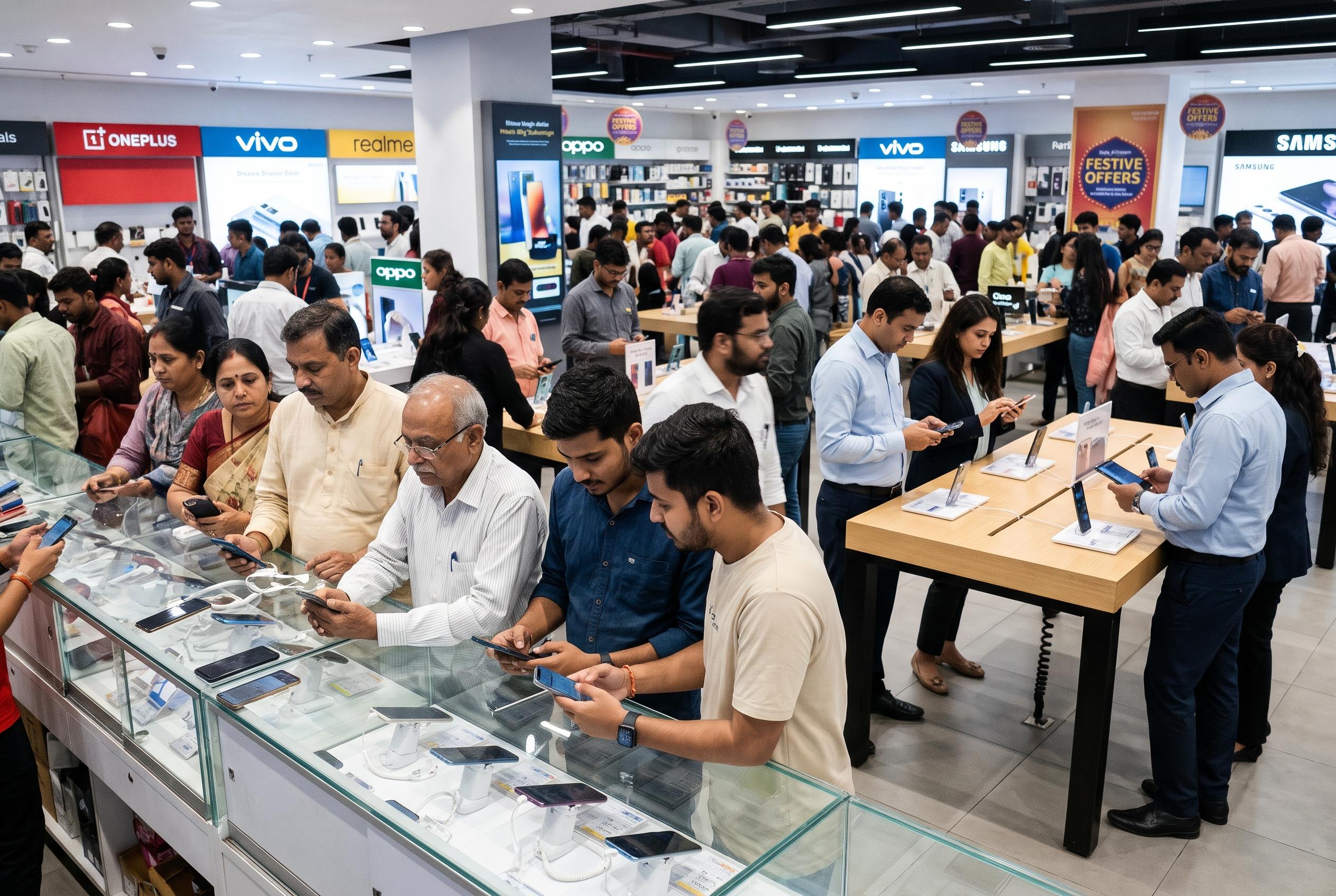

Shipments hit their weakest third-quarter level in years as higher prices and memory-chip shortages deterred budget-conscious buyers, while Samsung and Apple benefited from resilient premium demand ahead of Diwali.
India’s smartphone market is heading into the festive season with less momentum than usual, after shipments fell sharply in the July-to-September quarter and the lower-priced end of the market took the hardest hit. Industry reports cited by The Economic Times and The Times of India say the market logged its weakest third-quarter performance in years, with unit sales sliding as buyers were squeezed by higher prices and postponed upgrades.
The sharpest pressure has been felt in handsets priced below ₹20,000, the segment that has traditionally driven volume in India. The Economic Times reported that shipments in this bracket fell steeply as rising costs forced many customers either to delay replacement purchases, accept fewer features or opt for refurbished devices. That pattern suggests the slowdown is not just a problem for one product category, but a warning sign that value-conscious consumers are becoming more selective about discretionary spending.
At the same time, the slump is being shaped by a broader supply shock linked to the global rush to build artificial intelligence infrastructure. TechCrunch reported that a memory-chip crunch, driven by demand from AI data centres, has lifted component costs across the electronics industry, while Business Standard said the squeeze could make phones, computers and televisions more expensive in 2026. In that environment, manufacturers are facing a difficult trade-off: absorb higher input costs, raise retail prices or trim features to protect margins.
Even so, the market has not weakened evenly. According to The Economic Times and The Times of India, Samsung regained the top spot in India during the quarter, helped by stronger demand for premium models, while Apple also moved into the top five on the back of interest in the iPhone 17 and iPhone 16 ranges. That split underscores a bifurcated market, where affluent buyers continue to trade up even as the mass market slows. For retailers heading into Diwali, the message is less about a collapse in demand than a shift in where demand is still willing to spend.
Disclaimer: This article is intended to inform and educate, not to recommend or endorse any financial product, investment or strategy. Please consider your own financial circumstances and seek professional advice where appropriate before making financial decisions.



