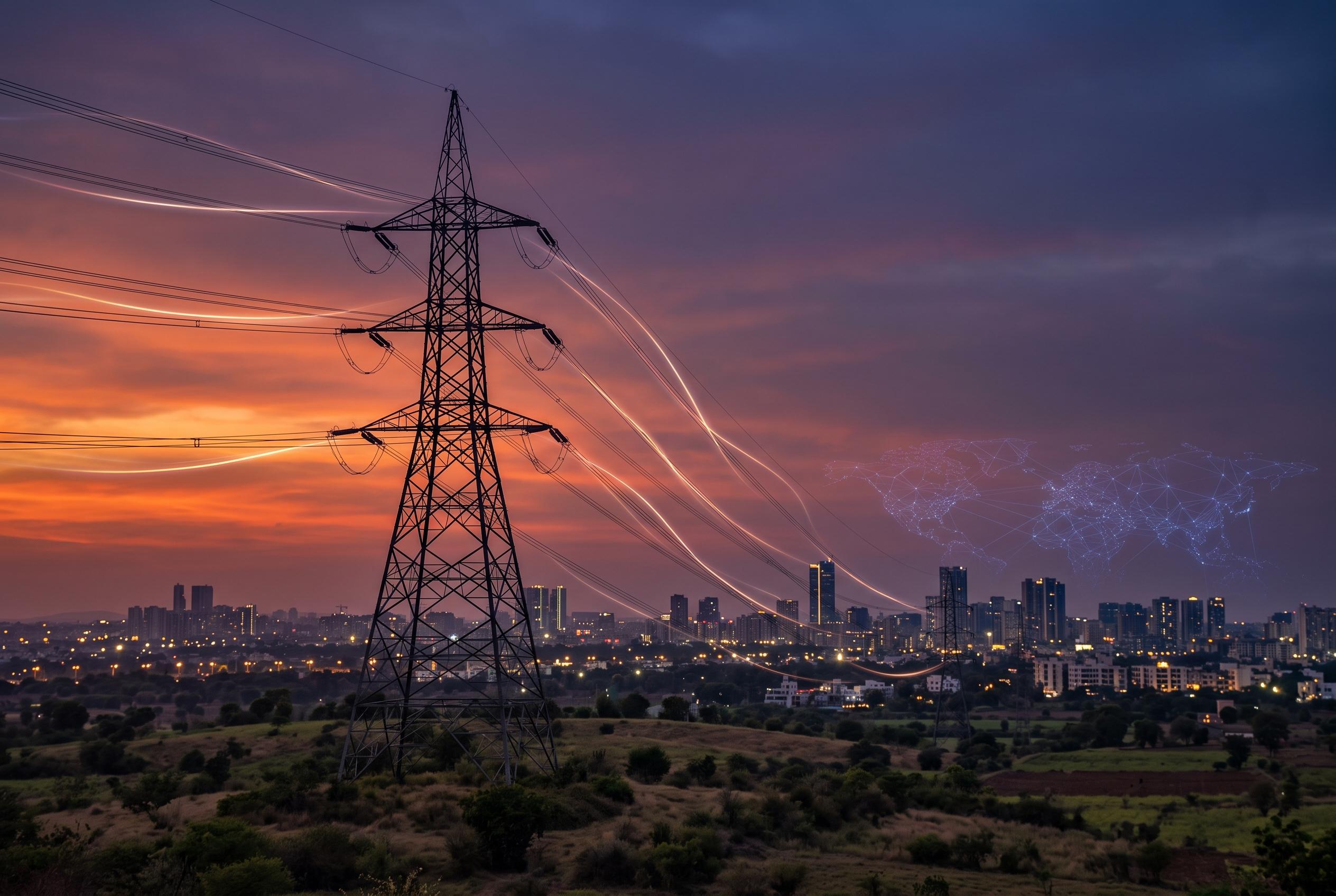

India’s peak electricity demand increased by 12% in April to June, reaching new heights, yet the country faces ongoing transmission bottlenecks that hinder supply during evening surges, highlighting challenges in balancing growing energy needs with infrastructure constraints.
India’s peak electricity demand rose about 12 per cent in April to June from a year earlier, reaching a record 270.8GW in May, even as the evening supply gap widened to 3,045MW in June, according to a written reply the government gave to the Rajya Sabha on Monday. The figures point to a power system that remains broadly stable overall but is still struggling to match demand during the sharpest evening spikes.
The ministry said the shortfall was most visible in the north, where June evening demand reached 95,919MW and met supply was 93,269MW. At the all-India level, non-solar peak demand in June stood at 255,172MW against supply of 252,127MW. The gap had been smaller in the previous two months, at 1,326MW in May and 1,225MW in April.
The government said the rise in demand was linked in part to El Niño conditions, while also stressing that India had enough installed capacity to meet overall needs. The Press Information Bureau said in April that the country had already met a previous record peak of 256.1GW without shortage, helped by a sharp increase in electricity consumption and a record addition to generation capacity in fiscal 2025-26. It later said installed capacity had reached 548.86GW by June 2026, up sharply from earlier years.
Thermal generation remained the backbone of supply through the summer, accounting for 72.71 per cent of output in April, 69.90 per cent in May and 68.39 per cent in June, while the renewable share, including large hydro, rose over the same period. The government said the main reason for the difference between electricity requirement and supply was constraints in state transmission and distribution networks. A separate July release said coal stocks at thermal plants were sufficient for 14 days at 85 per cent plant load factor, while officials said storage systems would need to expand rapidly if renewable power is to shoulder a much larger share of peak demand in the years ahead.
Disclaimer: This article is intended to inform and educate, not to recommend or endorse any financial product, investment or strategy. Please consider your own financial circumstances and seek professional advice where appropriate before making financial decisions.