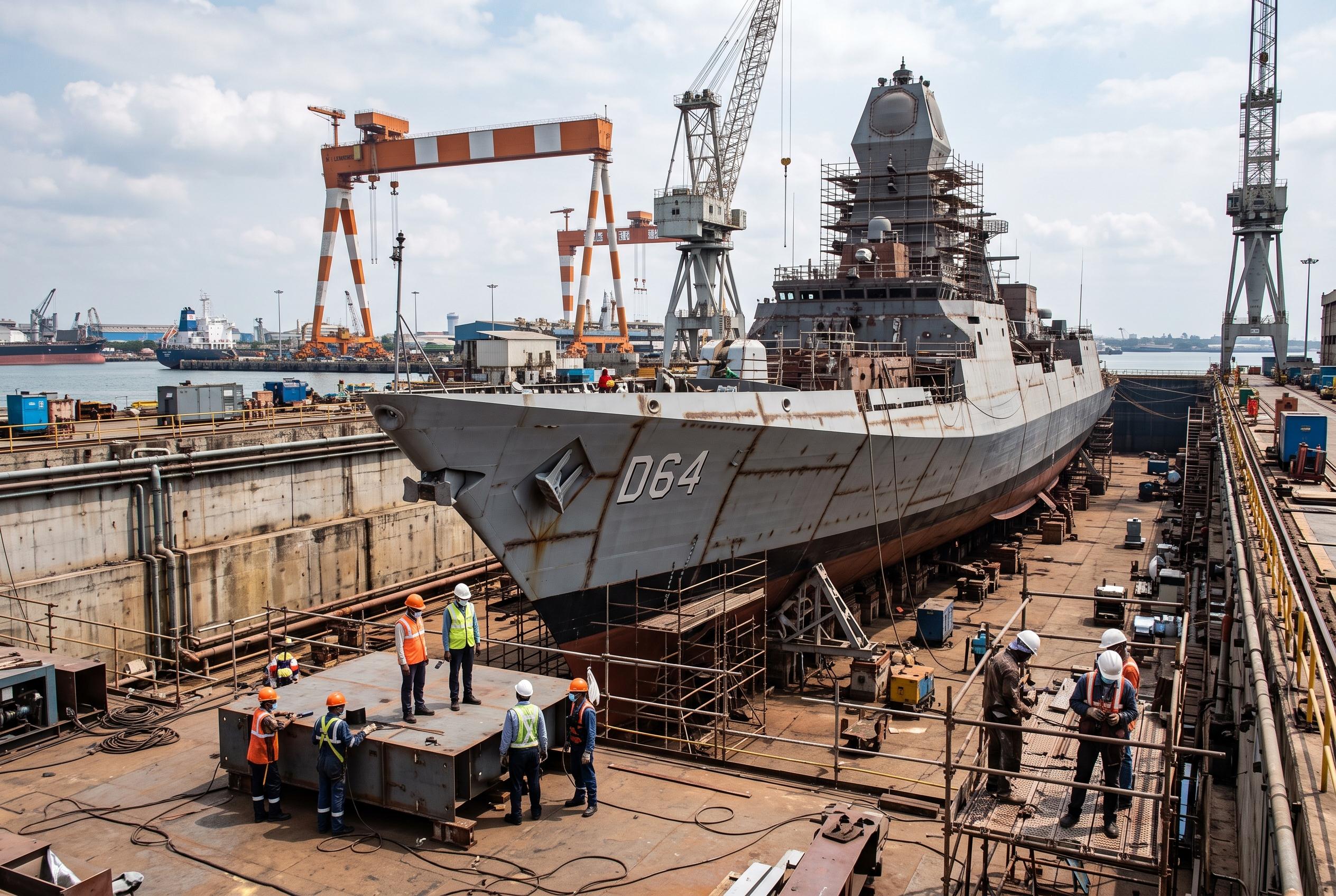

As India accelerates its naval modernisation to bolster maritime capabilities, focus moves from order backlog to ensuring rapid, efficient delivery of warships, highlighting both progress and persistent structural challenges in the defence sector.
India’s defence shipyards are being judged less on the size of their order books and more on whether they can turn those orders into warships on time. That distinction matters because, as a PwC study cited by The New Indian Express warned in June, India’s aerospace and defence manufacturing sector is facing an execution strain: some existing contracts could take up to a decade to complete unless supply chains, planning, governance, digital systems and workforce productivity improve.
The pressure is especially visible in naval shipbuilding, where the Indian Navy is in the middle of one of the largest modernisation drives in its history. According to industry briefings and defence reporting, the service is expected to induct 19 warships in 2026 alone as India sharpens its maritime doctrine and responds to a more contested Indian Ocean. That expansion includes destroyers, frigates, anti-submarine warfare ships and other frontline platforms that are far more complex than commercial vessels and often take years to move from steel cutting to commissioning.
Recent deliveries suggest Indian shipyards have made progress. Army Recognition reported that the stealth frigate Taragiri, built by Mazagon Dock Shipbuilders, was delivered after an 81-month build period and is due to join frontline service this year. The ship has more than 75% indigenous content and relied on a supply chain that included more than 200 micro, small and medium enterprises, a sign that local industry is becoming more deeply embedded in naval production.
The same pattern was evident in June, when the Indian Navy commissioned three indigenously built platforms in one ceremony at Kolkata. According to reporting from the event, the frigate Dunagiri, the survey vessel Sanshodhak and the anti-submarine warfare craft Agray were all built by Garden Reach Shipbuilders and Engineers, reinforcing the pace at which India is adding domestically designed and constructed assets to the fleet.
Even so, the sector’s structural weaknesses remain hard to ignore. India Today reported in July that more than 90% of the country’s warships and submarines are built by six state-owned shipyards, many of which have not been significantly modernised in years. Slow build rates, cost overruns and the absence of widely used Hull Block Construction Method techniques continue to weigh on productivity, while imported equipment and specialised materials can still delay an entire programme if a single component is late.
That is why execution is now seen as strategically important as procurement. The Defence Acquisition Council’s approval in February of proposals worth about $40 billion, including six P-8I maritime patrol aircraft and 114 Rafale fighters, underlines the scale of India’s defence spending ambitions. But for the navy in particular, capability is created only when a contract is translated into a completed platform, tested, certified and placed into service.
The lesson for shipyards is that infrastructure alone is not enough. Dry docks, cranes and fabrication halls matter, but so do design expertise, quality control, skilled labour and programme management. India’s naval build-up may be accelerating, yet the long-term winners will be the yards that can deliver consistently, not just win headlines with larger order books.
Disclaimer: This article is intended to inform and educate, not to recommend or endorse any financial product, investment or strategy. Please consider your own financial circumstances and seek professional advice where appropriate before making financial decisions.