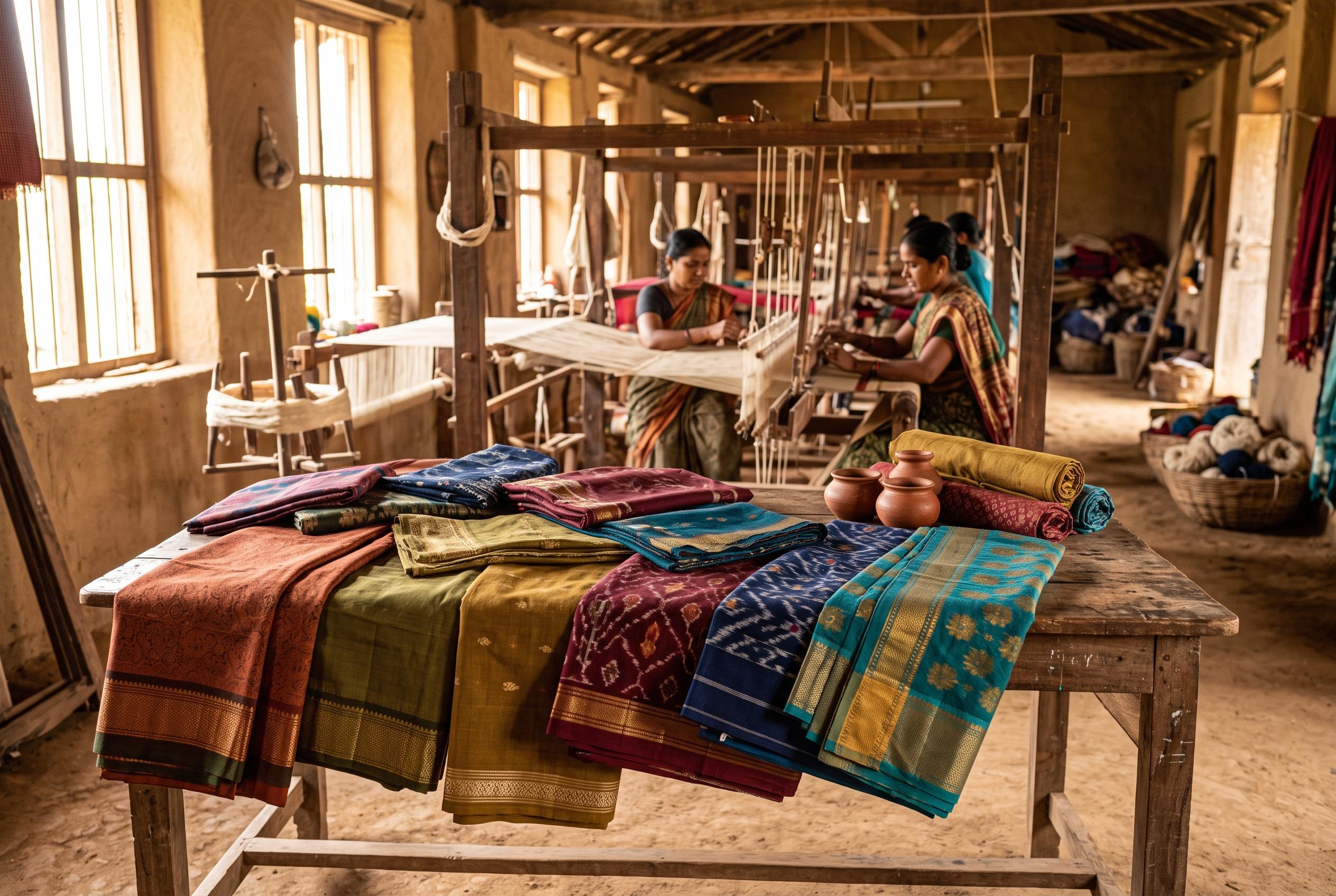

On National Handloom Day, India highlights the sector’s critical role in rural employment, traditional crafts, and sustainable development, while addressing persistent market and access issues.
India marks National Handloom Day on August 7 each year to recognise the weavers and allied workers who sustain one of the country’s oldest cottage industries. The date recalls the launch of the Swadeshi movement in 1905, when Indians were urged to favour domestic goods, and the first official observance was held in 2015 in Chennai under Prime Minister Narendra Modi, according to government and campaign material on the day.
The handloom economy remains deeply tied to rural life. Industry material from the India Brand Equity Foundation says the sector is among the country’s largest unorganised industries, with about 2.8 million looms and roughly 3.52 million people engaged in direct and allied work. The source also says women make up a large share of the workforce, underscoring the sector’s role in female employment and household income in villages and small towns.
That rural relevance is part of why handloom is often presented as a complement to farming rather than a rival to it. Handloom production depends on agricultural inputs such as cotton and silk, while farm households can use weaving as a second source of income when seasonal work is scarce, a point also reflected in reports describing the sector as a livelihood buffer during lean months. At the same time, recent coverage has highlighted persistent problems, including low pay, weak market access and limited use of e-commerce by many units.
Policy support has expanded around this legacy industry, from cluster development under the National Handloom Development Programme to yarn subsidies under the Raw Material Supply Scheme. Export data cited in the supplied material shows demand remains meaningful overseas, with the UAE and the United States among the top destinations for Indian handloom shipments in 2025-26. Even so, the bigger argument made by advocates is not just commercial: handloom is seen as a lower-energy, locally rooted alternative that can strengthen sustainable farming communities and keep traditional skills alive.
Disclaimer: This article is intended to inform and educate, not to recommend or endorse any financial product, investment or strategy. Please consider your own financial circumstances and seek professional advice where appropriate before making financial decisions.