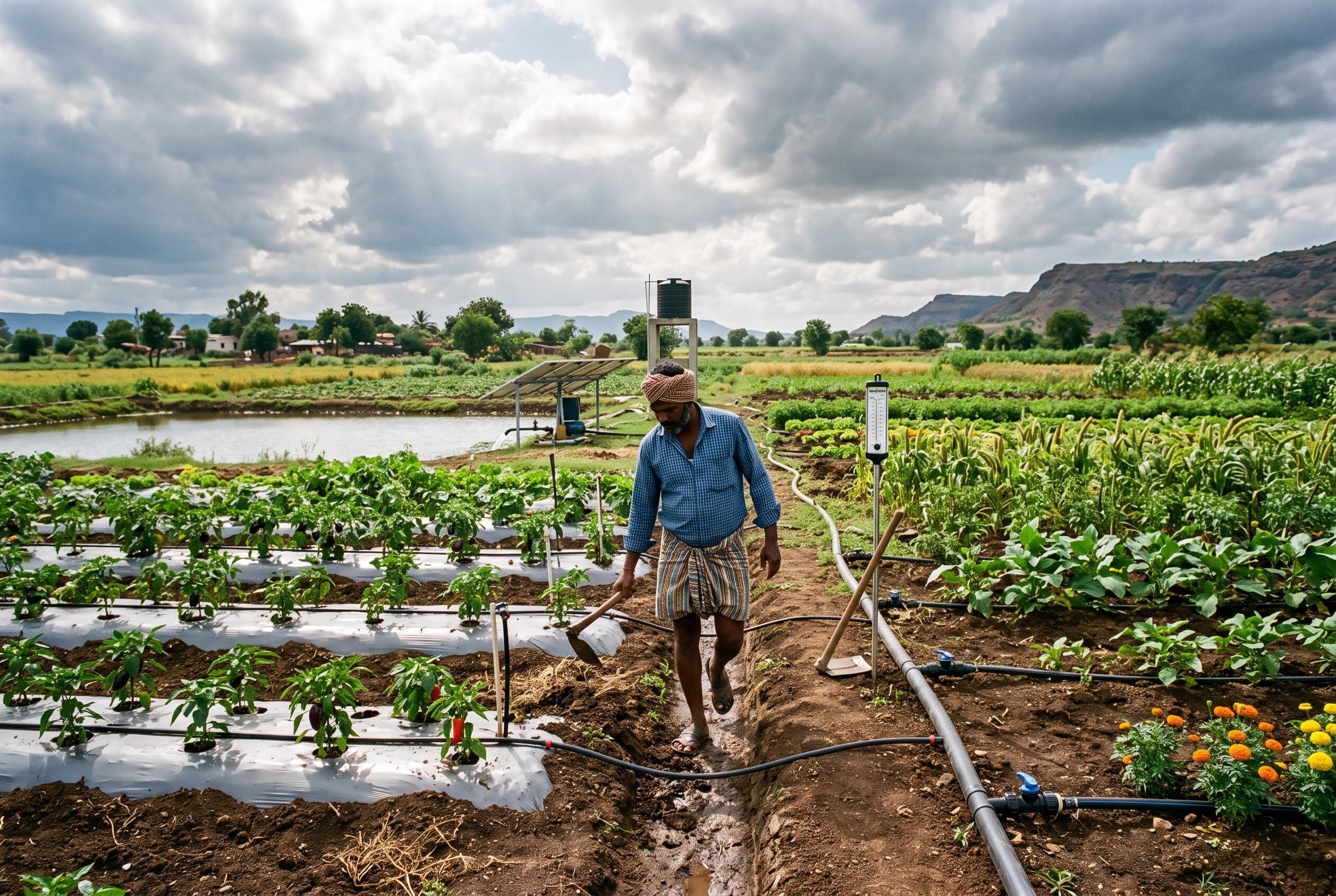

A weak monsoon and changing rainfall patterns are forcing Indian farmers to shift crop choices and adopt new practices amid ongoing water scarcity concerns, highlighting both risks and resilience in the country’s agricultural sector.
India’s farming economy is heading into another difficult season as erratic rain threatens output across much of the country, especially in rain-fed districts where growers have little buffer against a weak monsoon. Government data cited in the lead article suggests about 45% of net sown land depends on rainfall, and that makes the timing and spread of precipitation critical for crops, farm incomes and food prices.
The sharpest warning sign is the pressure on coarse cereals, pulses and oilseeds, where acreage has reportedly dropped by more than 40%. That matters well beyond the farm gate. Pulses are a major source of protein for millions of households and India still imports roughly a fifth of its needs, so any fall in domestic supply can quickly feed into higher import bills and more expensive food for poorer consumers.
The concern is not new. The Times of India reported in 2023 that a deficient southwest monsoon had already damaged crops, reduced cultivation and pulled down reservoir levels, while also hitting linked industries such as tractors and two-wheelers. Earlier that year, the Indian Express said the monsoon began with a deficit amid fears that El Niño could curb rainfall further. By the end of the season, The Times of India said cumulative rainfall had finished below normal, with more than 200 districts still reporting deficient rain.
Even so, the farming system is changing. Bernstein has argued that India is less dependent on the monsoon than the old 60% figure suggests, pointing to expanded irrigation and shifting crop patterns. It said the relationship between rainfall and agriculture has undergone a structural reset, and noted that India still managed higher foodgrain output in 2018-19 and 2023-24 despite below-normal monsoons. That does not eliminate the risk from poor rainfall, but it does help explain why the impact is no longer as uniform as it once was.
There are also signs that farmers are adapting. Government data in the lead article shows acreage moving towards hardier crops, with sunflower planting rising sharply and smaller gains in horse gram, jute and mesta. Seed suppliers are also seeing demand for short-duration vegetables, including coriander, cabbage and temperate cauliflower. The challenge now is to turn that adjustment into a broader shift in dryland farming, better water conservation and more crop research that reaches fields quickly rather than staying in laboratories.
Disclaimer: This article is intended to inform and educate, not to recommend or endorse any financial product, investment or strategy. Please consider your own financial circumstances and seek professional advice where appropriate before making financial decisions.