

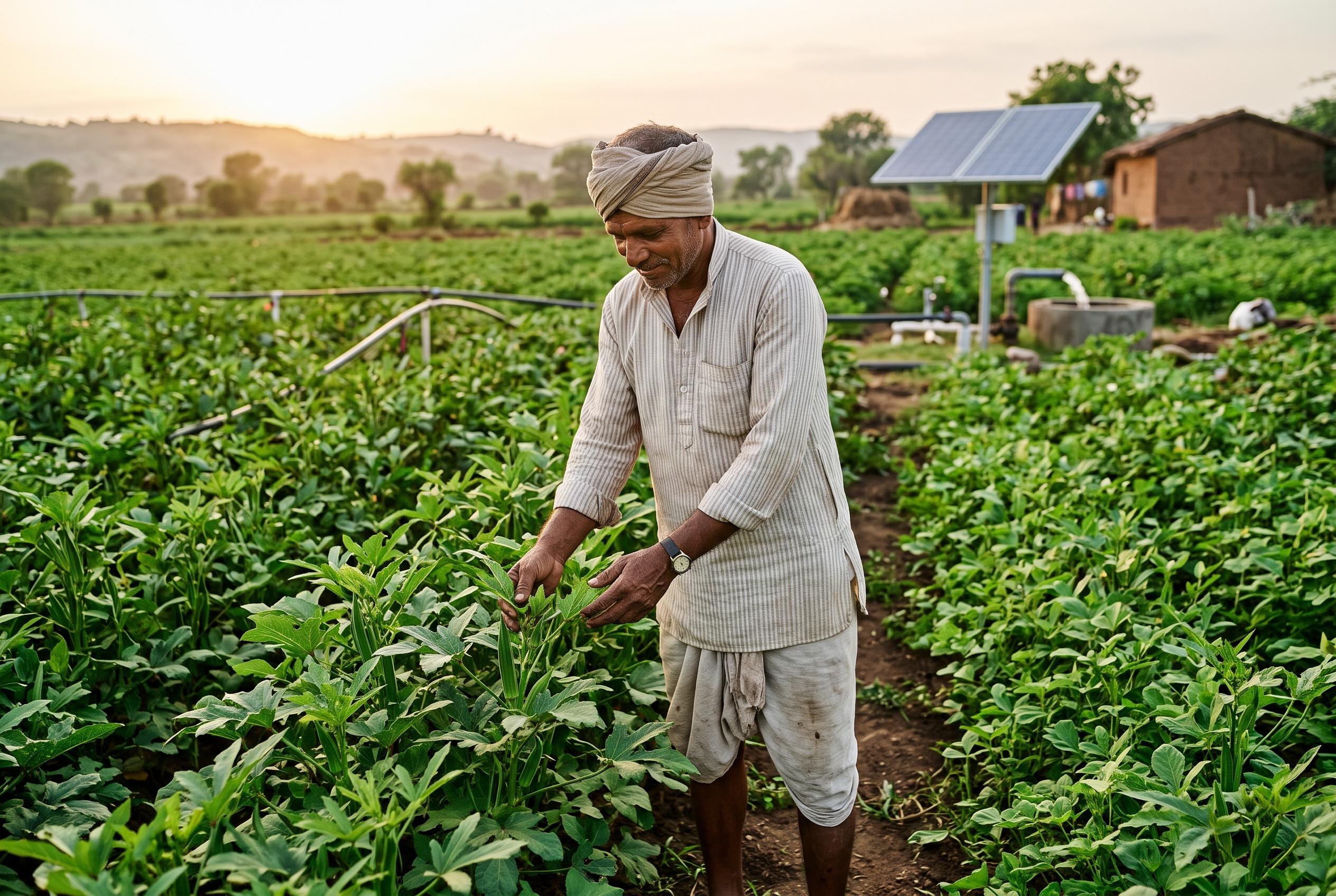

India is shifting from a food-security model towards higher-value, climate-resilient agriculture, but weak rural incomes, resource constraints and uneven growth threaten the next phase of its farm transformation.
India’s farm policy has entered a new phase, according to a recent opinion piece arguing that the sector has moved from a narrow focus on food security towards a broader quest for resilience, nutrition and competitiveness. The article says the shift began after 2014, when agriculture and farmer welfare were elevated within the national development agenda, and it frames the next goal as building a system that produces more, wastes less and connects rural producers to higher-value markets.
That optimism sits alongside a more mixed reading of the past decade. An analysis from the Research and Information System for Developing Countries argues that India’s agriculture between 2014 and 2024 was marked by slow economic growth, weak rural job creation and unfulfilled promises to farmers, with those pressures feeding agrarian distress and shaping the 2024 election outcome. Another assessment of the first years of the NDA-II government put average agricultural growth at just 2.3% a year between 2014 and 2020, well below the pace needed to meet the long-running pledge to double farmers’ incomes by 2022.
Still, the government’s own case for transformation rests on structural changes rather than headline output alone. The opinion piece says agricultural growth accelerated to around 4.5% between 2015 and 2025, helped by irrigation, digital tools, market reform and climate adaptation, while farm output has become more diverse, with greater weight on horticulture, dairy, fisheries and poultry. It also highlights a strong jump in food-grain production over the past two years, presenting this as evidence that coordination between the Centre and the states, along with targeted spending and climate-resilient practices, is beginning to bear fruit.
The consumption side of the story has changed as well. The article points to a sharp fall in the share of cereals in rural household food spending over the past half-century, alongside a much larger appetite for milk, fruit, vegetables, eggs, meat and fish. That shift has clear policy implications: the argument is that India must now place more emphasis on pulses, oilseeds and other high-value crops, while helping farmers move further into grading, processing, packaging, branding, logistics and exports.
The policy toolkit has expanded to match that ambition. The piece cites irrigation efficiency schemes, soil testing, renewable-energy links for farming, farmer collectives, digital marketplaces and support for storage and processing as part of an emerging value chain that runs from seed to market. It also argues that research output has improved, with thousands of crop varieties released in the past decade, many of them aimed at climate resilience and better nutrition.
Yet the practical constraints remain formidable. A Statista dataset on food-grain cultivation shows that the area under such crops fell by 2024 after peaking the previous year, underlining the pressure on land at a time when groundwater, soil health and weather patterns are all under strain. The article’s central claim is that these limits make efficiency, rather than expansion alone, the key to the next stage of farm growth. At the same time, a Le Monde report from central India shows how some cotton growers are already moving towards organic and regenerative methods in search of lower input costs, healthier soils and better prices, a reminder that sustainability is increasingly being pursued on the ground rather than only in policy papers.
Disclaimer: This article is intended to inform and educate, not to recommend or endorse any financial product, investment or strategy. Please consider your own financial circumstances and seek professional advice where appropriate before making financial decisions.



