
India’s defence export industry is entering a new phase, with record shipments driven by missiles, air-defence systems, and a shift towards smaller, more adaptable technologies like drones and smart munitions, aiming for a ₹50,000 crore target by 2030.
India’s defence export story is entering a new phase. Government data cited by Indian Masterminds shows shipments reached a record ₹38,424 crore in financial year 2025-26, extending a rapid rise that has been driven by missiles, air-defence systems, ammunition and a growing mix of electronics and components. According to The New Indian Express, exports were up 62.66% from the previous year, with Defence Public Sector Undertakings accounting for the largest share and private companies also making a substantial contribution.
For years, the BrahMos supersonic cruise missile has been the most recognisable symbol of India’s military export ambitions. It has helped establish India as more than a marginal supplier, with the Philippines among the system’s early buyers and fresh international interest reported from other countries, including in the Middle East, Africa and Latin America. Moneycontrol has reported that indigenous platforms such as BrahMos and the Akash air-defence system are central to India’s export momentum, especially across the Indo-Pacific region.
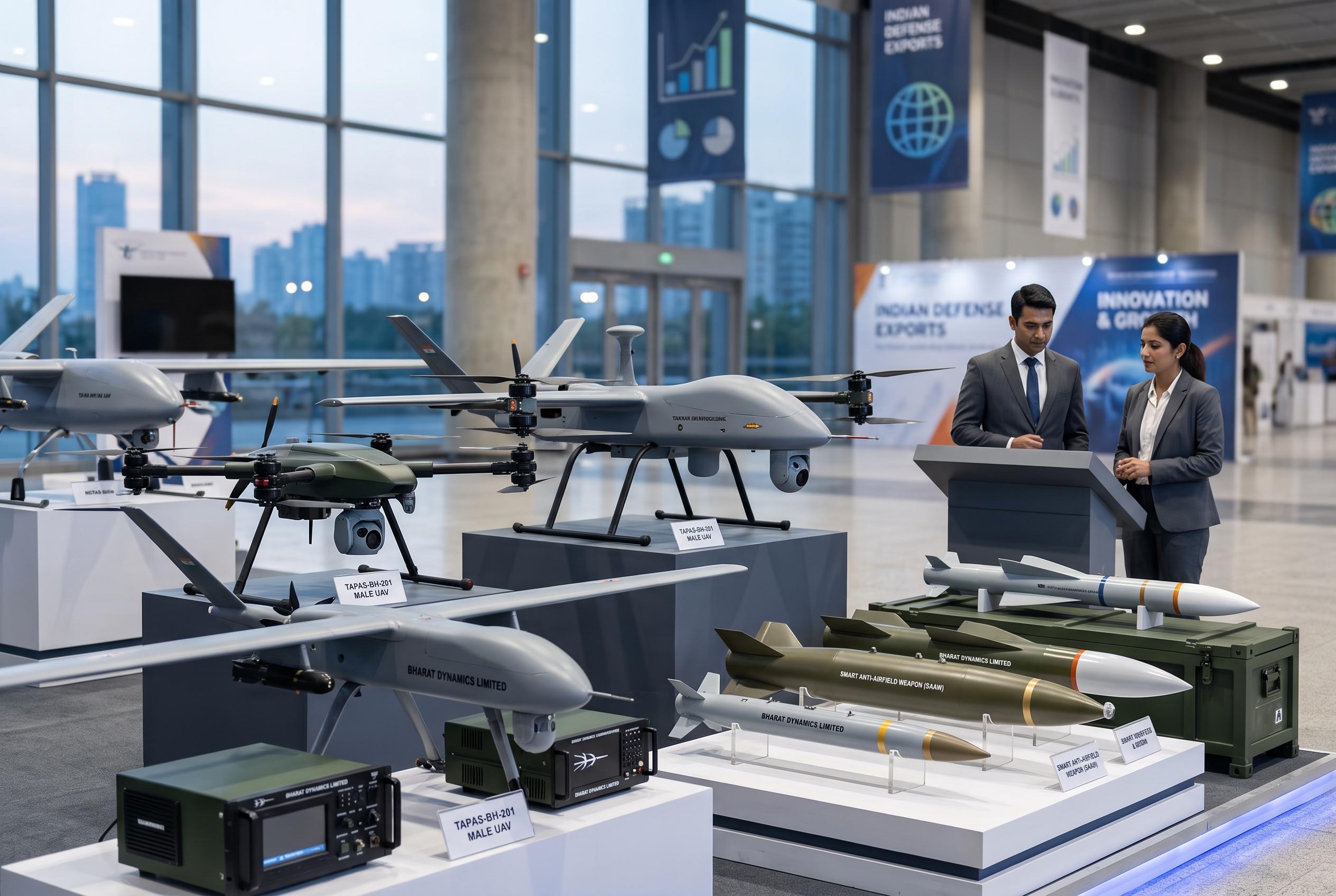
But the next leap is likely to come from smaller, more adaptable technologies. Indian Masterminds says the real growth opportunity now lies in drones, smart weapons, precision-guided ammunition, defence electronics and autonomous systems. That view is consistent with wider industry reporting, which suggests modern conflicts have boosted demand for low-cost unmanned systems, counter-drone tools and electronically guided munitions rather than only large traditional platforms.
This shift also fits the government’s broader export ambition. Defence Secretary Rajesh Kumar Singh has said India is aiming for ₹50,000 crore in defence exports by 2030, and Moneycontrol reported that about 145 Indian companies are already selling military equipment overseas. That expanding industrial base, together with the Make in India push and rising domestic production, is strengthening India’s position in global supply chains and reducing reliance on imports.
The technology mix behind India’s export rise is therefore changing as fast as the market itself. IG Defence’s KAL drone, described by the company as capable of long-range missions with a substantial payload, is one example of the type of platform that could help define the next phase. As demand grows for systems that combine range, precision and lower operating costs, India’s export story may increasingly be written not only by headline missiles such as BrahMos but by the quieter rise of drones, sensors and smart munitions.
Disclaimer: This article is intended to inform and educate, not to recommend or endorse any financial product, investment or strategy. Please consider your own financial circumstances and seek professional advice where appropriate before making financial decisions.