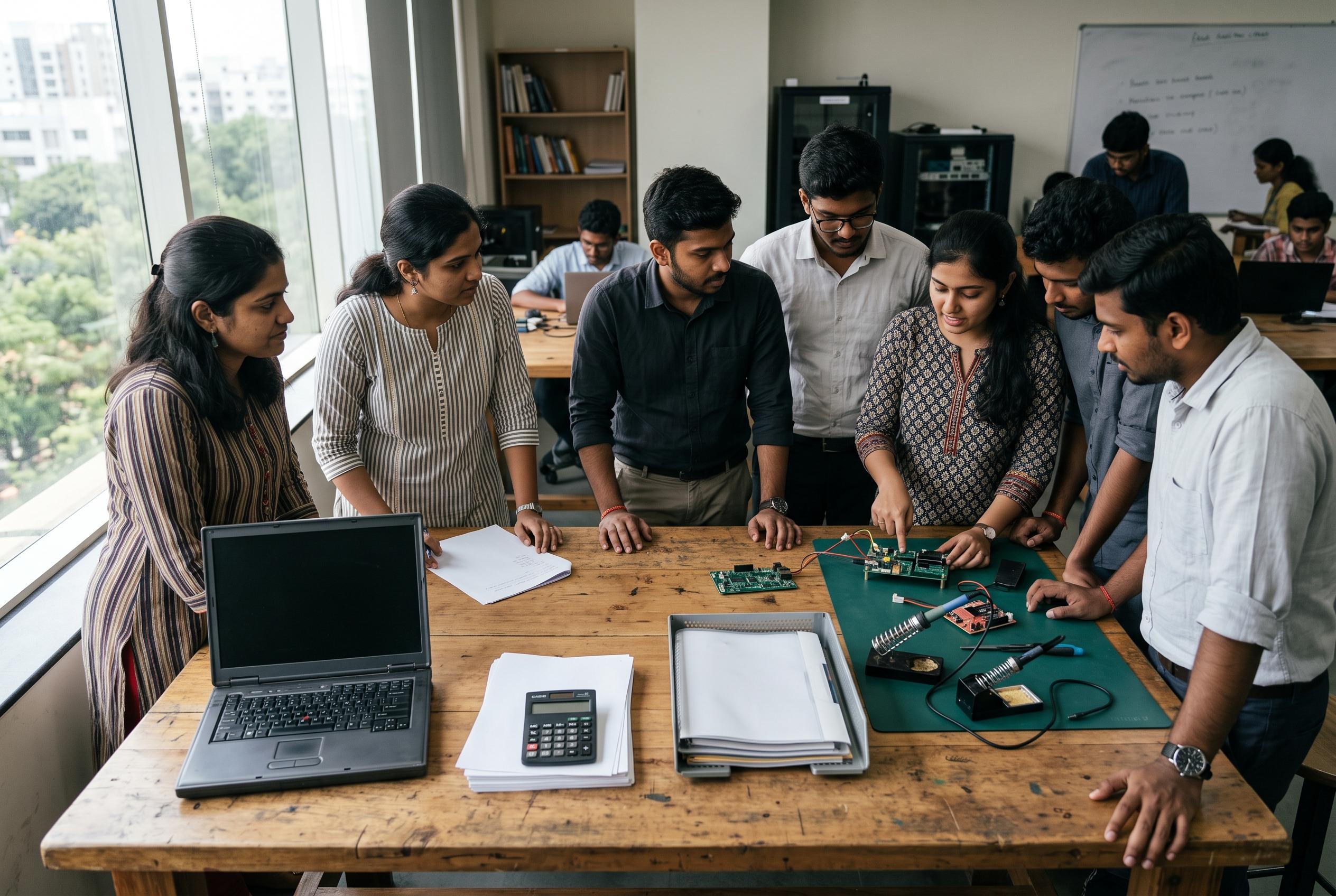

India’s government reports that more than 68,000 students have been trained under the Chips to Startups initiative, aiming to strengthen the country’s semiconductor design capacity and establish a robust electronics ecosystem.
India has trained more than 68,000 students under its Chips to Startups programme as it tries to deepen a domestic semiconductor design base, according to the government. Union minister of state for electronics and IT Jitin Prasada told parliament that the initiative is intended to build 85,000 industry-ready graduates and researchers across BTech, MTech and PhD levels in chip design.
Launched in 2022, the programme is part of a broader effort to position India as a stronger electronics system design and manufacturing hub. Industry and policy summaries say it brings together more than 300 organisations, including academic institutions and startups, and gives participants access to advanced electronic design automation tools, software used to create and test chip layouts before fabrication.
The government said 332 academic institutions now have access to those tools, supplied through companies including Synopsys, Cadence, Siemens EDA and others. Participating colleges and universities have completed 254 chip tape-outs, the point at which a design is sent for fabrication, including 175 at the 180nm process node at the Semiconductor Laboratory in Mohali and 79 at overseas foundries. In Andhra Pradesh alone, 23 institutions have been given tool access and have used more than 4.34 lakh tool hours, according to Prasada’s remarks in Lok Sabha.
The minister also said electronics hardware technology park units have risen to 79, with exports crossing Rs 11,100 crore in FY2025-26. The EHTP scheme is a 100% export-oriented framework that offers duty-free imports of capital goods and components, along with simplified customs procedures and single-window clearances, according to government and scheme information. Taken together, the training drive and export incentives point to a wider effort by New Delhi to strengthen the full electronics value chain, from design talent to manufacturing and overseas sales.
Disclaimer: This article is intended to inform and educate, not to recommend or endorse any financial product, investment or strategy. Please consider your own financial circumstances and seek professional advice where appropriate before making financial decisions.