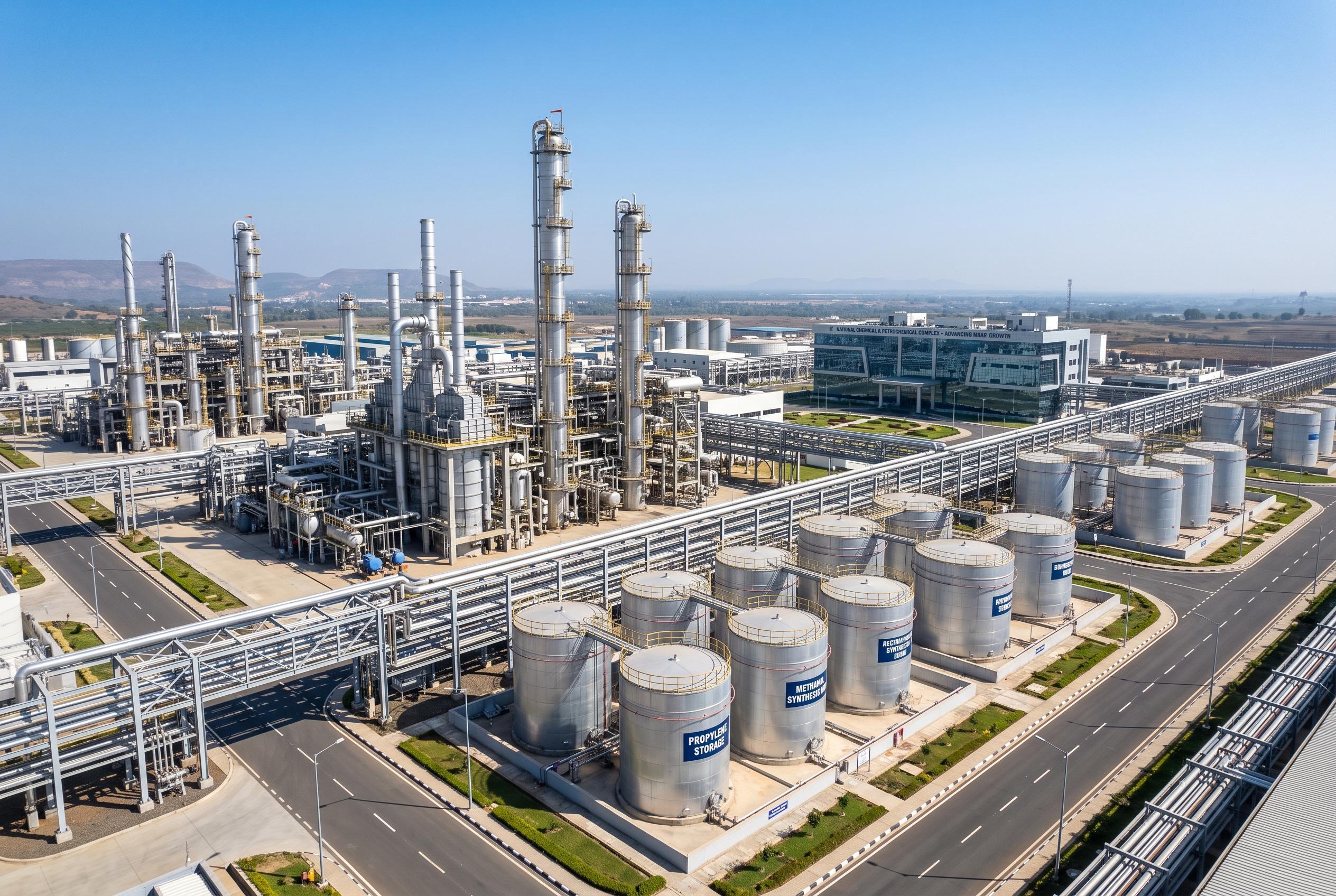

India’s chemicals industry is benefiting from a strategic policy shift towards cluster-based ecosystems, aimed at lowering costs, boosting investment, and advancing higher-value outputs amid global trade shifts.
India’s chemicals sector is drawing stronger policy support as the government pushes a cluster-based model meant to lower costs, improve logistics and attract more investment into a capital-heavy industry. The latest official update says Petroleum, Chemicals and Petrochemical Investment Regions, or PCPIRs, have drawn investment of about ₹3.4 lakh crore, underscoring the role of integrated industrial ecosystems rather than isolated plants in the country’s manufacturing strategy.
PCPIRs are designed to bring together feedstock access, transport links, utilities and downstream production in one location, giving companies a more efficient route into chemicals manufacturing. According to the government, that structure has become increasingly important as India tries to build a more self-reliant industrial base while global supply chains continue to shift under trade tensions, energy volatility and localisation efforts in major markets.
The policy push is also moving down the value chain. The Department of Chemicals and Petrochemicals has approved 10 Plastic Parks to support downstream processors, and four have completed full infrastructure development, with three finished during 2025-26, according to the ministry. In parallel, the 18 Centres of Excellence in the sector have filed 85 patents, published more than 600 research papers and developed 105 technologies and products, a sign that policymakers want the industry to move beyond commodities and into higher-value segments.
That direction is being reinforced by fresh budget support. Business Standard reported that the 2026 Union Budget set aside ₹600 crore for three dedicated chemical parks, marking the first budgetary backing for such infrastructure. The planned parks are intended to provide shared utilities, waste management and logistics support, echoing earlier efforts in Plastic Parks and PCPIRs that aim to reduce entry costs, encourage scale and make domestic chemical production more competitive.
Disclaimer: This article is intended to inform and educate, not to recommend or endorse any financial product, investment or strategy. Please consider your own financial circumstances and seek professional advice where appropriate before making financial decisions.