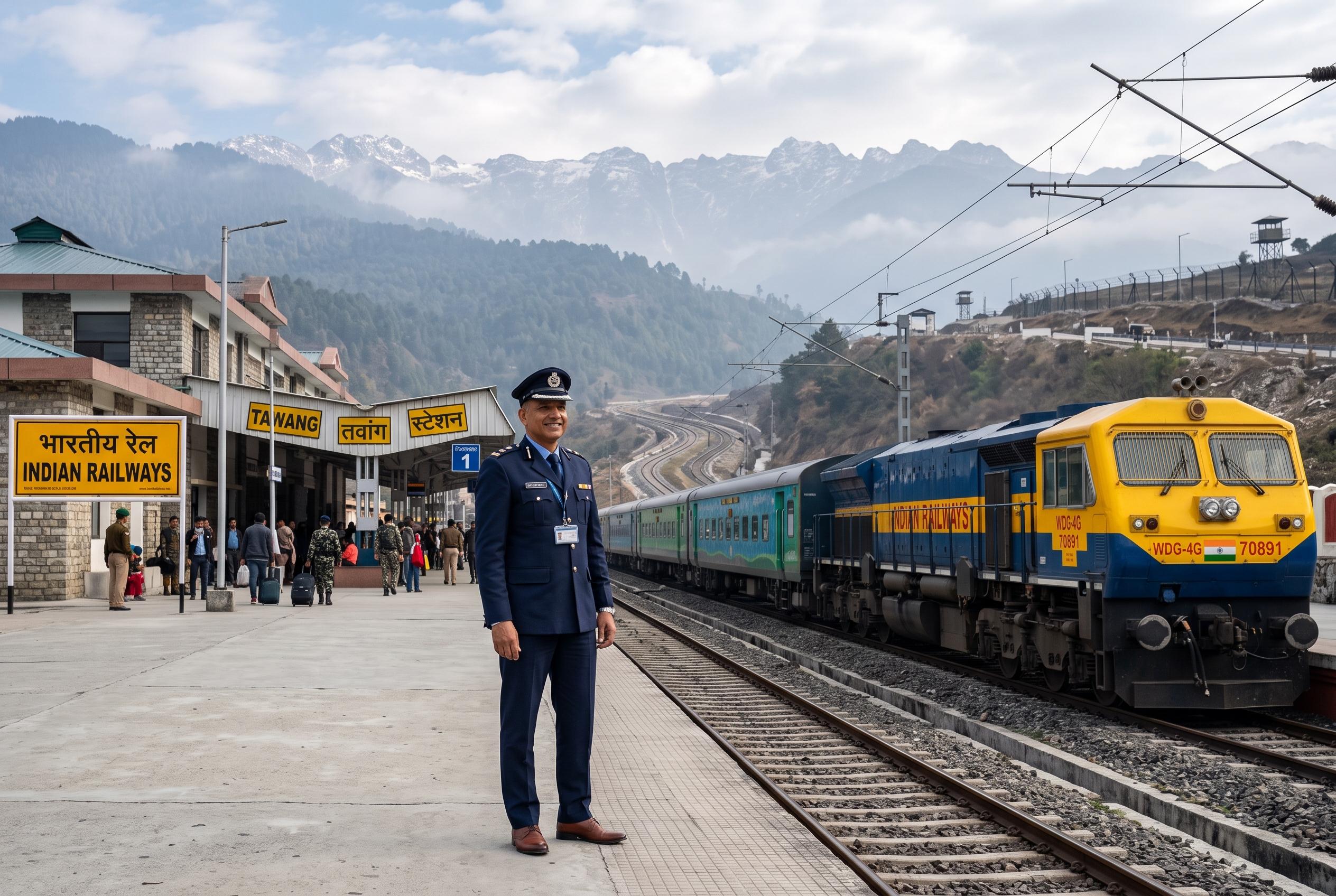

India is set to invest around $4.7 billion in new railway lines along its borders with China, Pakistan, and Bangladesh, aiming to strengthen security, improve regional connectivity, and enhance military logistics in sensitive frontier regions.
India is preparing a major railway build-out along its borders with China, Pakistan and Bangladesh, with The Nation reporting that the plan could involve about Rs45,000 crore, or $4.7 billion, in new investment. The programme is meant to strengthen transport links in strategically sensitive frontier areas at a time when New Delhi is treating connectivity as a security priority as well as an economic one.
According to the report, the money would be channelled into new lines and upgrades in Punjab, West Bengal, Himachal Pradesh, Rajasthan, Assam and several north-eastern states. The broader push comes alongside a record capital spending allocation for Indian Railways in the 2026-27 Union Budget, which the article says was set at Rs293,030 crore after a series of annual increases.
Separate reports published by the Straits Times, The Economic Times, The Times of India and Business Standard describe a narrower but related plan focused on the north-east: roughly 500 kilometres of rail lines, including bridges and tunnels, at an estimated cost of around Rs300 billion, or $4.4 billion. Those accounts say the scheme is intended to improve access to remote border districts adjoining China, Bangladesh, Myanmar and Bhutan, while also speeding logistics, emergency response and military deployment if tensions rise.
The latest reporting fits a wider pattern of infrastructure spending in frontier regions. India has already pushed ahead with major rail and road projects in difficult terrain, including the Chenab Rail Bridge in Jammu and Kashmir and new lines across the north-east over the past decade. Analysts cited in the lead article argue that the next phase would further reduce mobilisation times, strengthen supply lines and give New Delhi more flexibility between its eastern and western theatres.
Disclaimer: This article is intended to inform and educate, not to recommend or endorse any financial product, investment or strategy. Please consider your own financial circumstances and seek professional advice where appropriate before making financial decisions.