

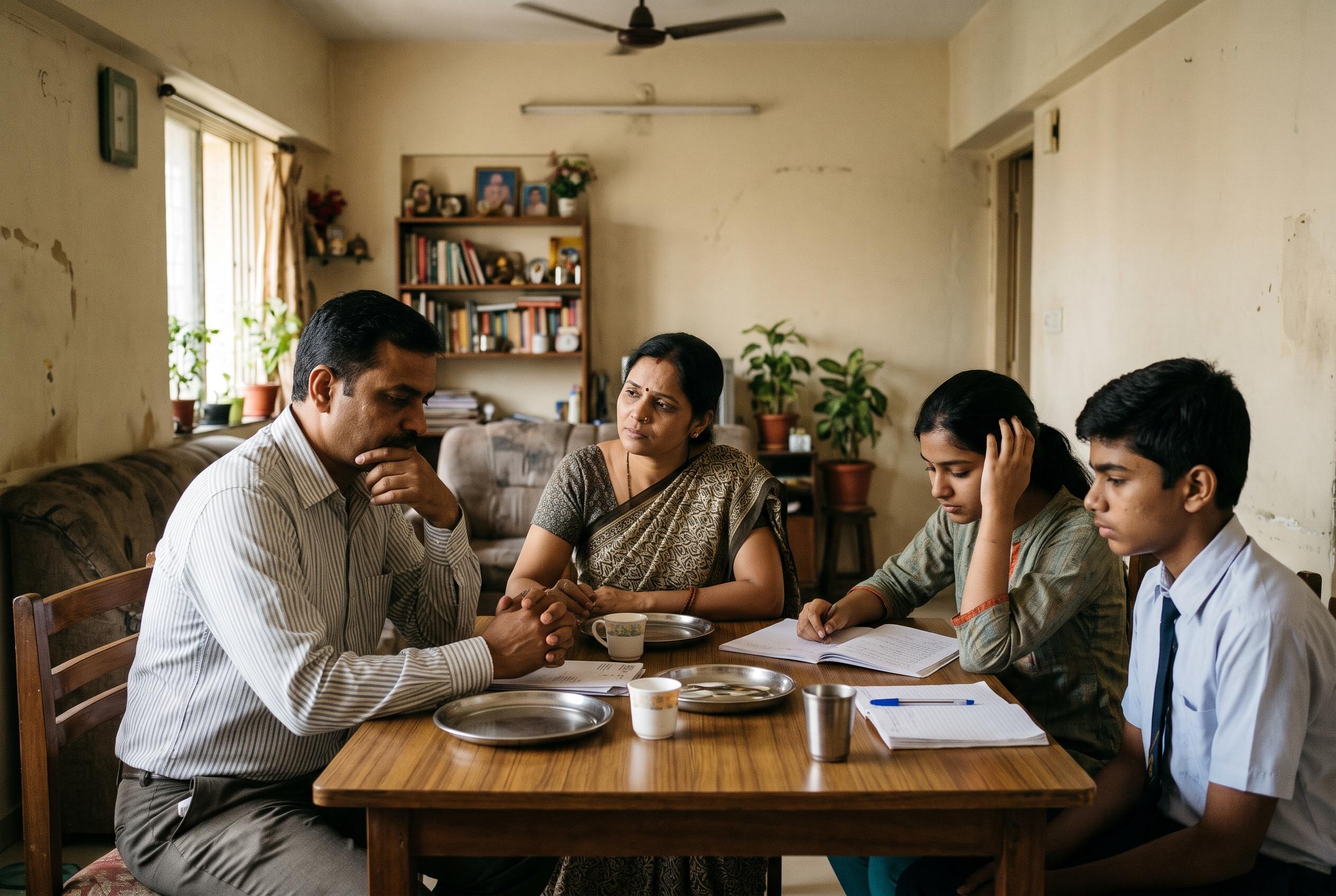

India’s economy is expanding rapidly, but weak consumer confidence, insecure work and rising household pressures expose the widening gap between headline GDP growth and everyday prosperity.
An Uber driver working longer hours for less pay captures a frustration that runs deeper than a single anecdote. India’s economy has been expanding quickly on paper, but many households say daily life still feels more precarious. That tension has become harder to ignore as official data show strong output growth alongside weakening sentiment. According to government figures, real GDP rose 7.8% in the April-June quarter, with services doing much of the heavy lifting, while manufacturing lagged.
The headline growth rate is undoubtedly robust, and it comfortably exceeded the Reserve Bank of India’s earlier estimate of 8% for the quarter. Yet the composition of that expansion matters. The services sector, particularly financial, real estate and professional services, contributed strongly, and contact-intensive activities such as trade, hotels and transport also improved. By contrast, manufacturing slowed, a reminder that rapid aggregate growth does not always translate into broadly shared gains.
That disconnect helps explain why household confidence has remained soft. Ajit Ranade points to the Reserve Bank’s urban consumer confidence survey for September, which showed the current situation index at 87.9, its lowest level since March 2023 and still below the neutral mark of 100. The survey also found that more than half of urban respondents felt the general economy had worsened over the previous year. In rural areas, too, more people reported falling incomes than rising ones.
The broader point is that gross domestic product measures output, not the lived experience of ordinary people. A country can produce more without making every household feel better off, especially when gains are concentrated in capital-heavy sectors or in parts of the economy that employ relatively few workers. That is why wages, job security and working conditions matter as much as the growth rate itself. Ranade argues that a large economy can still leave many people under pressure if income growth is unevenly distributed.
Employment data can also flatter reality. Someone counted as working may still be trapped in low-paid, irregular or insecure work. A driver who puts in extra hours but earns no more is employed in the statistical sense, yet his standard of living has deteriorated. That is one reason queues for government posts remain long: many applicants are not simply jobless, but seeking predictable pay, benefits and stability that the private market often fails to offer.
Ranade also points to the strain created by household expenses. Food, rent, school fees, healthcare and transport are the bills families notice most, and low inflation in the present does not erase earlier price rises. Farmers face a similar problem when local shocks such as drought hit income even as national growth remains firm. On markets, the picture is mixed: foreign investors have been pulling money out while domestic investors continue to add funds every month, leaving stock returns under pressure despite steady local participation.
The argument, then, is not that India has failed to grow, but that growth has not yet become sufficiently inclusive or reassuring. Stronger public services, better schools, more reliable healthcare and transport, and a broader base of decent jobs would do more than lift output figures. They would help turn national expansion into something households can feel in their own budgets and daily routines. Until that happens, the gap between macroeconomic success and private unease is likely to remain a defining feature of the economy.
Disclaimer: This article is intended to inform and educate, not to recommend or endorse any financial product, investment or strategy. Please consider your own financial circumstances and seek professional advice where appropriate before making financial decisions.



