

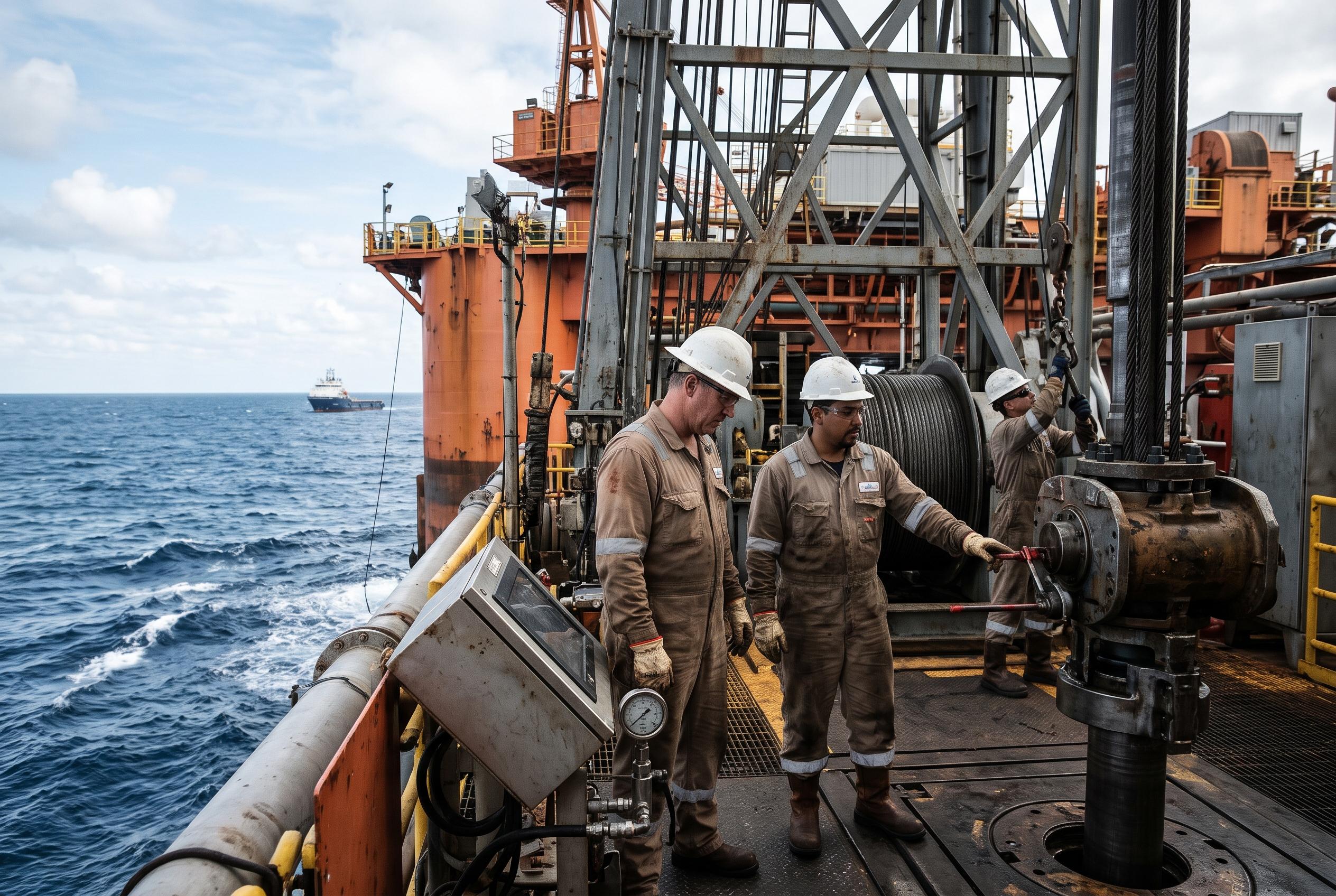

The Rs 84,084 crore Samudra Manthan scheme will absorb up to half the cost of eligible deepwater exploration wells, but operators must repay the support if drilling leads to commercial production.
India’s planned offshore energy push will be underwritten by a sizeable public subsidy, but the state intends to claw back part of its support if drilling succeeds. Under newly issued operational rules for the Samudra Manthan programme, the government will cover up to half the cost of risky deepwater and ultra-deepwater exploration wells, while retaining a claim on future revenue if those wells deliver oil or gas, according to the Business Standard. If a well comes up dry, the loss stays with the state.
The repayment mechanism is central to the scheme’s design. The guidelines say government funding will begin to be recouped after seven years of commercial production, or once the operator has recovered 50 per cent of its exploration and development costs, whichever arrives first. Repayment would be made in annual instalments without inflation indexation. The programme is set to support 60 wells in waters deeper than 400 metres, with 56 exploratory wells eligible for support of up to 50 per cent of actual cost, capped at Rs 675 crore each. Four stratigraphic wells, which are drilled to study rock layers, can receive as much as 100 per cent funding, subject to a ceiling of Rs 1,350 crore apiece.
The scale of the initiative reflects the government’s effort to reduce India’s reliance on imported hydrocarbons. The Business Standard said the total scheme outlay is Rs 84,084 crore, while Cabinet approval announced earlier set the programme’s horizon through FY2030-31. Prime Minister Narendra Modi announced the plan in his Independence Day speech in August 2025, describing it as a mission to find oil and gas reserves under the sea. Petroleum Secretary Neeraj Mittal has called it the most ambitious upstream oil and gas intervention in recent years and said it could add more than 600 million tonnes of oil equivalent to India’s reserves. Separate reporting has said officials expect the scheme could help lift domestic output and trim the import bill by as much as nearly Rs 1 lakh crore a year.
Eligibility for the subsidy is tightly drawn. Only blocks awarded under the revenue-sharing contract regime qualify, which means areas offered in bid rounds since 2016 are covered, while older production-sharing and coal-bed methane blocks are generally excluded unless the government decides otherwise. The support is restricted to exploration wells and does not extend to development wells or sidetrack wells. The guidelines also say payments will be milestone-based, with 40 per cent released once drilling reaches 40 per cent of the approved depth and the remainder paid on completion and approval of the well report.
Beyond drilling, the scheme is meant to address the bottleneck that often prevents discoveries from becoming producing assets. A second track will provide viability gap funding for shared infrastructure such as subsea manifolds, trunk pipelines, central processing platforms and floating production units, initially focusing on the Mahanadi basin with token funding for Kutch. The government says the point is to make small or stranded discoveries commercially workable by linking several fields into one system. A third track would back oil and gas manufacturing and services zones with utilities, berthing, warehouses and testing laboratories, while seismic surveying will be supported through a separate framework in which two-dimensional surveys are fully government-funded and three-dimensional surveys follow a multi-client model. The broader structure suggests New Delhi is trying not only to de-risk offshore exploration, but also to build the industrial ecosystem needed to sustain it.
Disclaimer: This article is intended to inform and educate, not to recommend or endorse any financial product, investment or strategy. Please consider your own financial circumstances and seek professional advice where appropriate before making financial decisions.



