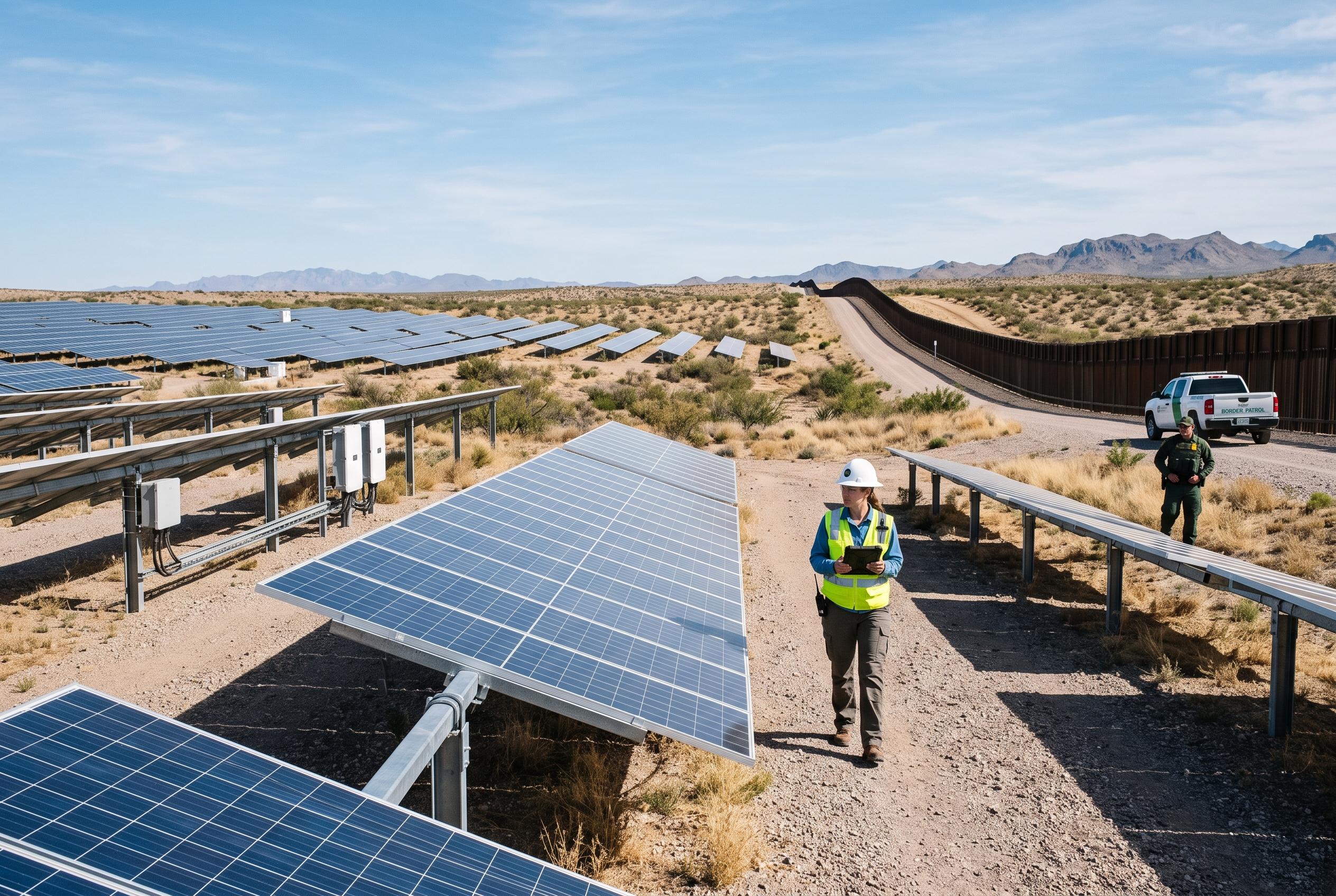

India has introduced stricter security rules for renewable energy projects within 1 km of its borders, citing national security concerns and requiring enhanced vetting and anti-drone measures for solar, wind, and hybrid schemes near sensitive frontiers.
India has tightened security rules around renewable energy projects near its sensitive frontiers, barring new solar, wind and hybrid developments within 1 km of the Line of Control, the Line of Actual Control and the international border, according to new government guidelines reported by News18 Hindi. The move reflects growing concern that large clean energy schemes near the border can involve land control, foreign contractors, on-site staff, drones and other equipment that may raise national security risks.
Under the new framework, areas stretching up to 50 km from those borders are treated as sensitive, with clearances required from the Home Ministry for solar, wind and hybrid projects. Projects planned within 20 km of the international border will also need a no-objection certificate from the Defence Ministry. According to the report in Telegraph, land allocation for such schemes will now be tied to security vetting, with applications routed through the Ministry of New and Renewable Energy before being shared with the Home and Defence ministries.
The guidelines also place tighter limits on foreign involvement. Nationals from neighbouring countries including Pakistan, Bangladesh and China will need central approval before being engaged as engineers, workers or other staff on such projects, and developers must ensure vetting of all personnel. Local police and the Border Security Force will issue security instructions that companies have to follow, adding another layer of compliance for firms working close to the frontier.
Security arrangements at project sites are being expanded beyond paperwork. The new rules call for anti-drone systems, to be operated by the Central Industrial Security Force or state police at the developer’s expense, as well as dedicated police posts to monitor construction activity in sensitive areas. The government also wants to keep watch over land transfers, saying property used for these projects cannot be passed to a foreign company without central approval.
The measures come as India continues to push renewable energy expansion while also tightening the technical and safety framework around the sector. In April, the Central Electricity Authority issued revised technical standards for electrical plants and lines, covering solar, wind and battery storage systems, with the changes due to take effect from April 1, 2027, according to industry reports. Separate CEA rules on battery energy storage, also due from 2027, require stronger safety features including two-fault tolerance, fire suppression and independent fire audits. The new border guidelines appear to extend that same regulatory caution into strategically sensitive terrain.
Disclaimer: This article is intended to inform and educate, not to recommend or endorse any financial product, investment or strategy. Please consider your own financial circumstances and seek professional advice where appropriate before making financial decisions.