

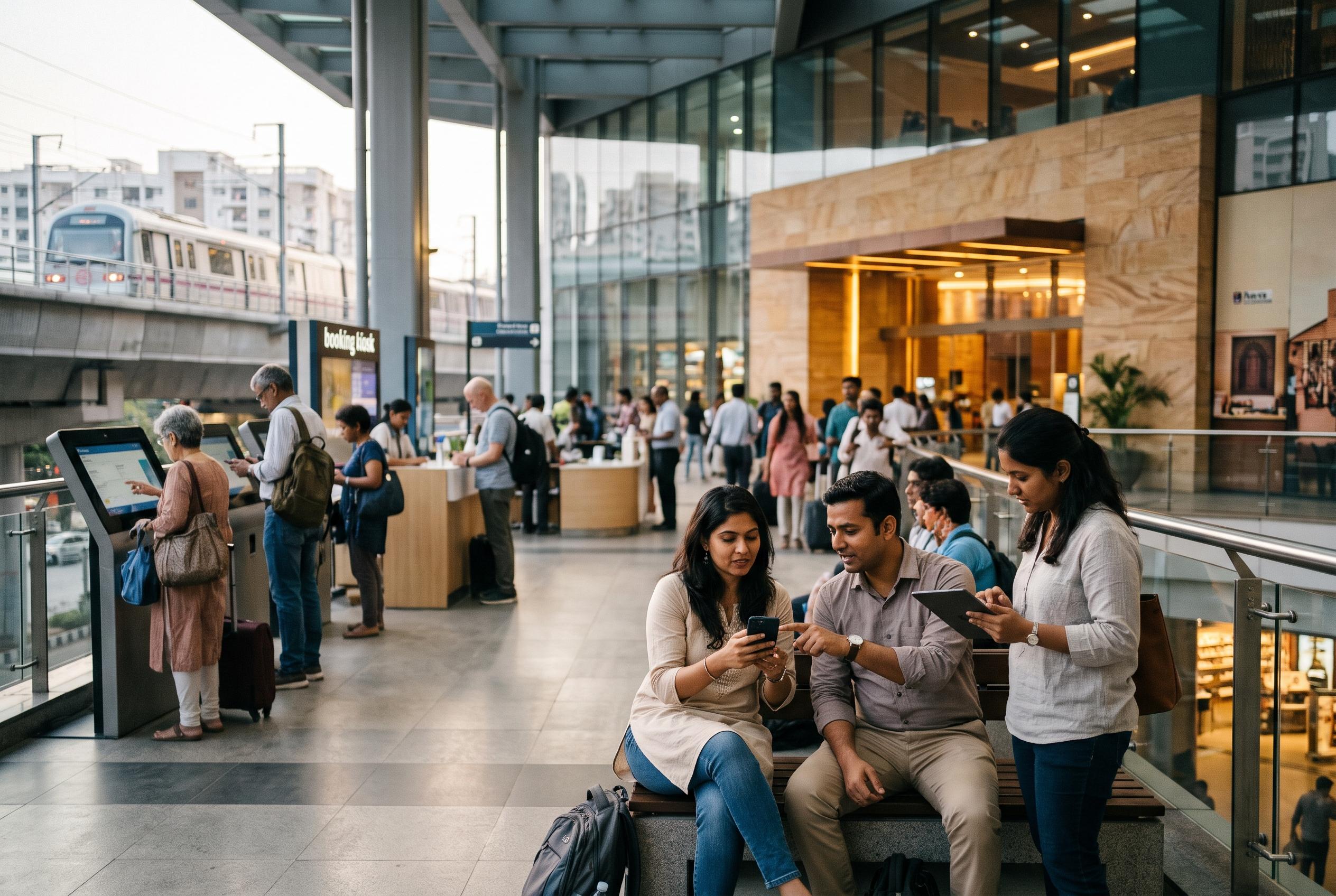

India is moving beyond destination promotion towards integrated infrastructure, digital booking systems and more diverse experiences as it targets a $250 billion tourism economy by 2030.
India’s tourism strategy is shifting from selling attractions to building systems. That was the central message from Bhuvnesh Kumar, the Union tourism secretary, in an interview with Indian Masterminds, where he argued that the sector now needs integrated planning, stronger infrastructure and more varied experiences if it is to become a bigger contributor to growth, jobs and foreign exchange. His remarks come as the government pushes towards ambitious 2030 goals for tourism’s share of the economy and looks further ahead to 2047, when it wants India to be a much more diversified, year-round destination.
Kumar said the biggest change since 2014 has been a move away from isolated promotion towards ecosystem development. He pointed to investment in connectivity and destination-wide infrastructure, as well as a broader tourism portfolio that now includes meetings, incentives, conferences and exhibitions, adventure travel, wellness, medical tourism, cruises, rural experiences and destination weddings. The broader policy direction, he said, is to make tourism easier to enter, easier to operate in and more attractive to private capital, while also strengthening skills and community participation.
The sector still faces familiar weaknesses. Kumar said India must improve international and last-mile connectivity, visa and entry processes, accommodation quality, cleanliness, safety, service standards and destination management if it wants to compete more effectively for global travellers. Industry coverage has echoed that view, with The New Indian Express reporting that the ministry is focusing on destination development that combines quality infrastructure, reliable access, visitor amenities and local participation, rather than relying on promotion alone.
The government’s targets remain sizeable. According to the ministry’s roadmap, India is aiming for tourism to contribute about $250 billion to GDP by 2030, support 137 million jobs, earn $56 billion in foreign exchange and attract 25 million foreign tourist arrivals. Kumar said the ministry is also trying to strengthen the statistical base for measuring progress, noting that tourism contributed an estimated 5.22% to GDP in 2023-24 and supported 84.63 million direct and indirect jobs, while 2025 saw 20.22 million international arrivals and about ₹2.7 lakh crore in foreign exchange earnings.
A large part of the policy response is now centred on programme design. Kumar contrasted Swadesh Darshan 1.0, which focused on thematic circuits and physical infrastructure, with Swadesh Darshan 2.0, which is built around destinations and the full visitor journey. He said the newer phase combines hard assets with softer measures such as skills, digital systems, sustainability, maintenance and community involvement, and has introduced state-level and destination-level institutions to help clear bottlenecks. The ministry has also moved on pilgrim and heritage sites through PRASHAD, while recent policy discussion has included more experiential development at archaeological sites and a Buddhist circuit in the North-East.
Technology is becoming part of that wider overhaul. The ministry and the Open Network for Digital Commerce have been building a National Digital Tourism Stack, aimed at bringing homestays, guides, attractions, transport and experiences into a single discoverable and bookable ecosystem. Kumar has also tied digital tools to better regulation, including online registration and classification through NIDHI+ and a broader effort to simplify approvals for accommodation and hospitality businesses. He said the sector’s future depends on making India not only more visible abroad, but also more legible, reliable and easy to book for domestic and international visitors alike.
Looking ahead to 2047, Kumar said India should aim for a tourism map that is more dispersed, more diverse and active throughout the year. The ministry’s longer-term thinking, as reflected in recent policy discussion, includes a larger inbound market and a far bigger tourism economy, supported by faster transport links, more hotel capacity, simpler regulation, stronger skills and data-led marketing. For the government, the challenge is no longer simply to attract visitors, but to turn tourism into a durable engine of local development, formal employment and export earnings.
Disclaimer: This article is intended to inform and educate, not to recommend or endorse any financial product, investment or strategy. Please consider your own financial circumstances and seek professional advice where appropriate before making financial decisions.



