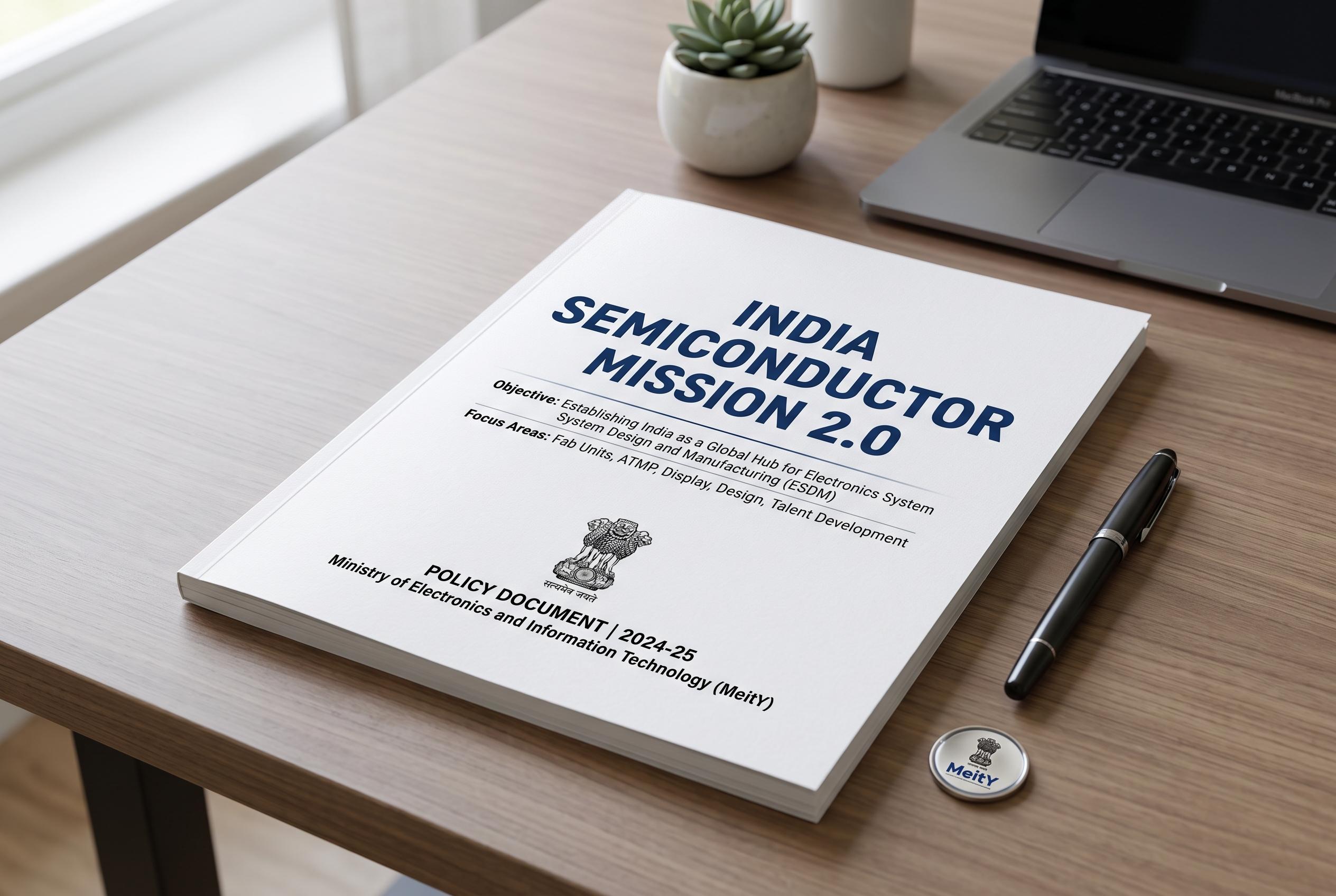

India’s tech ministry unveils ISM 2.0, aiming for long-term policy stability to attract investment and expand its role in semiconductors, AI, and social media regulation.
India’s technology ministry is preparing a new phase of its semiconductor push that officials say is designed to give the sector greater policy stability, as the country looks to deepen its role in a strategically vital industry. In a podcast interview with The Economic Times, the IT secretary discussed the next stage of the India Semiconductor Mission, known as ISM 2.0, alongside the government’s approach to social media regulation and India’s broader artificial intelligence ambitions.
According to The Economic Times, ISM 2.0 would build on the first phase of the programme, which approved 12 projects. The secretary said the government had learned from that initial round and was now shaping a second phase with a more market-linked funding model for chip design start-ups, rather than relying on a one-size-fits-all approach. The new plan also appears to distinguish more clearly between silicon fabrication plants and other packaging facilities, with fabs set to receive different incentives.
The report also said the government sees long-term policy certainty as central to keeping domestic semiconductor investment on track. That matters because chip manufacturing requires large upfront capital, long lead times and a regulatory framework that investors can trust. By signalling a more tailored incentive structure, New Delhi is trying to make its support package more attractive to companies considering India as a manufacturing base.
The same conversation touched on the government’s wider digital agenda, including how to regulate social media and how India can compete in the global AI race. Together, the themes point to a policy drive that is no longer confined to manufacturing alone, but is also aimed at shaping the country’s wider technology ecosystem. According to The Economic Times, the interview framed semiconductors, platform regulation and artificial intelligence as connected parts of the same national strategy.
Disclaimer: This article is intended to inform and educate, not to recommend or endorse any financial product, investment or strategy. Please consider your own financial circumstances and seek professional advice where appropriate before making financial decisions.