

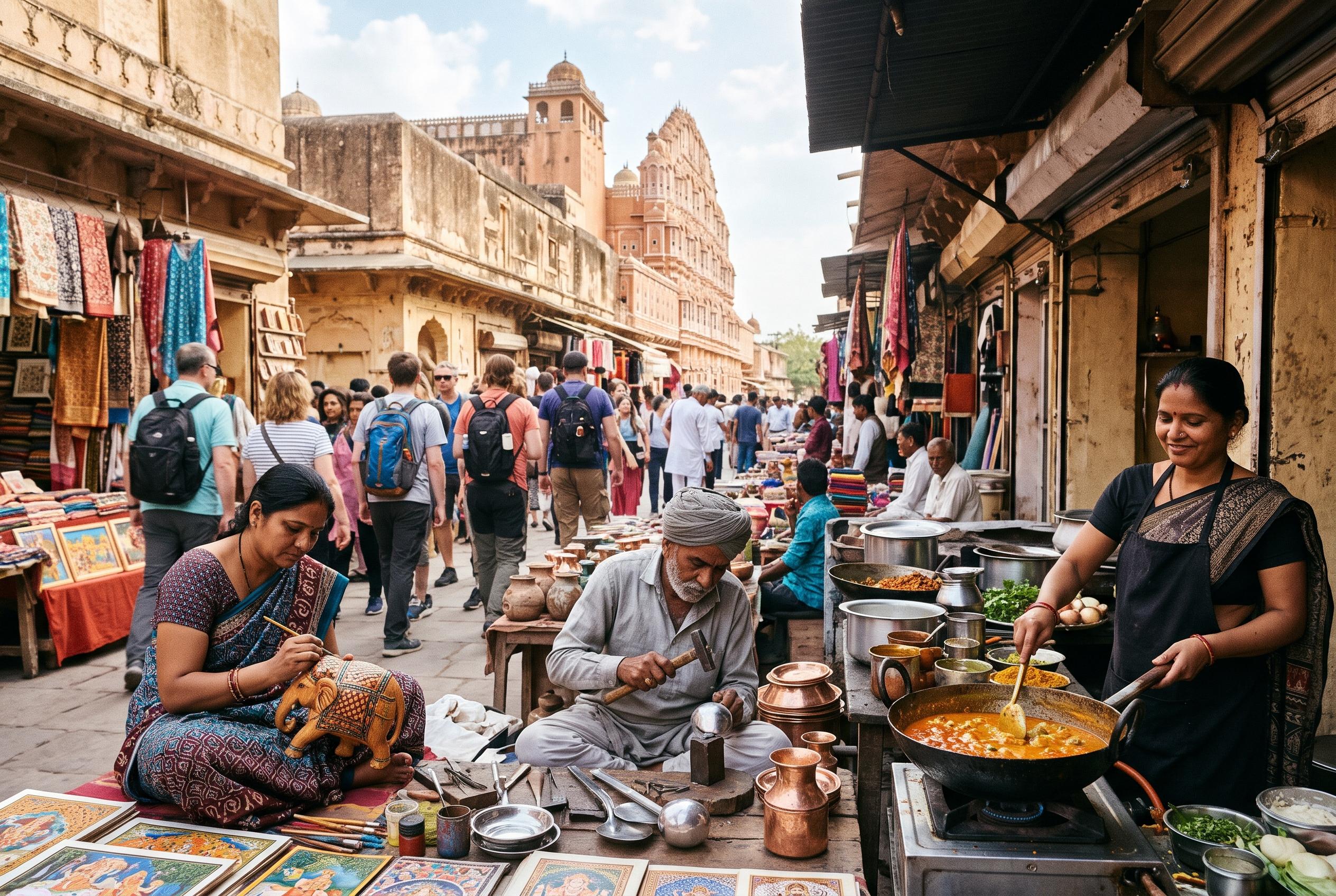

India’s Commerce Ministry is identifying professions less vulnerable to AI, with the government highlighting traditional skills, tourism and human creativity as potential areas of global advantage.
Piyush Goyal said the Commerce Ministry is drawing up a list of professions that are less exposed to artificial intelligence, as India tries to position itself for a labour market reshaped by automation and machine learning. Speaking to Indian science and technology researchers and students in Germany on Friday, the commerce and industry minister said the aim was to identify fields where AI can improve productivity without displacing people on a large scale.
Goyal argued that India’s strengths in handicrafts, handloom, culinary arts and tourism could give it room to build global leadership even as other countries accelerate their use of AI. He said these sectors depend heavily on human skill, judgement and creativity, making them less vulnerable to substitution by software and algorithms. According to reports in Moneycontrol and Mid-Day, he framed the exercise as part of a broader effort to use the country’s young workforce and deep pool of skilled talent to its advantage.
The minister also said the government would not rely on a single policy tool to support these industries. Instead, he described a mix of private initiative, public support and opportunity-driven growth, adding that incentives would be deployed where needed but would not necessarily be required across every activity. The Hindu reported that he linked the strategy to the wider goal of improving living standards for India’s 1.4 billion people.
Goyal also used the trip to Germany to make a pitch for Indian researchers, engineers and scientists overseas to return home. He said the challenge was not only to offer money, but to build an ecosystem that encourages innovation through stronger links between industry, academia and research institutions. He also pointed to the large Indian community in Germany, including tens of thousands of students, saying many appeared eager to bring their experience back to India. He said developed economies would increasingly need to engage with emerging markets in Asia, Africa and Latin America as those regions drive future growth.
Disclaimer: This article is intended to inform and educate, not to recommend or endorse any financial product, investment or strategy. Please consider your own financial circumstances and seek professional advice where appropriate before making financial decisions.



