

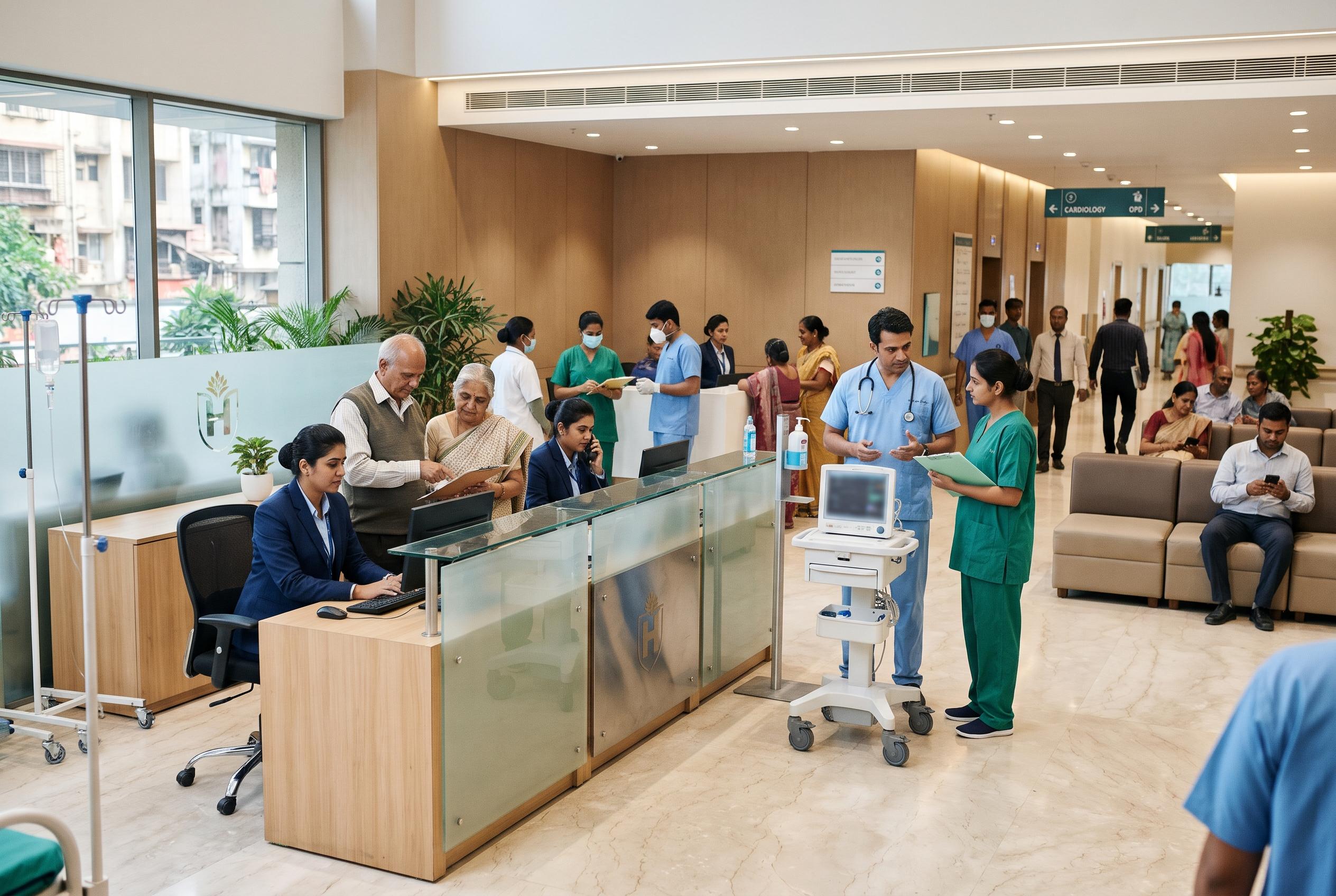

Healthcare dealmaking in India accelerated in the third quarter, with private equity concentrating capital in hospital networks while buyers pursued specialist pharmaceutical, diagnostics and life sciences assets.
India’s pharmaceutical and healthcare deal market reached a quarterly peak in the three months to September, as investors backed hospital operators, specialist drug assets and diagnostics platforms in a sign that capital is chasing both scale and technical depth.
Grant Thornton Bharat said there were 87 deals in the sector in the third quarter of calendar 2026, worth $4.3 billion. That represented a 34% increase in deal volume from the previous quarter and a 23% rise from the same period a year earlier, according to the firm’s Dealtracker report. Excluding public-market transactions, mergers and acquisitions alongside private equity and venture capital activity totalled 81 deals worth $2.8 billion. The headline value was lower than in the second quarter, but only because that period included Sun Pharmaceutical Industries’ $11.75 billion purchase of Organon, rather than because underlying activity weakened.
Bhanu Prakash Kalmath S J, partner and healthcare industry leader at Grant Thornton Bharat, said the market is being pulled in two directions at once: expansion of healthcare delivery and the build-out of more specialised capabilities across the life sciences chain. In his view, large private investments in hospitals show that established care platforms remain attractive, while pharma and biotechnology buyers are increasingly focused on brands, intellectual property and manufacturing assets.
M&A activity increased modestly to 37 deals worth $500 million. Domestic buyers accounted for 27 of those transactions, or 73% of the total, as companies pursued regional expansion, smaller bolt-on acquisitions and capability gains. The average deal size fell sharply from the previous quarter, once the Sun Pharma-Organon transaction is excluded. The largest deal in the category was Novartis India’s $132 million acquisition of Pfizer’s Minipress trademarks and related intellectual property. Diagnostics also saw a stronger quarter, with six transactions, double the number recorded in the previous period.
Private equity and venture capital drove much of the quarter’s momentum, rising to 44 deals worth $2.33 billion from 26 deals worth $444 million in the prior quarter. KKR’s agreement to acquire Medicover India’s hospital operations was among the standout transactions, reinforcing the broader investor appetite for hospital networks with room to scale. The deal fits KKR’s stated strategy of investing in India’s healthcare sector, while Medicover’s footprint spans multispecialty hospitals, oncology centres, fertility clinics and diagnostic laboratories.
Hospitals dominated capital deployment, drawing about $1.8 billion across four PE transactions and accounting for roughly 78% of PE and VC value. Health technology and wellness generated more deals, but a far smaller share of the money. On the fundraising side, four initial public offerings raised $1.27 billion, the highest quarterly total in the series, while two qualified institutional placements brought in another $162 million. Manipal Health Enterprises’ $976 million listing made up the bulk of IPO proceeds, underlining how concentrated public-market fundraising remained among the sector’s largest names.
The broader pattern suggests that investors are still willing to pay for healthcare businesses that combine scale with focused capabilities. That is also reflected in the operating strategies of major hospital groups. Manipal Hospitals, which says it has more than 13,000 beds across 49 hospitals, remains one of India’s largest providers by capacity, while Max Healthcare has continued to expand through acquisitions such as Sahara Hospital in Lucknow and Alexis Multi-Specialty Hospital in Nagpur. Grant Thornton Bharat said rising demand for prevention, early diagnosis and wider access to care is likely to keep investment flowing into hospitals, pharmaceuticals, diagnostics and digital health into 2027.
Disclaimer: This article is intended to inform and educate, not to recommend or endorse any financial product, investment or strategy. Please consider your own financial circumstances and seek professional advice where appropriate before making financial decisions.



