

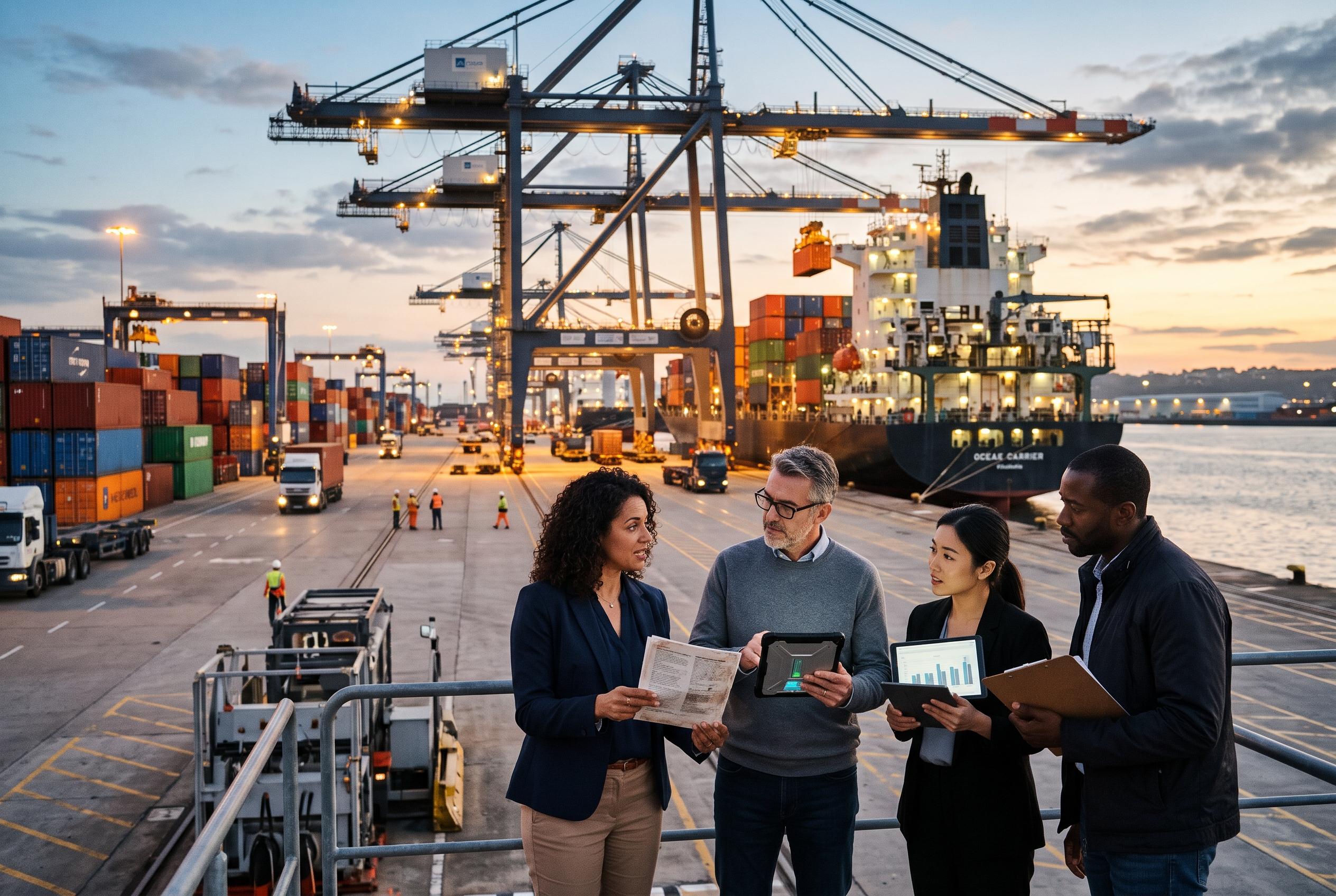

The extension of the RELIEF scheme to March 2027 will maintain enhanced cover and frozen premiums for exporters facing higher freight costs, delays and conflict-related risks.
India has extended a relief scheme for exporters trading with West Asia until March 31, 2027, as the government seeks to cushion businesses from continuing conflict-related disruptions to shipping routes across the Gulf and nearby waters.
The Commerce and Industry Ministry said the extension covers Component II of the Resilience & Logistics Intervention for Export Facilitation, or RELIEF, a time-limited measure under the Export Promotion Mission announced in this year’s Union Budget. The scheme, which began in March, applies to 10 destinations including the United Arab Emirates, Saudi Arabia, Kuwait, Qatar, Oman and Iran, and is designed to make insurance cover more affordable for shipments sent into a volatile trade corridor.
Under the programme, the Export Credit Guarantee Corporation of India provides enhanced compensation of up to 100% of losses tied to war-related and associated political risks, subject to verification. The government also said premiums will remain frozen at pre-disruption levels during the eligible period, while exporters using standalone policies or whole turnover policies can receive 95% risk cover for eligible shipments taken on or after March 16, 2026. The cover applies to full container load, less-than-container load and refrigerated cargo, but not energy shipments.
The decision comes as exporters continue to absorb higher freight costs, port delays and uncertain transit schedules. Industry data released by the Commerce Ministry showed that several low-margin shipments have remained under pressure even as the rupee weakened versus a year earlier. Ready-made garment exports fell 6% in the April-to-September period, while exports of fruits and vegetables, tea, spices and oil meals dropped 9.6%, 13.6%, 5.7% and 26%, respectively. Rice exports, a key category for West Asia, rose only 2.5% over the same period, while engineering goods and electronics drove broader export growth.
Aman Gupta, managing director of Shiv Shakti Inter Globe Exports, told the Indian Express that the problems are especially acute for lower-value agricultural goods such as Basmati rice, which have less room to absorb logistical shocks than higher-value manufactured products. Gupta said the outlook remains difficult because high freight charges, unpredictable sailing schedules and delayed payments are forcing smaller exporters to operate with much thinner margins and less flexibility.
The strain is visible in India’s trade with the region. Exports to the UAE, India’s second-largest export market, fell nearly 11% to $16.70 billion in the first half of the current financial year compared with the same period a year earlier. Shipments to Saudi Arabia slipped more than 5% to $4.70 billion, while exports to Iraq fell almost 50% to $836 million. Trade with Qatar, Kuwait and Iran also declined sharply. Oman was an exception, with exports rising 47.4% to $3.28 billion after the India-Oman free trade agreement came into force in June.
The broader regional fallout has also reshaped shipping patterns. In its latest trade outlook, the World Trade Organisation said the Middle East was expected to see a 17.2% contraction in merchandise exports in 2026, alongside a 4% decline in output, as conflict continues to disrupt commerce. The WTO also said container throughput at Jebel Ali, the United Arab Emirates’ largest port, fell by about 60% year-on-year in the first half of 2026, while ports in Oman and Saudi Arabia recorded strong gains as carriers diverted traffic to alternative hubs. The organisation defined container throughput as the total number of shipping containers handled by a port, terminal or country.
Disclaimer: This article is intended to inform and educate, not to recommend or endorse any financial product, investment or strategy. Please consider your own financial circumstances and seek professional advice where appropriate before making financial decisions.



