

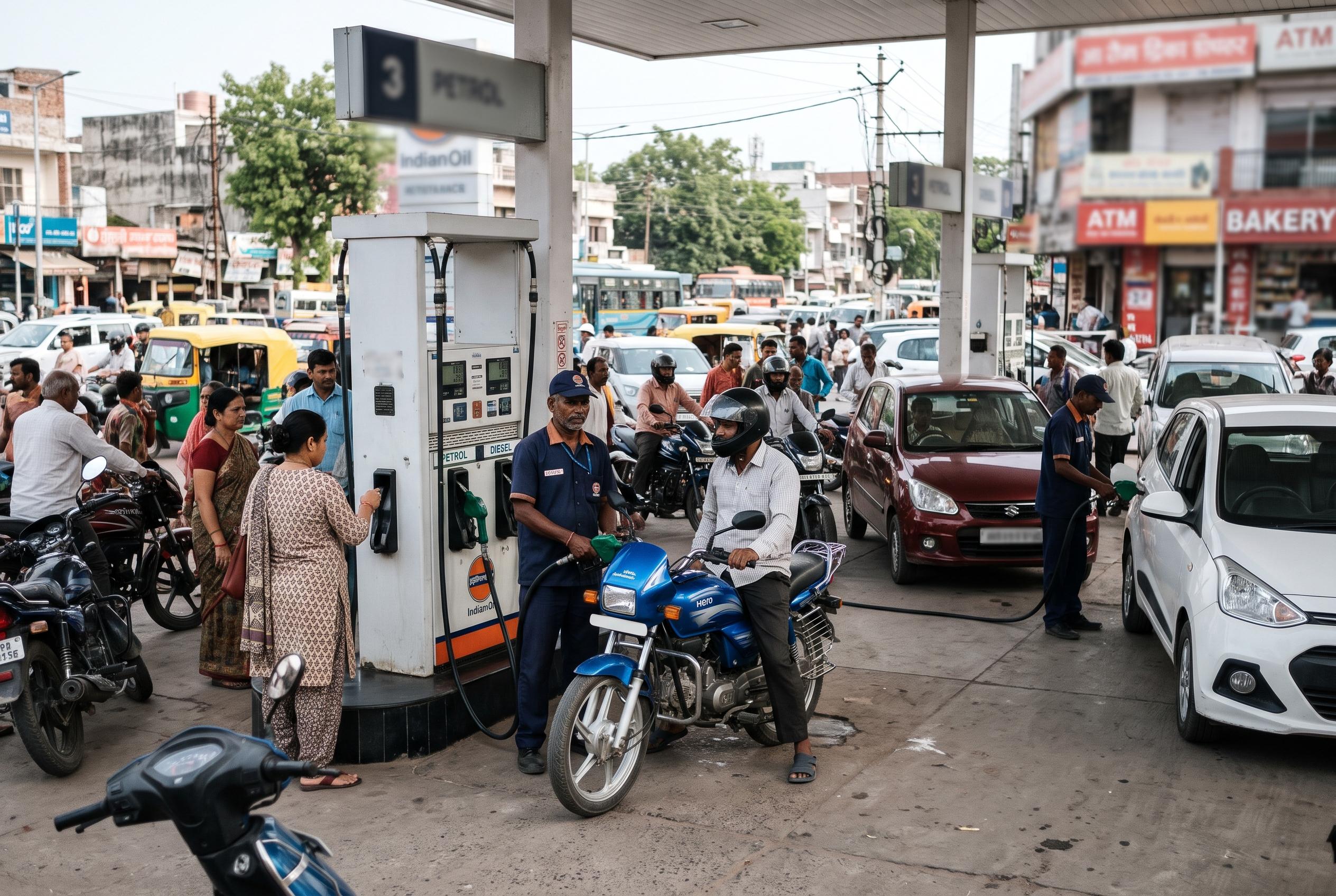

State-run fuel retailers have held petrol and diesel rates steady despite volatile global crude markets, as rolling averages, the rupee, refining margins and taxes delay any immediate impact at the pump.
Crude oil prices have been swinging higher in global markets, but motorists in India have not yet seen an immediate pass-through at the pump. State-run fuel retailers left petrol and diesel rates unchanged on Friday morning, even as Brent and West Texas Intermediate remained volatile amid geopolitical tension and concerns about supply. The main reason is that retail pricing in India does not move in lockstep with every change in crude; oil companies typically look at rolling averages, along with refining margins and currency movements, before altering pump rates.
That delay matters in a country that imports more than four-fifths of its petroleum needs. Higher crude prices can raise the cost of imports, but the final impact on petrol and diesel also depends on the rupee-dollar exchange rate, freight charges, refined-product prices and the taxes imposed by the Centre and the states. Industry explainers on fuel pricing have long noted that a jump in crude does not automatically translate into an equal or immediate rise at the forecourt, because oil-marketing companies often absorb part of the shock for a period of time.
For now, the latest retail prices remain unchanged in the big cities. In Delhi, petrol is priced at ₹102.12 a litre and diesel at ₹95.20. Mumbai continues to have some of the highest rates among major metros, with petrol at ₹111.21 and diesel at ₹97.83. Kolkata is at ₹113.51 for petrol and ₹99.82 for diesel, while Chennai stands at ₹107.76 and ₹99.55 respectively. The differences reflect state-level value added tax, freight costs and other local charges, which is why prices can vary sharply from one city to another.
Elsewhere, the pattern is similar. In Lucknow, petrol was listed at ₹101.86 and diesel at ₹95.36, while Noida and Greater Noida were at ₹101.94 and ₹95.08. Ghaziabad showed petrol at ₹101.78 and diesel at ₹94.92, and Kanpur was at ₹101.65 and ₹95.12. Higher-tax states and some large southern and western cities remain costlier, with Jaipur at ₹112.66 for petrol, Patna at ₹111.80, Bengaluru at ₹111.68 and Hyderabad at ₹116.15. The same local levies that create these gaps also explain why a national price move, when it comes, is not felt evenly across India.
The broader economic stakes are clear. Analysts say a sustained increase in crude can feed into transport costs, logistics bills and household spending, which in turn adds pressure to inflation. That is one reason the government has an incentive to avoid sudden fuel shocks when possible. For consumers who want to check their local rate directly, the three state-run oil companies still offer SMS-based price look-ups using a dealer code sent to the relevant helpline number.
Disclaimer: This article is intended to inform and educate, not to recommend or endorse any financial product, investment or strategy. Please consider your own financial circumstances and seek professional advice where appropriate before making financial decisions.



