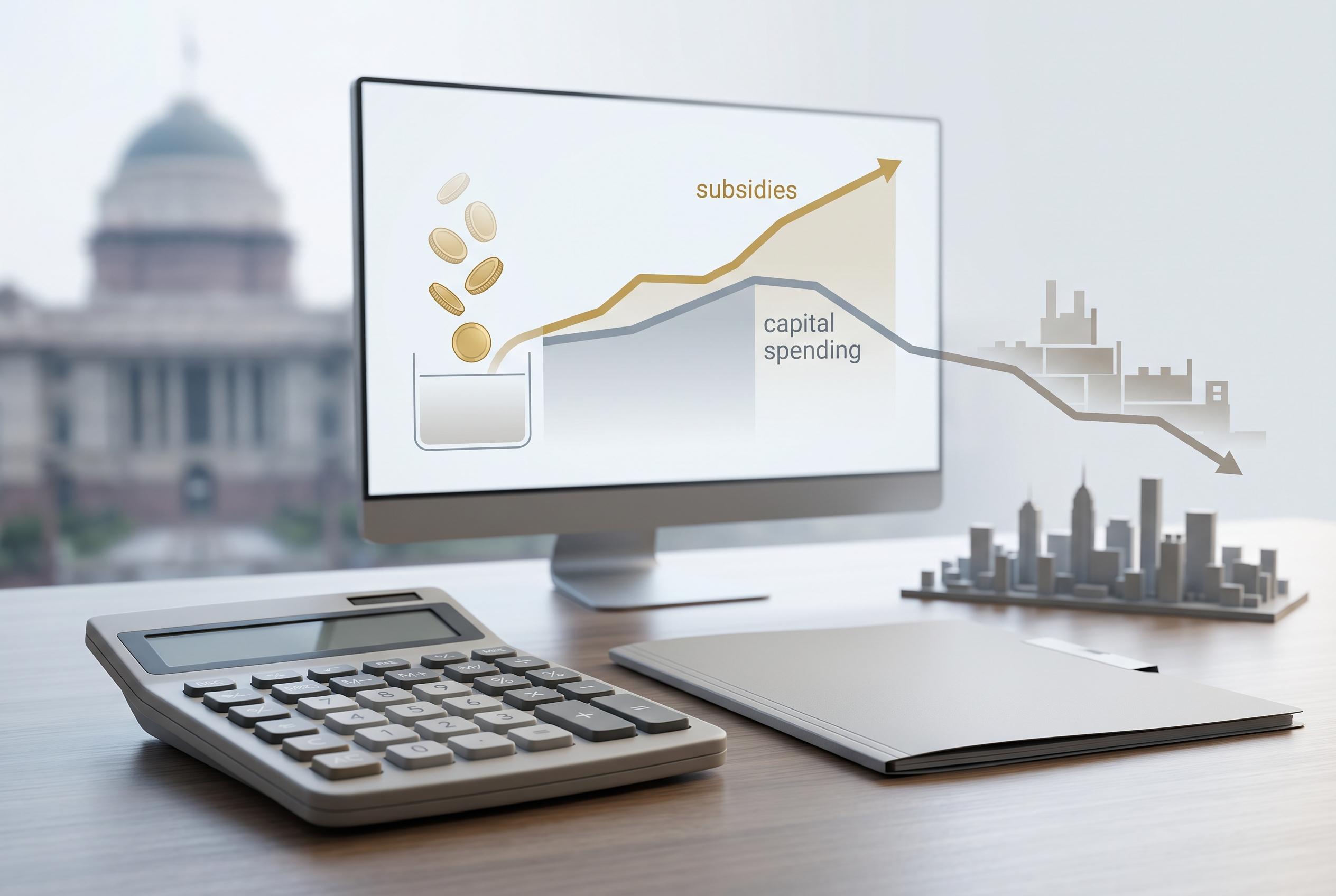

The latest CAG report exposes a rising share of subsidies and dwindling infrastructure investments in Delhi’s finances, raising questions over sustainability and long-term growth strategies amid political debates.
Delhi’s new government on Monday tabled the Comptroller and Auditor General’s 2024-25 report on the capital’s finances, sharpening the political fight over the previous administration’s spending priorities. According to the report, subsidies and other recurring costs have taken a growing share of the budget, leaving little room for long-term investment in infrastructure and public assets.
The audit says revenue expenditure rose far faster than capital spending, with committed costs and subsidies absorbing most of the increase. Over the 2015-25 period, subsidies climbed by ₹3,222 crore, or 172.48%, driven largely by a ₹2,033 crore rise in electricity support. The report also says capital spending has moved in the opposite direction, falling from ₹8,311 crore in 2021-22 to ₹3,695 crore in 2024-25, a pattern it says points to a weakening focus on asset creation and development works.
A separate analysis of Delhi’s budgetary transactions, reported by the Times of India, suggests free electricity, water and unlimited free bus travel for women together account for about 35% of the government’s expenditure. That analysis, which examined the budgets for 2023-24, 2024-25 and 2025-26, put current transfers including subsidies at ₹23,563 crore, ₹25,896 crore and ₹34,520 crore respectively.
The CAG also flagged the poor returns on Delhi government investments in public sector companies and other state entities. It said the total investment had reached ₹21,810 crore by 2024-25, up from ₹18,492 crore in 2015-16, yet the annual return remained below 1%. Assembly Speaker Vijender Gupta said the report was the 19th CAG report placed before the House and that no audit had been tabled in the assembly for the past 7 years.
Disclaimer: This article is intended to inform and educate, not to recommend or endorse any financial product, investment or strategy. Please consider your own financial circumstances and seek professional advice where appropriate before making financial decisions.