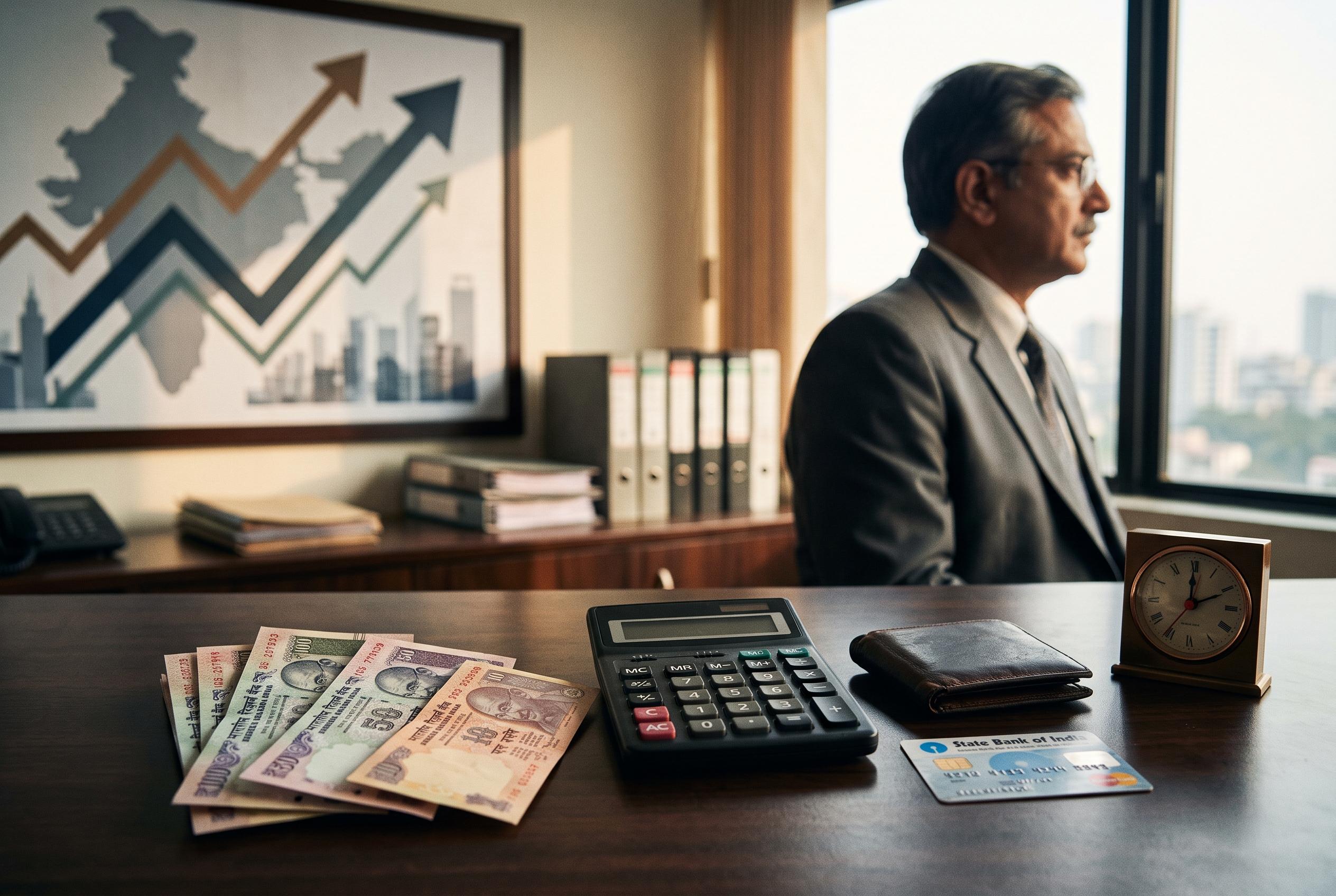

India’s economic overhaul in 1991 was born out of a financial crisis and political backing, paving the way for long-term market-oriented reforms, but leaving fundamental structural issues unaddressed, according to Nk Singh.
India’s 1991 economic overhaul was not a sudden conversion to liberalisation but the end point of a long squeeze. N K Singh, one of the officials who helped steer the response, said the roots lay in the borrowing-heavy 1980s, when higher external funds were used to support growth and public spending without enough fiscal restraint. That approach, he argued, left the country exposed when politics became unstable and external conditions worsened.
By the late 1980s, India’s current account deficit had widened sharply, while political uncertainty after Rajiv Gandhi’s defeat in 1989 made investors uneasy. The pressure became acute after Iraq’s invasion of Kuwait in August 1990, which sent oil prices soaring and hit remittances. With foreign exchange reserves under strain, the new government had little room to delay. Economists and later summaries of the reforms describe 1991 as a crisis-driven turning point that forced India to abandon a more closed, state-led economic model.
The response came in phases. The government moved first to stabilise the balance of payments, then to dismantle elements of the licence-permit system that had long governed industry and trade. According to Singh’s account, P Chidambaram advanced the trade liberalisation measures on July 4, 1991, before Manmohan Singh delivered the broader Budget changes that opened the economy further. Academic and reference accounts of the period similarly identify devaluation, industrial deregulation and a decisive shift towards a market-oriented framework as the core of the package.
Singh said the reforms were driven by a mix of necessity and conviction, but necessity came first. The International Monetary Fund and the World Bank were no longer separate sources of support in practice: securing help from one increasingly meant satisfying the conditions of the other. Prime Minister P V Narasimha Rao, Singh said, understood that the scale of change required political cover across party lines. That backing gave Manmohan Singh the authority to push through measures that would otherwise have been much harder to defend inside a fragile coalition and a sceptical establishment.
Yet the 1991 settlement also left important work unfinished. Singh said India escaped the immediate crisis and regained macroeconomic stability, investor confidence and growth, but did so without tackling deeper structural issues such as land, labour and capital reform. He said the country also sidestepped faster changes in agriculture, banking competition, foreign direct investment and the capital account. In that sense, the success of the rescue package created a degree of complacency, allowing the hardest reforms to be postponed.
Later governments broadened the reform agenda rather than reversing it. Singh pointed to Atal Bihari Vajpayee’s administration, which pushed telecom reform, highway building, fiscal rules, disinvestment and power-sector restructuring, helping to turn liberalisation into a more durable national consensus. He said the lesson from 1991 was clear: crisis may force action, but long-term reform depends on political leadership willing to keep going after the emergency has passed.
Disclaimer: This article is intended to inform and educate, not to recommend or endorse any financial product, investment or strategy. Please consider your own financial circumstances and seek professional advice where appropriate before making financial decisions.