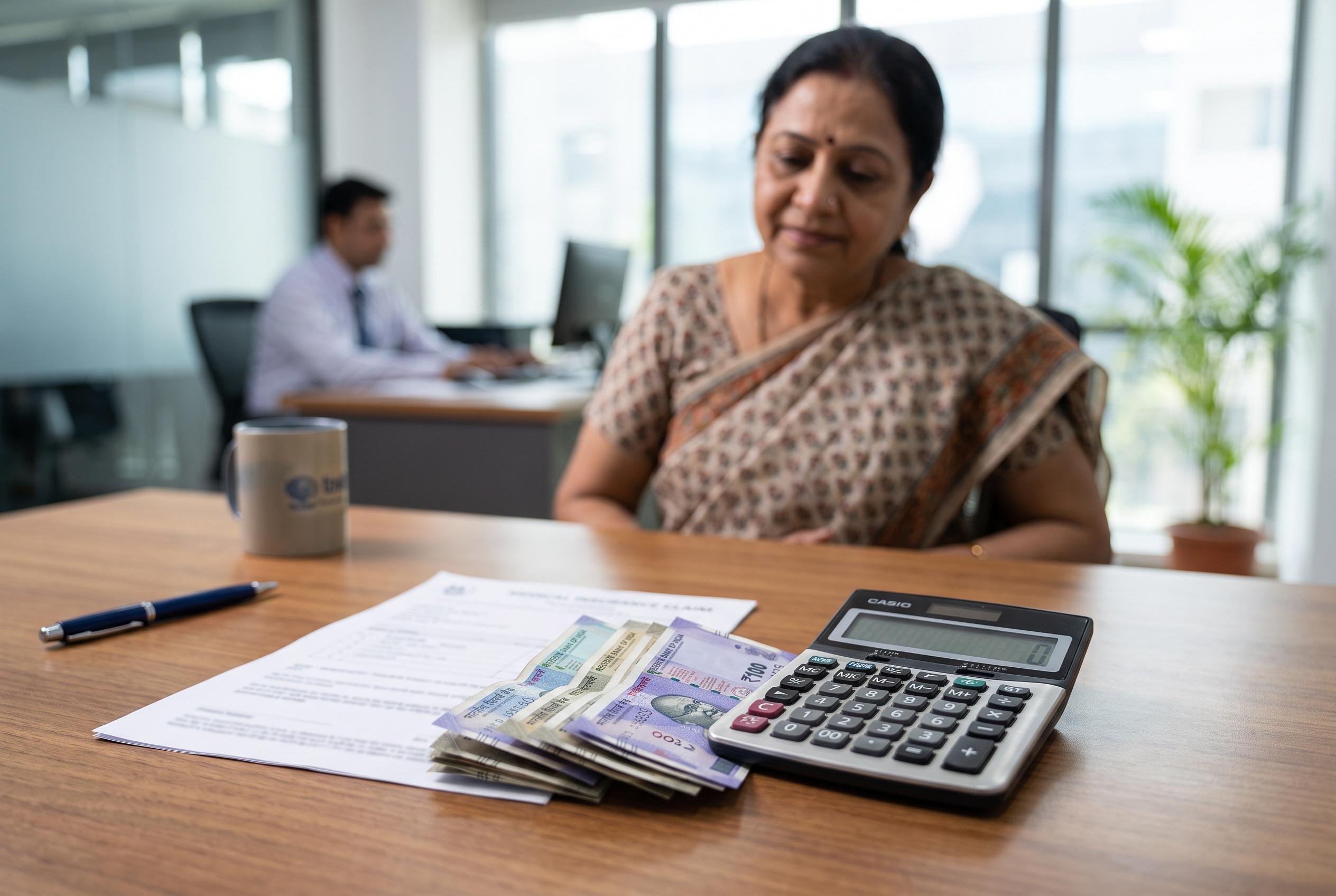

Despite having health insurance, many Indian families find cancer treatments financially overwhelming, exposing gaps in coverage that leave patients paying most costs out of pocket amid rising treatment expenses.
Kanchan Pande’s experience has laid bare a gap that many Indian families discover only when a serious diagnosis arrives: having health insurance does not necessarily mean cancer treatment will be affordable. In her case, a policy that was supposed to provide ₹5 lakh of cover still left her family paying most of the bill over more than five years of treatment for breast cancer in a Delhi private hospital.
According to the account given by her husband, Balaji, the first round of treatment cost about ₹6.2 lakh, with roughly ₹5 lakh reimbursed. But the illness did not end there. Pande needed further treatment costing another ₹2.9 lakh to ₹3.2 lakh, was admitted 78 times and faced repeated bills of about ₹24,000 per stay. Balaji said the family also paid for nine chemotherapy doses at about ₹2.5 lakh each, and that radiation therapy was excluded from cover. He estimates that 70% to 75% of the overall cost came out of pocket, even though the couple kept renewing the policy.
Their case reflects a wider problem, doctors say, as cancer care has become more expensive and more complex. Dr Atul Sharma, vice-chairman of medical oncology at Max Super Speciality Hospital in Saket, said patients often run into disputes over exclusions and technical readings of policy language. He said insurers may contest claims linked to family history or treat newer forms of care such as targeted therapy, oral chemotherapy and immunotherapy differently, while cashless treatment is not always available. Dr Sharma argued that patients need clearer rules and a more humane approach, rather than being pushed into fights over fine print.
Dr Abhik Chattopadhyay of Axiomax Oncology Private Limited in Kolkata said the problem has widened as oncology has shifted towards costly targeted drugs and immunotherapy. He noted that government-backed schemes such as Ayushman Bharat PM-JAY offer health cover up to ₹5 lakh a year, but that ceiling is often too low for advanced cancer care. He also said oral targeted medicines are frequently excluded because they do not require hospitalisation, while private plans may cap room rent and other charges, reducing reimbursement further. Industry guides on cancer insurance in India echo that advice, saying patients should study waiting periods, exclusions and treatment-specific limits closely, and many recommend a far higher sum insured, often in the ₹15 lakh to ₹25 lakh range, if they want broader protection.
Disclaimer: This article is intended to inform and educate, not to recommend or endorse any financial product, investment or strategy. Please consider your own financial circumstances and seek professional advice where appropriate before making financial decisions.