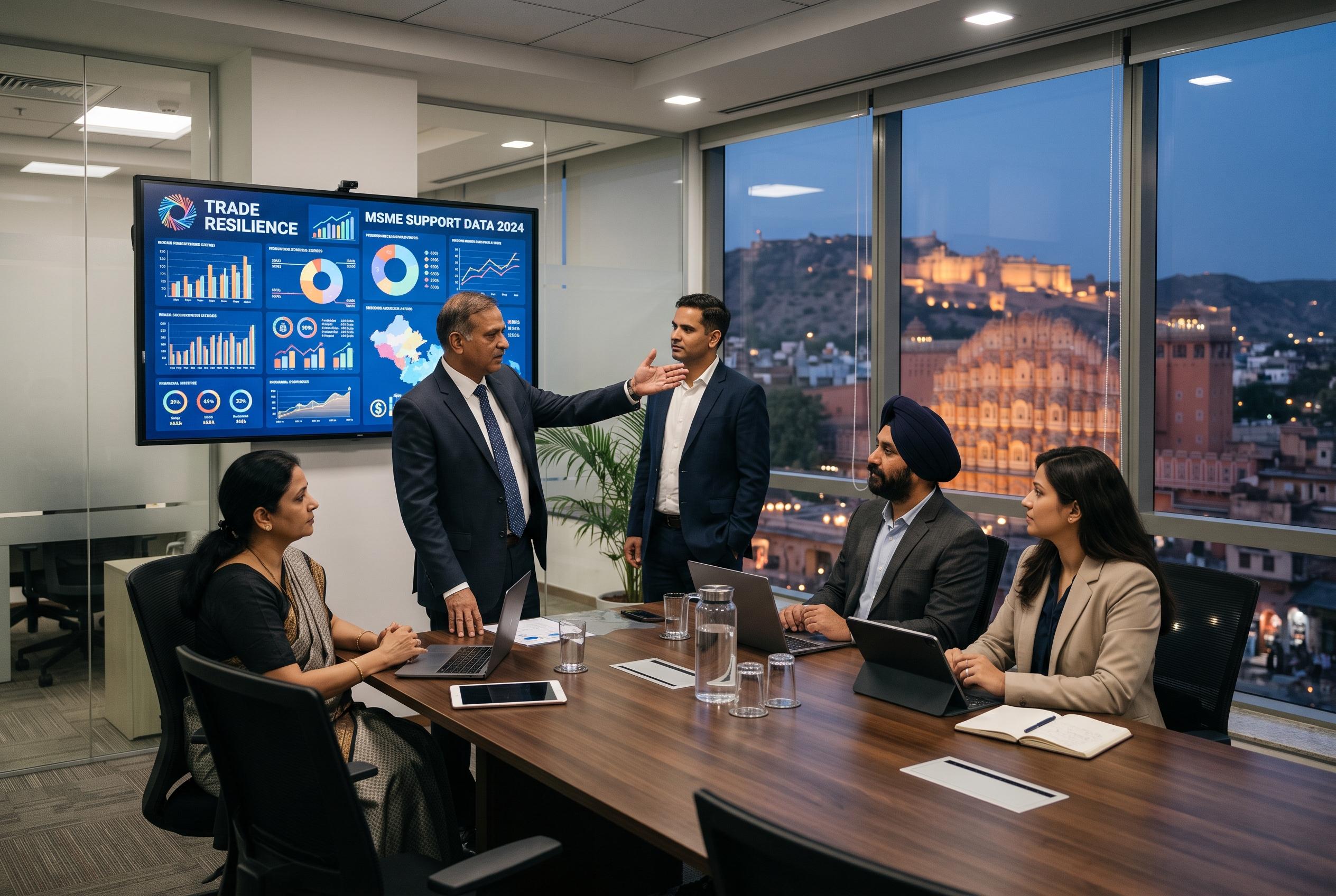

India leveraged the 16th BRICS Trade Ministers’ Meeting in Jaipur to advance an ambitious agenda aimed at strengthening trade resilience, supporting small firms, and enhancing digital commerce pathways, marking a significant step forward in its 2026 chairship plans.
India used the closing of the 16th BRICS Trade Ministers’ Meeting in Jaipur to push a broader economic agenda for its 2026 chairship, with ministers backing a package aimed at making trade more resilient, widening support for small firms and easing cross-border digital commerce. The gathering, held on August 7 in Rajasthan under the theme “Building for Resilience, Innovation, Cooperation and Sustainability”, was chaired by Piyush Goyal, India’s commerce and industry minister, alongside Jitin Prasada and Commerce Secretary Rajesh Agrawal.
According to the chair’s statement and outcome document, the talks centred on four priorities: defending a rules-based multilateral trading system, building more diversified supply chains, improving access to trade finance for micro, small and medium-sized enterprises and keeping digitally delivered services flowing more smoothly across borders. India said it wants a reformed World Trade Organization system that preserves special treatment for developing economies and restores a binding dispute settlement process.
The strongest emphasis fell on MSME finance. Ministers adopted the Jaipur Consensus, which calls for study of a BRICS Invoice Discounting Mechanism, and approved guiding principles for credit assessment frameworks for export-oriented smaller firms. The aim is to judge businesses more on cash flow than on collateral, in response to a global trade finance gap of about $2.5 trillion, according to the material released after the meeting.
The Jaipur package also included a workplan on shared understanding of global value chains, with a 2026-2030 action plan covering a BRICS Technical Council, BRICS Connect and a joint study on supply chains. It further set out principles to facilitate digitally delivered services across borders and noted progress towards a BRICS Economic Partnership Strategy for 2030, which ministers agreed should go to leaders for endorsement. The trade meeting followed other India-led BRICS ministerial sessions this year, including agriculture talks in Indore in June and SME working group meetings in May that focused on finance, technology access and skill development.
Disclaimer: This article is intended to inform and educate, not to recommend or endorse any financial product, investment or strategy. Please consider your own financial circumstances and seek professional advice where appropriate before making financial decisions.