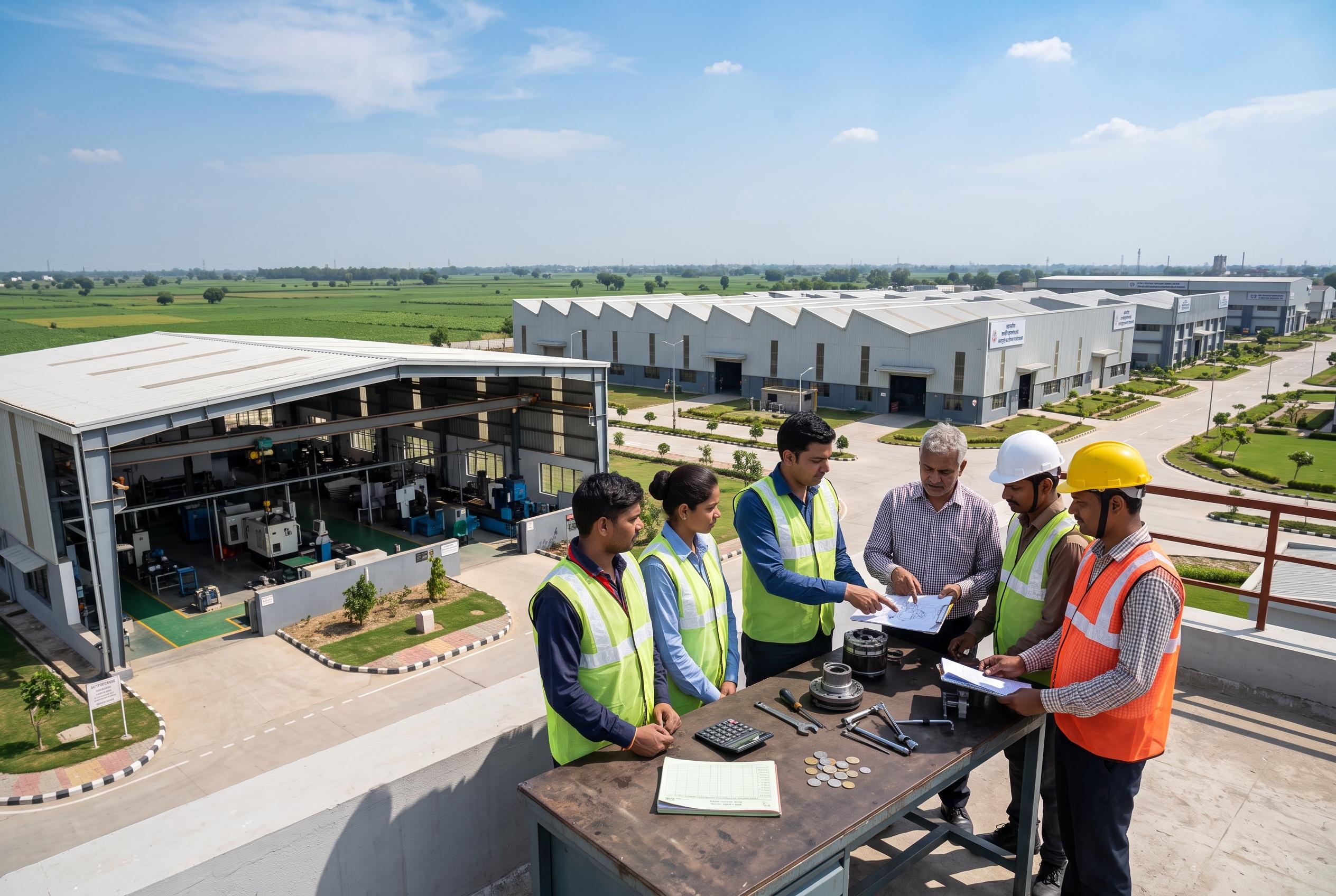

Investments exceeding ₹35,000 crore in Uttar Pradesh’s defence corridor, coupled with agricultural and skill development initiatives, may accelerate the state’s journey towards a $1 trillion economy by transforming local industries and expanding opportunities for millions of residents.
Uttar Pradesh’s economic future may hinge on three connected forces: better transport and storage for farm produce, stronger vocational-to-job pathways for young workers, and a deeper build-out of industrial capacity in places such as the state’s defence corridor. A News 18 article on August 7 set out the idea through two everyday scenes: women vegetable sellers in Gorakhpur losing value because produce spoils before it reaches market, and trained welders in Agra struggling to find stable work despite having marketable skills. The argument is that if infrastructure and industry improve together, the gains could reach far beyond individual households.
That broader strategy has already taken visible shape in the Uttar Pradesh Defence Industrial Corridor, which has emerged as one of the state’s main industrial bets. Financial Express reported that investment proposals in the corridor had reached ₹39,571.09 crore, while Business Standard said proposals had crossed ₹35,000 crore earlier in the year and later noted that the state had allotted 1,142 hectares to defence manufacturing firms. The corridor, launched in 2018 and run by the Uttar Pradesh Expressways Industrial Development Authority, stretches across six nodes: Kanpur, Jhansi, Lucknow, Aligarh, Agra and Chitrakoot.
The scale of interest suggests that the corridor is moving from announcement to activity. According to Business Standard and The Week, nine units have become operational across the six nodes, and the hub has already drawn investment proposals worth more than ₹35,500 crore. Financial Express said the state sees the corridor as part of its push towards a $1 trillion economy, with industrialisation and job creation at the centre of that ambition. In practical terms, that could help absorb workers trained in technical skills who currently find themselves stuck between classroom learning and the labour market.
The agricultural side of the story is also beginning to look more organised. The Mahayogi Gorakhnath Krishi Vigyan Kendra in Gorakhpur, established in 2016, works to bring newer farming methods to growers across nine blocks of the district. Innoscale’s Agri Tech Hub in Gorakhpur says it has incubated 34 start-ups, raised ₹6.8 crore in capital and created 418 jobs in 13 districts, with projects aimed at reducing post-harvest losses and improving market access. Taken together, these efforts point to a single economic logic: if produce can move faster, skills can connect more quickly with industry and investment can spread beyond a few urban centres, more of Uttar Pradesh’s 240 million people could share in growth.
Disclaimer: This article is intended to inform and educate, not to recommend or endorse any financial product, investment or strategy. Please consider your own financial circumstances and seek professional advice where appropriate before making financial decisions.