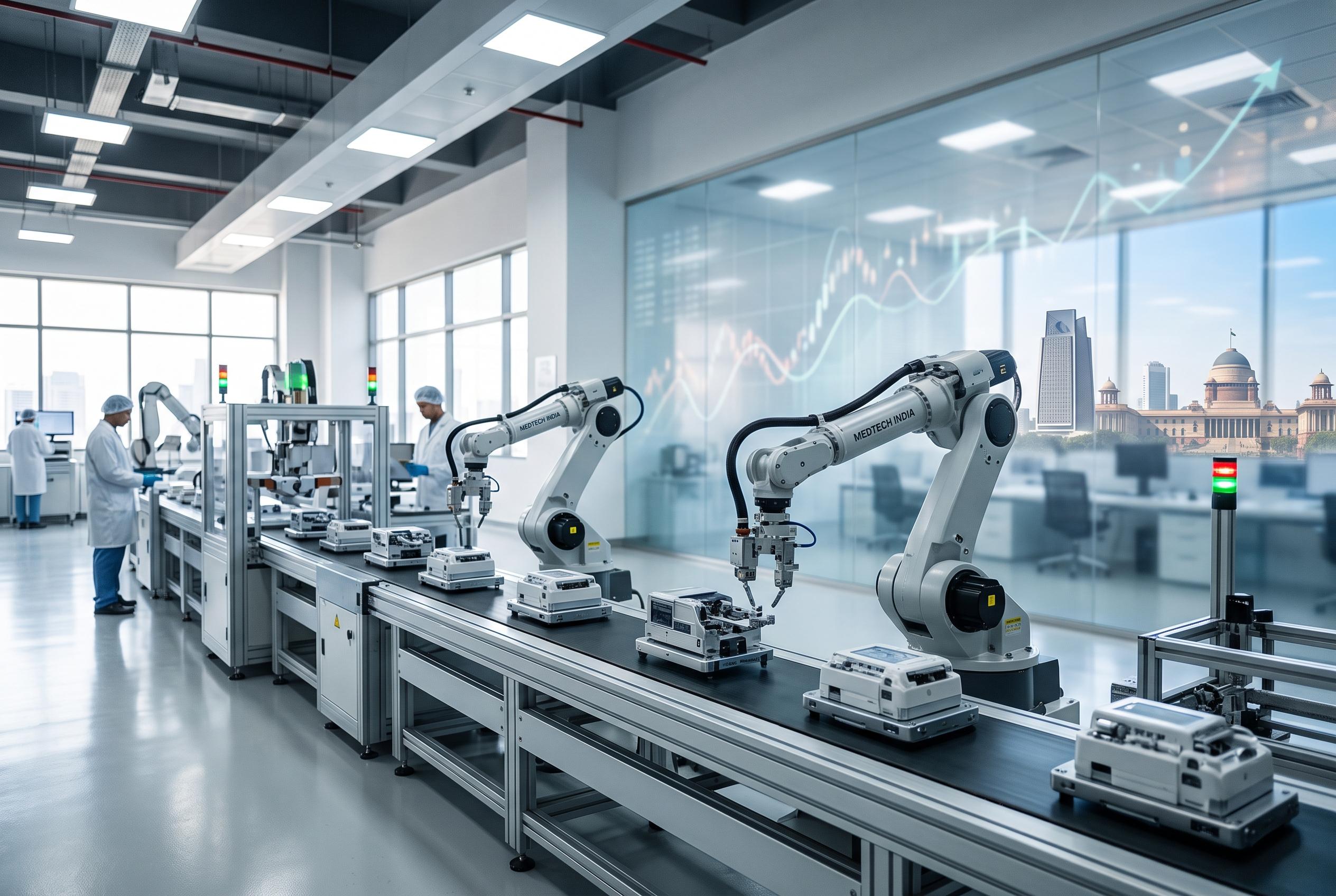

Prime Minister Narendra Modi highlights India’s concerted efforts to bolster its domestic medical technology sector through government support, innovation, and increased local production, aiming to reduce import dependence and position as a global med-tech hub.
Prime Minister Narendra Modi on Saturday used a social media post to spotlight India’s push to build a stronger domestic medical technology industry, saying lower import dependence and government support are helping the country position itself as a dependable global partner in med-tech. He shared an article by Health Minister Jagat Prakash Nadda that argued India is moving steadily towards greater self-reliance in medical devices.
Nadda said the government has backed the sector through the Production Linked Incentive scheme, Medical Device Parks and the Promotion of Research and Innovation in Pharma-MedTech scheme. According to his article, more than 50 advanced medical devices are now being manufactured in India under the PLI programme, while foreign investment continues to flow into the industry, suggesting rising confidence among investors.
The minister said a stronger domestic manufacturing base could make supply chains more resilient, create room for cost savings and improve access to equipment ranging from diagnostics and imaging systems to implants and intensive-care devices. He also pointed to newer fields such as artificial intelligence, software as a medical device, connected devices, robotics and remote diagnostics as areas where India could build scale.
Industry estimates cited by the Indian government-backed India Brand Equity Foundation put the medical devices market at about ₹90,000 crore, or $11 billion, in 2022, with a projection of $50 billion by 2030. Separate industry reports give different medium-term forecasts, but broadly point to sustained growth, helped by rising healthcare demand, expanding hospital networks and policy support aimed at boosting local production and reducing import reliance.
Nadda said the sector’s development is also tied to regulatory reform, stronger testing infrastructure and better clinical evidence, all of which he said are needed to raise patient safety and align Indian products with global standards. He added that the industry could support manufacturing, jobs, exports and innovation while helping keep healthcare more affordable and accessible.
Disclaimer: This article is intended to inform and educate, not to recommend or endorse any financial product, investment or strategy. Please consider your own financial circumstances and seek professional advice where appropriate before making financial decisions.