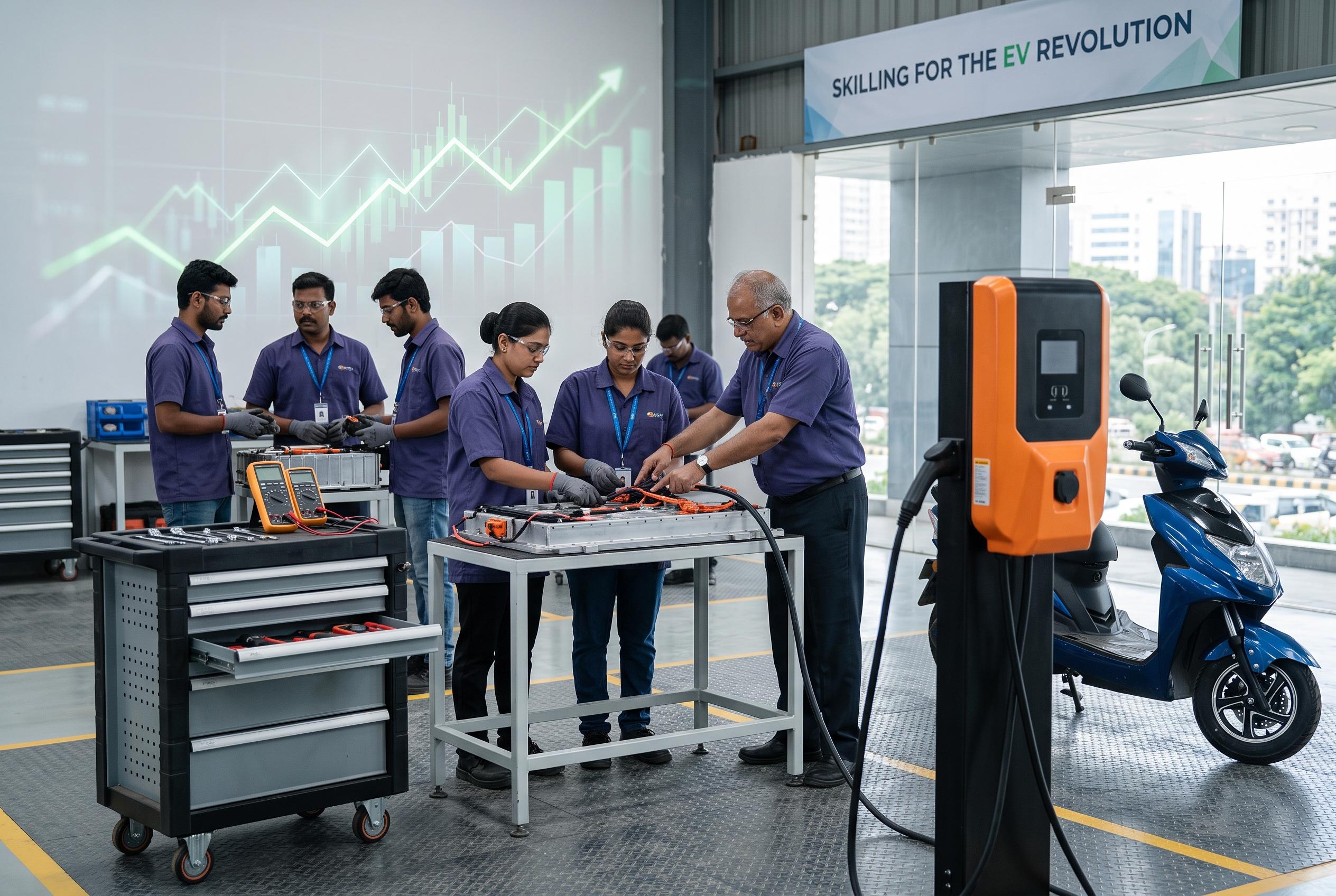

India aims to create tens of millions of jobs through its expanding EV sector by 2030, but faces a significant skills shortage that requires large-scale upskilling and infrastructure investments to sustain this growth.
India’s shift to electric vehicles is increasingly being framed not just as an industrial transition but as a major jobs engine. Estimates cited by HRKatha, the Ministry of Skill Development and Entrepreneurship and Union minister Nitin Gadkari suggest the sector could create tens of millions of roles by 2030, if current plans and investment levels are sustained.
The scale of that opportunity is broad. Jobs are expected to emerge across battery assembly, component making, vehicle production, charging networks, sales, maintenance, research and development and financing. HRKatha said demand is also likely to rise from e-commerce and logistics firms that are aiming for fully electric fleets by the end of the decade, which would lift need for electric two-wheelers, three-wheelers and cargo vehicles.
Yet the same expansion is exposing a serious skills gap. The Society of Indian Automobile Manufacturers has said that supporting 30% EV penetration by 2030 could require up to 2 lakh trained professionals, while the industry’s current skills deficit stands at 40% to 45%. Fortune India reported that the sector needs annual intake of EV-ready workers to roughly double, and that expertise in battery chemistry, power electronics, software and artificial intelligence will be especially important.
The response being proposed is equally large in scale. The HRKatha report said the sector will need 60 new research and development centres, updated course content and wide apprenticeship programmes, along with ₹13,552 crore over five years for hiring and upskilling. That push is being backed by Production Linked Incentive schemes, FAME subsidies and private investment, as India tries to build an EV ecosystem that supports both cleaner transport and faster job creation.
Disclaimer: This article is intended to inform and educate, not to recommend or endorse any financial product, investment or strategy. Please consider your own financial circumstances and seek professional advice where appropriate before making financial decisions.