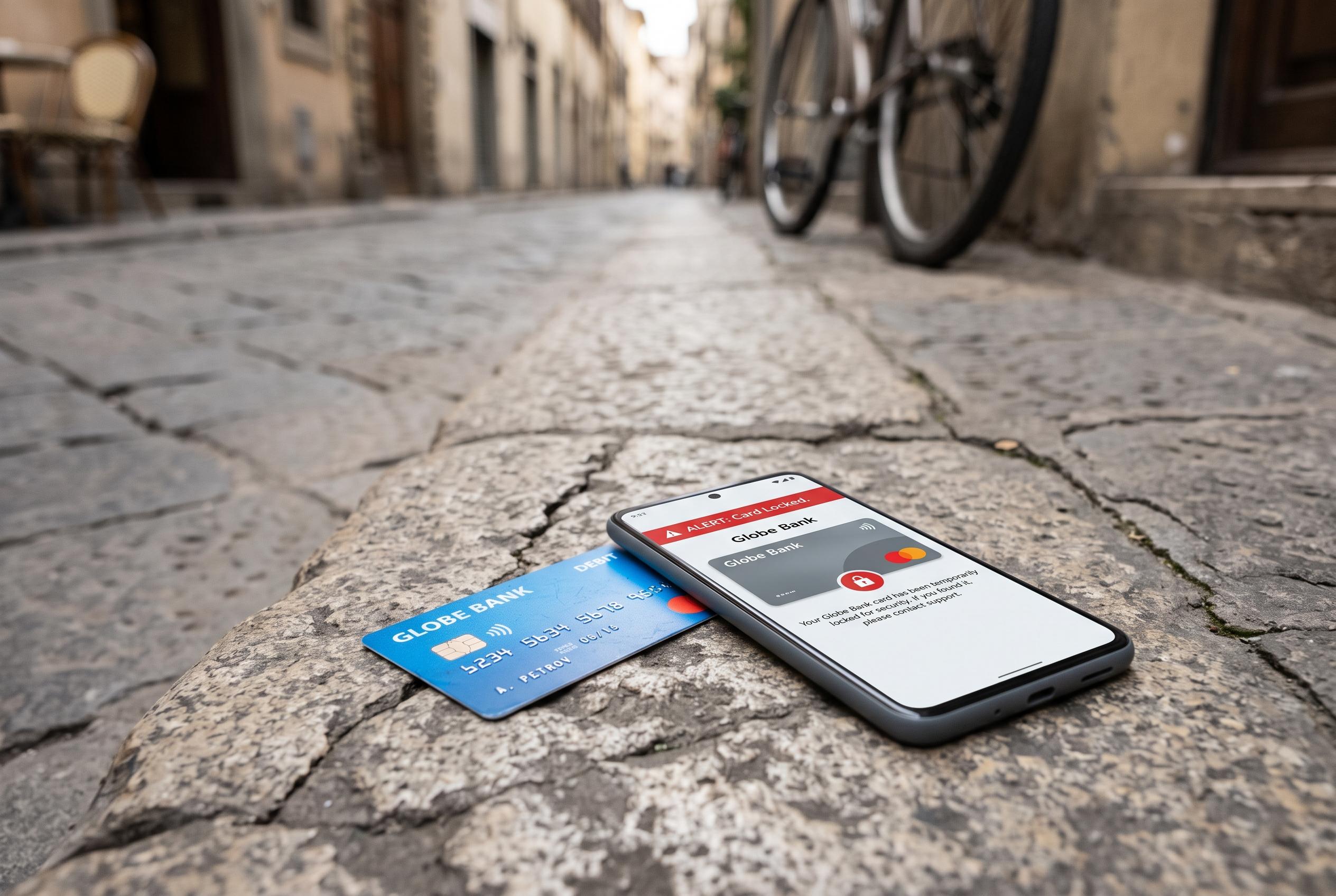

Losing a bank card overseas can quickly turn a holiday into a financial headache. Experts recommend immediate actions such as card locking, checking for suspicious activity, and considering digital wallets to minimise disruption and protect finances.
Losing a bank card overseas can turn a holiday disruption into a practical and financial headache within minutes. What begins as a missing wallet or a card left behind in a hotel room can quickly become a problem with hotel bills, transport and access to cash. The safest response, according to consumer guidance from major banks and card providers, is to act immediately rather than hoping the card will reappear.
The first step is to check carefully before taking more drastic action. Travelers are often urged to look through luggage, pockets, cars and the last place they used the card, because cards are frequently found after the initial panic has passed. But if theft is possible or the card still cannot be located, the priority shifts to stopping anyone else from using it.
Most banks now allow customers to lock or freeze a card through a mobile app, while some also offer a full cancellation through a 24-hour helpline. Visa says cardholders should report a lost or stolen card immediately and, where available, request emergency services. Chase similarly advises travellers to freeze the card, contact the issuer and ask for a replacement as soon as possible. The exact options vary by bank and by card type, so it makes sense to review those rules before travelling.
Once the card has been blocked, the account should be checked for unfamiliar activity. That includes purchases from unknown merchants, online transactions you did not make, cash withdrawals and repeated declined attempts. NerdWallet and Experian both recommend reporting suspicious activity quickly, because prompt action can limit liability and speed up the bank’s investigation. If the card was stolen rather than merely lost, it is also sensible to file a police report, which may help with both the bank and any travel insurer.
The most difficult case is losing the only card you have with you. In that situation, banks may be able to send a replacement abroad, issue a temporary card or arrange emergency access to cash, but such services are not guaranteed and may take several working days. Chase and other consumer finance guides also suggest carrying a backup card, some cash and keeping payment methods separate so one loss does not leave a traveller stranded.
Digital wallets can reduce the damage. If a card has already been added to Apple Pay, Google Pay or a similar service, a traveller may still be able to pay contactlessly with a phone or smartwatch even after the physical card is gone. That is one reason financial experts advise not relying on a single payment method when going abroad. A spare card stored separately, plus a modest cash reserve, can make the difference between a minor inconvenience and a ruined trip.
Disclaimer: This article is intended to inform and educate, not to recommend or endorse any financial product, investment or strategy. Please consider your own financial circumstances and seek professional advice where appropriate before making financial decisions.